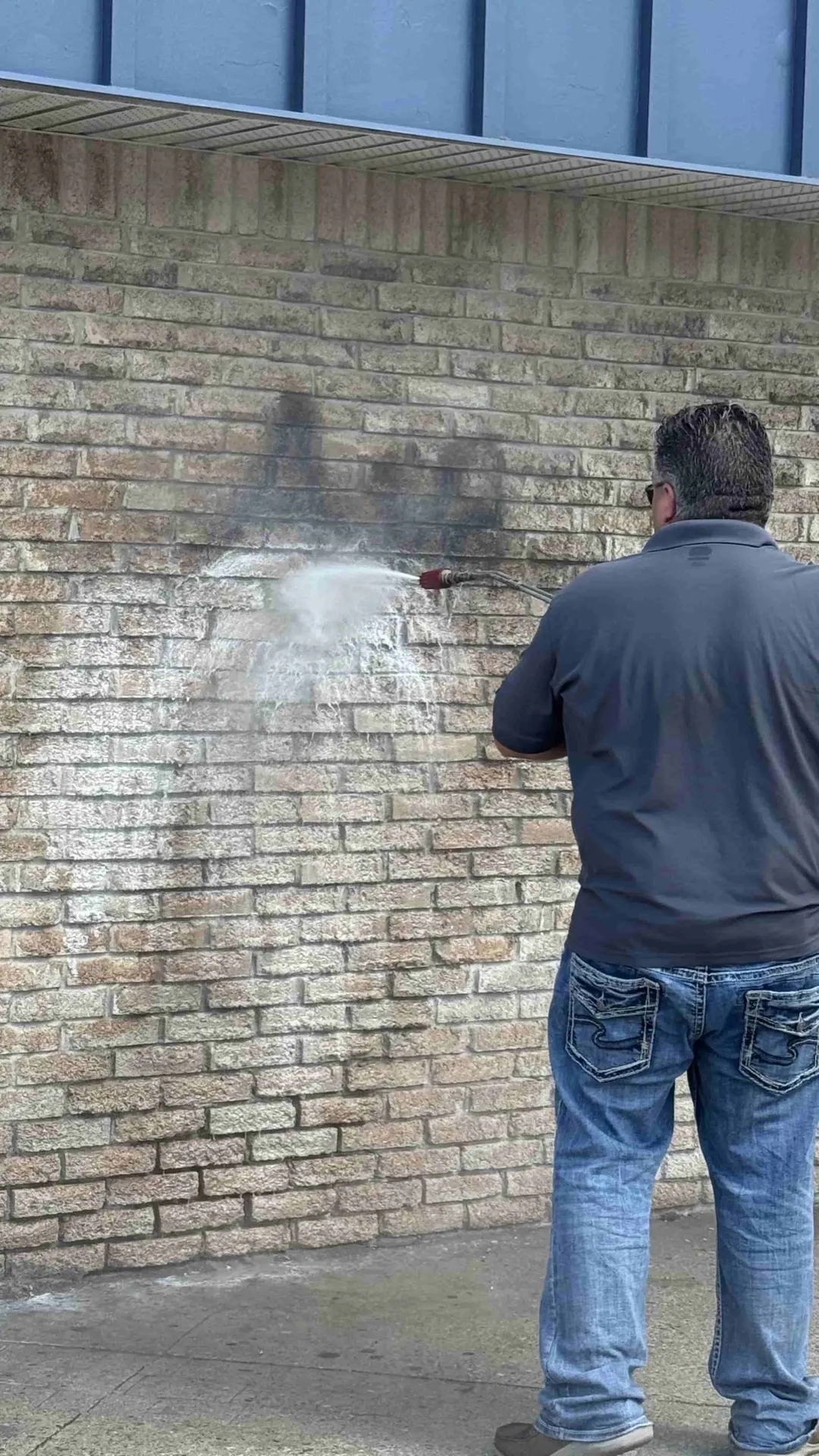
"Deeper" is the wrong yardstick for concrete. What matters is what the stain is and what you can carry away. This post compares pressure washing and steam cleaning on how they work, what each is good at, and what actually reaches into the pores.
In This Article
What each tool actually does
A pressure washer moves a lot of water at high speed. The force knocks dirt loose and the volume carries it away. Some machines heat the water as well. A steam cleaner works on the opposite balance: very hot vapour at low pressure and low volume. The heat softens and loosens residue, but there is little force or water to push it anywhere.
| Pressure washing | Steam cleaning | |
|---|---|---|
| Main action | Force and volume of water, sometimes heated | Heat and vapour at low pressure |
| Water used | Plenty | Very little |
| Rinsing power | Strong, carries debris away | Weak, so residue is wiped or vacuumed up |
| Speed on large areas | Fast, especially with a surface cleaner | Slow, working a small patch at a time |
| Runoff | A lot of wash water to manage | A little, easy to capture |
| Best at | Dirt, algae film, salt, general cleaning | Gum, grease film, spot work, sanitizing small areas |
One practical point about equipment. Household steam cleaners are built for indoor tile and grout, and they lack the output for outdoor concrete. Commercial steam units are heavier and costlier. For most homeowners, steam is a spot tool, not a driveway tool.
So which one gets deeper?
Neither reaches far below the surface on its own. Concrete is porous, and oil that has soaked in sits in the pores where a jet slides over it and a burst of steam only warms it. What decides depth is chemistry and time: a degreaser with proper dwell time, or a poultice that pulls oil out as it dries.
Heat does help with that process. Steam or hot water thins oil and grease so a degreaser can work on it, and thin oil migrates toward the surface more easily. In a sense, steam gets at shallow residue with less mess, while a hot pressure rinse gets rid of what the chemistry has freed. For deep marks, the combination beats either tool alone.
Moisture is another difference. Steam leaves the slab far drier than a full wash does, which can matter when a coating or sealer is planned, since any surface must be fully dry before it goes on.
Driveway or patio seen better days?
We pressure wash driveways, patios, decks and walkways across Kitchener, Waterloo, Cambridge & Guelph. Free, no-obligation quotes, ready within 1 business day.
Concrete jobs sorted by tool
- Large driveway with algae, dust and salt: pressure washing, ideally with a surface cleaner.
- Old drips on a garage floor: degreaser first, then hot water or steam on the spots, then a rinse. See oil stains on your driveway for the sequence.
- Chewing gum on a walkway or entrance: steam softens it so it can be scraped up without gouging the concrete.
- A greasy bin or barbecue pad: a hot-water pressure rinse after degreasing.
- A site where wash water cannot be allowed to run: steam and a wet vacuum, because there is far less water to control.
Safety, runoff and winter
Both tools are hot enough to scald, and both can hurt at close range. Wear gloves and closed footwear, keep pets and children back, and never point either at skin or at electrical fixtures.
Wash water still needs care. Oil, grease and degreaser should not go to a street storm drain, which in most Ontario towns leads to a creek or river without treatment. Capture what you can with absorbent material or a wet vacuum. And avoid outdoor work when the temperature is heading toward freezing, since wet concrete turns into an ice hazard overnight.
Choose pressure washing if, choose steam if
Choose pressure washing if the area is large, the dirt is ordinary, or you need a strong rinse to carry loosened material away.
Choose steam cleaning if the marks are small, sticky or greasy, water use or runoff is restricted, or you are working around fixtures that should not be soaked.
For most home driveways the answer is pressure washing, plus a proper degreaser for any oil. Hot-water machines sit between the two, and hot water vs cold water pressure washing explains when heat is worth having. D&D Home Services lists pressure washing from $350 for typical Kitchener-Waterloo homes, with a free written quote.
Key Takeaways
- Pressure washing uses force and water volume; steam uses heat and vapour at low pressure with very little water.
- Neither tool reaches deep into concrete pores alone; degreaser with dwell time or a poultice does that work.
- Steam suits gum, grease films and spot jobs; pressure washing suits large areas, algae, salt and dirt.
- Keep oily wash water out of storm drains and avoid outdoor washing when a freeze is on the way.

Request a home-service quote
Select the service you need and describe the work area and access.