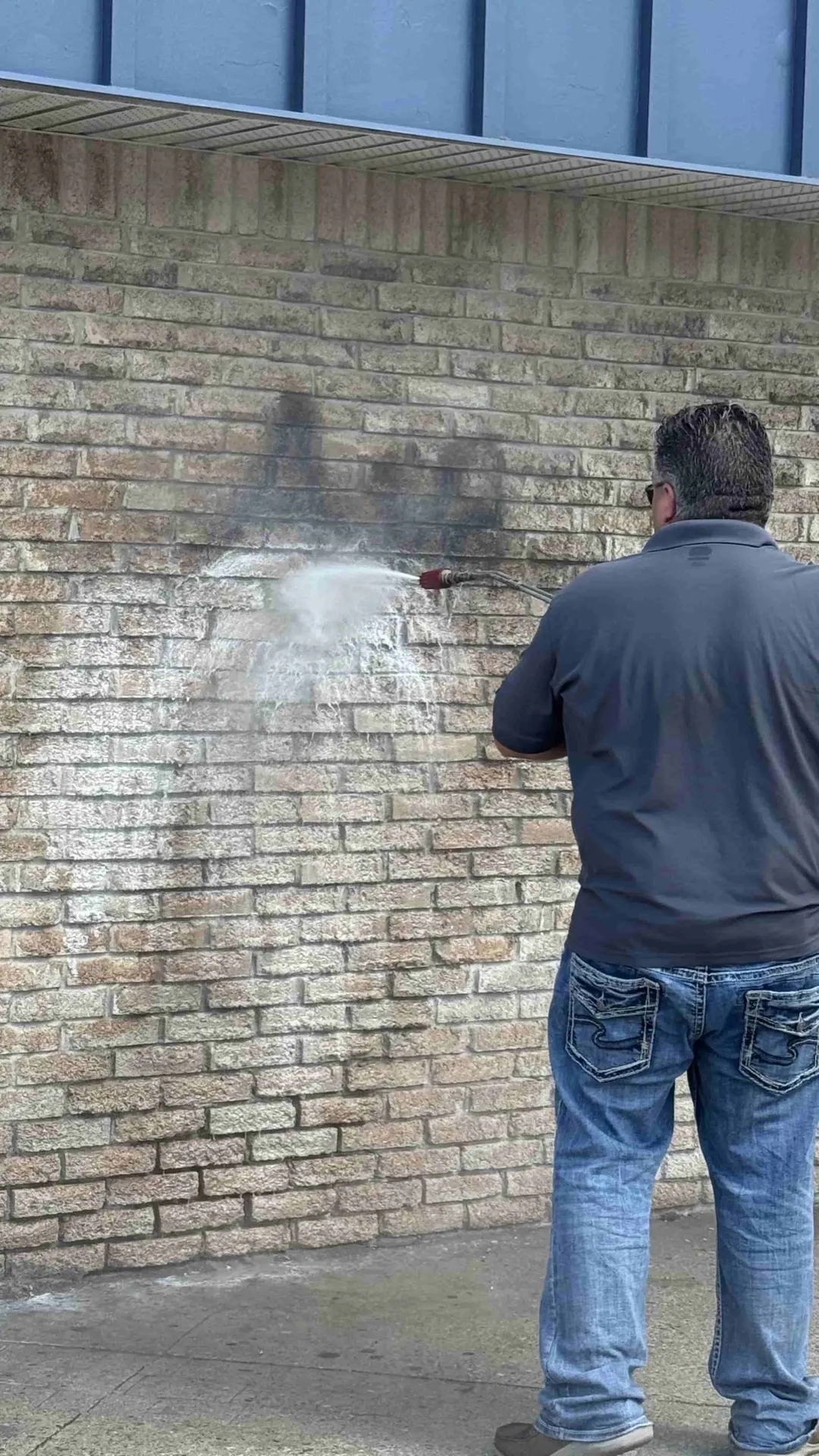
This is a working checklist for a spring pressure washing weekend, organized by zone of the property instead of by priority. For each surface it gives the method, what to look for while you clean and what to leave to a gentler approach, with a short set of day-of checks up front and an inspection routine at the end.
In This Article
Before you pull the trigger: five checks and the right product
- The ground. It should be thawed and firm, or rinse water will sit and run to the street.
- The nights. Wait until they stay above freezing, so wet surfaces do not refreeze.
- The tap. Open it slowly and look for a leak inside the wall, since winter splits pipes.
- The equipment. Check hoses, fittings and tips, and read the manual for any spring servicing.
- The plants. Buds and new shoots are tender, so plan where the rinse goes and pre-wet the beds beside the work.
Then test the widest tip on a hidden patch, start far back and only step closer until the dirt lifts.
Choose the product for the soil. A cleaner suits algae and mildew, a degreaser suits oil, and a wood cleaner suits decks and fences. Follow each label, never mix products and rinse nearby plants before and after.
Zone one: the front of the house
The zones below run from the front of the house to the back, which puts the safety-critical entry surfaces first. Where your lot slopes, do the higher surfaces before the lower ones, so runoff never crosses a surface you have already cleaned, or give the entry a final rinse at the end.
- Porch floor and railings. Low pressure, a wide fan and a cleaner on growth. Check for loose balusters, soft boards and peeling paint.
- Steps and walkway. Cleaner and brush on algae, then a wide-fan rinse. Check for cracked or rocking treads, heaved slabs and salt scaling.
- Garage apron. A surface cleaner or a steady wand height. Check for white salt haze, oil marks and cracks at the door.
- Garage door. A soft wash, or a low-pressure rinse for salt haze. Check for dented panels, worn paint and rust at the bottom edge.
Driveway or patio seen better days?
We pressure wash driveways, patios, decks and walkways across Kitchener, Waterloo, Cambridge & Guelph. Free, no-obligation quotes, ready within 1 business day.
Zone two: driveway and hard surfaces
- Concrete driveway. Sweep, treat stains, then use a surface cleaner. Check for scaling, hairline cracks and settled sections.
- Interlock. Moderate pressure, angled along the joints, then fresh joint sand. Check for heaved or sunken units, and see how to clean interlock paving.
- Garage floor. Degreaser first, then a rinse. Check for oil stains and rust marks, and see pressure washing a garage floor.
- Retaining walls and curbs. Cleaner, brush and a gentle rinse. Check for leaning sections, crumbling mortar and blocked weep holes.
Zone three: the back of the property
- Patio. Moderate pressure and a surface cleaner. Check for moss, weeds in the joints and lost sand.
- Wood deck. The widest fan or a soft wash, brushing along the grain. Check for soft boards, popped nails and a worn finish.
- Fence. Low pressure, with the method chosen by material, as in how to pressure wash a wood fence. Check for leaning posts, rot at ground level and peeling stain.
- Furniture and the barbecue. Low pressure and a mild cleaner. Check for rust and cracked plastic, and dry everything before storing it.
- Play equipment and sheds. Cleaner and a low-pressure rinse. Check for splinters, loose fasteners and mildew.
What not to pressure wash
- House siding and stucco: a low-pressure soft wash is safer, since a jet can split panels and force water into the wall cavity.
- Roofs: soft washing only, since force strips granules from shingles.
- Windows: these are a window cleaning job.
- Old paint, loose caulk and aging mortar: a jet makes them worse.
- Anything electrical: outlets, meters, light fixtures and the service mast stay dry.
After the wash: inspect, record and follow up
Once each surface is dry, walk the property again in low light. Note cracks, heaved units, loose boards, worn finishes and stains that did not lift. Photograph them with the date, and sort the list into repairs for the next dry, mild weekend and jobs for a professional.
A realistic two-day plan keeps the safety jobs first. On day one, do the porch, steps, walkway and garage apron, since slick surfaces matter most. On day two, do the driveway, the patio and the wood, and leave time to let the deck and fence dry before any stain goes on.
If the list is longer than the weekend, hand it over: D&D prices pressure washing from $350 for a typical Kitchener-Waterloo home and quotes it for free.
Key Takeaways
- Check the ground, nights, outdoor tap, equipment and plants before starting, then test the widest tip on a hidden patch.
- Work by zone: front entry and garage, driveway and hard surfaces, then the back of the property.
- Match the method to the material, keep the jet off siding, roofs, windows, old paint and anything electrical.
- Inspect each dry surface, record what you find and repair cracks, heaved units and loose boards before the next wash.

Request a home-service quote
Select the service you need and describe the work area and access.