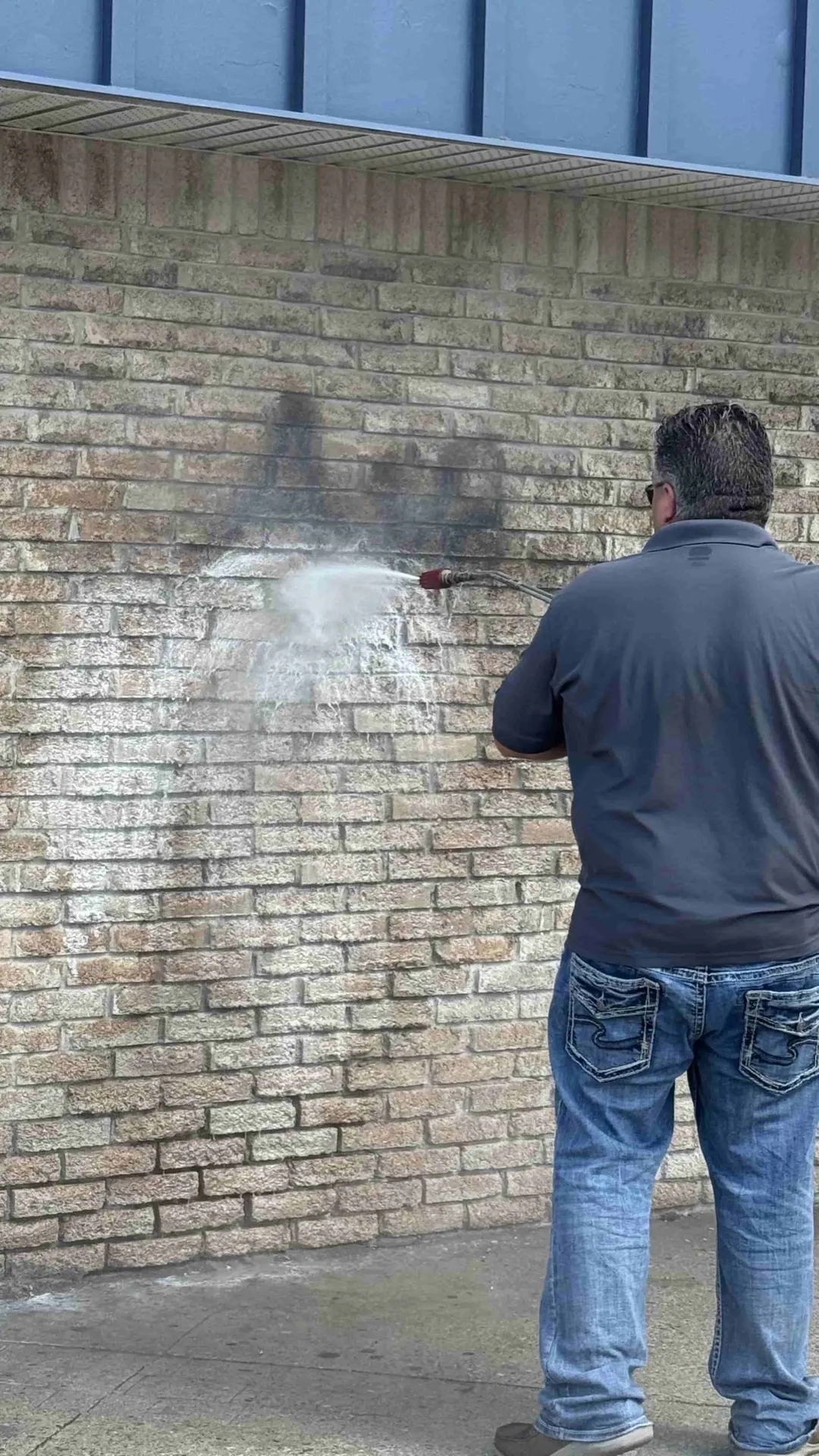
Damage from a pressure wash is easiest to fix in the first few days and hardest to prove after a month. This guide gives you a timed inspection routine: what to notice while the surface is wet, what to check next day, and what to look for inside the house and after rain.
In This Article
While the surface is still wet
Some of the earliest signs appear during the wash itself. Pause and look for these:
- Debris in the run-off. Paint flakes, mortar grit or pale sand from joints mean the surface is giving way.
- Water seeping from places it should not. Drips from behind siding laps, under window trim or out of a brick wall's weep holes mean water is getting inside.
- A change in sound. A sharp crack or a hollow rattle from a panel means it may have come unhooked.
- Bright, clean lines on concrete or wood, which mark where the surface has been cut instead of cleaned.
If you see any of them, stop, ease the pressure or change the method, and record what you saw.
The next day: dry and in daylight
Wet surfaces hide damage, so the main inspection happens once everything has dried. Use both eyes and a flat palm. Look along each surface at a low angle in morning or evening light as well, because raking light shows ridges, stripes and pits that overhead sun flattens out.
| Surface | Look and feel for | What it means |
|---|---|---|
| Wood deck or fence | Fuzz that snags your palm, ridges along the grain, lifted splinters | Light fuzz sands out. Deep gouges need a board replaced |
| Concrete | Stripes, a gritty, sandy surface, stones showing | The top layer is gone. It cannot be undone |
| Interlock | Missing joint sand, rocking pavers, chipped edges | Refill the joints and reset loose units |
| Brick and mortar | Sandy dust at the joints, mortar sitting deeper than before | Stop washing it. Get advice before repointing |
| Vinyl or aluminum siding | Dents, cracks, panels unhooked at the edge, stains below laps | Check inside the wall as described below |
| Paint and stain | Thin patches or flaking beyond the old problem areas | The finish was already failing, or it was hit too hard |
| Caulk and window seals | Splits, gaps and lifted edges | Re-seal before the next rain |
Driveway or patio seen better days?
We pressure wash driveways, patios, decks and walkways across Kitchener, Waterloo, Cambridge & Guelph. Free, no-obligation quotes, ready within 1 business day.
Inside the house: the check most people skip
Forced water rarely announces itself outdoors. Within a day or two, walk the inside of the walls you washed. Look at the corners near windows, the ceiling below a washed eave, the drywall near exterior doors and any basement wall or window well below the area. Watch for new stains, bubbling paint, a musty smell or damp carpet edges.
Touch the baseboards near washed walls. If they feel cold and damp, moisture has found a path. A small fan and quick action can limit the harm. If it keeps coming back, get someone to trace where the water is entering.
After the first heavy rain, and two weeks on
Rain tests the work. Check for standing water on newly cleaned paving, joint sand that has washed out, white salts rising as the slab dries and drips at caulk lines. Two weeks on, look again for wood fibres lifting as the boards weather, growth returning in the joints, and stain or sealer that is peeling in patches.
Southern Ontario adds a deadline of its own. If the damage is a crack or an open joint, water can get in and freeze, and each freeze-thaw cycle widens it. Sort out repairs before the cold weather returns, not after.
What to do with what you find
- Photograph each problem with something for scale, and note the date.
- Stop washing the affected area.
- If a contractor did the work, tell them promptly and in writing, attach the photos, and let them see the problem before you repair it.
- Repair or seal what you can, starting with anything that lets in water.
For a wood deck that has already been hurt, pressure washing damaged my deck: what to do next gives the full repair order, and why your driveway looks worse after washing covers the concrete side. D&D Home Services quotes pressure washing for free and in writing before work begins, from $350 for typical Kitchener-Waterloo homes.
Key Takeaways
- Watch the run-off and listen while you wash: paint flakes, mortar grit or drips behind siding are early warnings.
- Do the main inspection when the surface is dry and in daylight, running a flat palm over wood and concrete.
- Check inside the house near washed walls within a day or two, because forced water rarely shows outdoors.
- Photograph problems, stop washing that area, and tell any contractor in writing before you repair.

Request a home-service quote
Select the service you need and describe the work area and access.