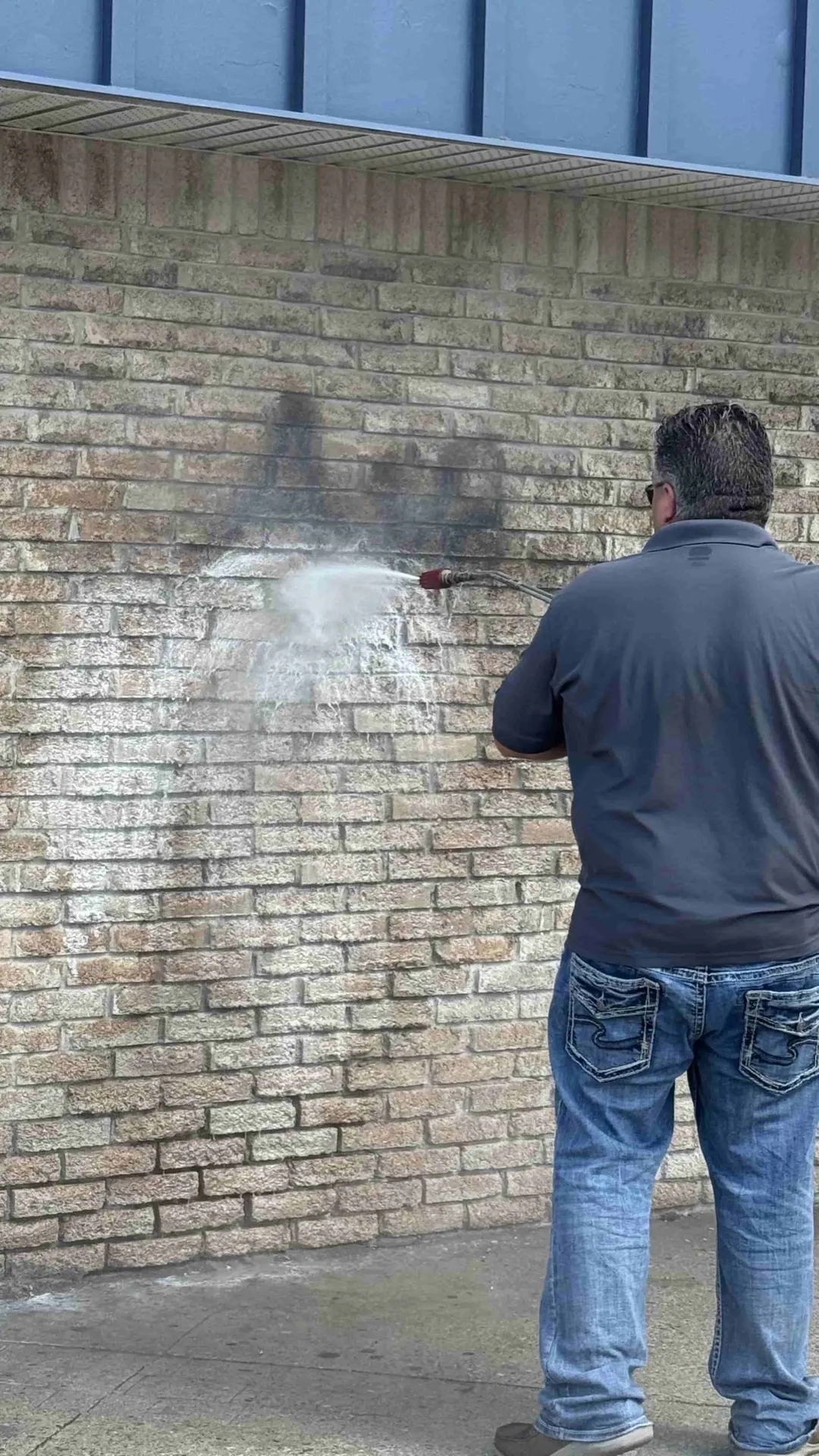
Short answer: pressure washing on its own rarely removes oil, and it can spread the stain. What works is a sequence of soaking up, breaking down, lifting and rinsing. Here is that ladder, from a fresh drip to a stain that has been there for years, and what to expect at each rung.
In This Article
Why water alone loses to oil
Oil and water do not mix, so a jet of plain water slides over an oil film instead of dissolving it. Concrete makes it worse. The surface looks solid, but it is full of tiny pores, and oil wicks down into them. A pressure washer clears what sits on top and leaves what has sunk in.
The type of oil matters a little too. Motor oil, transmission fluid and cooking grease each behave differently, while spilled petrol mostly evaporates and leaves a lighter mark.
Two things decide the outcome: how long the oil has been there, and how thick it was. A fresh spill is a wipe-and-absorb job. A stain that has baked through several Ontario summers and been walked on since is a poultice job, and even then the result may be a lighter shadow rather than a clean slab.
The ladder from fresh spill to old stain
- Absorb at once. Cover a fresh spill with clay cat litter, sawdust or a commercial absorbent. Grind it in with your shoe, leave it for several hours, then sweep it up. Bag the used absorbent, and check your Region's household hazardous waste guidance before putting it out with ordinary garbage.
- Degrease. Apply a concrete degreaser exactly as the label directs, scrub with a stiff brush, give it the stated dwell time and rinse. Work on a cool, shaded slab, because hot sun dries the product before it can act. Do not mix products.
- Draw it out. For older stains, a poultice (an absorbent powder mixed with a cleaning agent, spread over the stain and left to dry) pulls oil out of the pores as it dries. Follow the product's ventilation and fire warnings, and repeat if the first round only lightens the mark.
- Rinse with pressure last. Now the washer earns its place. Use a wide fan tip and steady passes to carry loosened residue away. Hot water helps because heat thins oil.
- Accept the ghost. A faint shadow may remain. Sealing afterwards helps block the next drip from soaking in.
Driveway or patio seen better days?
We pressure wash driveways, patios, decks and walkways across Kitchener, Waterloo, Cambridge & Guelph. Free, no-obligation quotes, ready within 1 business day.
Concrete, interlock and asphalt behave differently
- Concrete: the classic case. Degreaser, brush and poultice are effective, and a broad pressure rinse finishes the job.
- Interlock: oil soaks into the pavers and can spread to neighbours through the joints. For a deep stain, replacing the single paver is sometimes the tidiest result, and it beats repeated scrubbing that removes joint sand.
- Asphalt: petroleum products soften the asphalt binder, so oil, harsh solvents and hard pressure can all damage it. Use mild degreaser and a brush, expect only fading, and keep the pressure low. A sealer coat, if the surface is due for one, evens out the look.
Where the oily rinse water goes
This part is easy to skip and should not be. In most Ontario towns a street storm drain carries water to a creek or river with little or no treatment. Oil, degreaser and the grit that goes with them do not belong there.
- Block the flow with a rolled absorbent sock or a temporary berm before you rinse.
- Soak up the rinse water with absorbent, or use a wet vacuum, and bag the results.
- Keep degreaser off lawn and shrubs, and never hose the residue toward the road.
- Check your municipality's current rules if you are unsure what may go where.
When to stop and ask for help
Two honest rounds of degreasing, with a poultice on the stubborn part, usually show what is achievable. If a stain will not move, keep the shadow or ask about a coating or resurfacing rather than escalating to a harsher jet that etches the slab.
A crew can judge the surface and the stain before promising anything. D&D Home Services offers pressure washing from $350 for typical Kitchener-Waterloo homes, with a free written quote. For stains on a slab you plan to seal, oil stains before sealing explains why they must be treated first, and hot water vs cold water pressure washing covers when heat helps.
Key Takeaways
- Plain pressure rarely removes oil from concrete, because the oil has soaked into the pores and water slides over it.
- Absorb first, then degrease, then use a poultice on old stains, and rinse with pressure last.
- Asphalt is softened by oil and solvents, so use a mild degreaser and low pressure there.
- Keep oily rinse water and degreaser out of storm drains, which usually lead to a creek or river.

Request a home-service quote
Select the service you need and describe the work area and access.