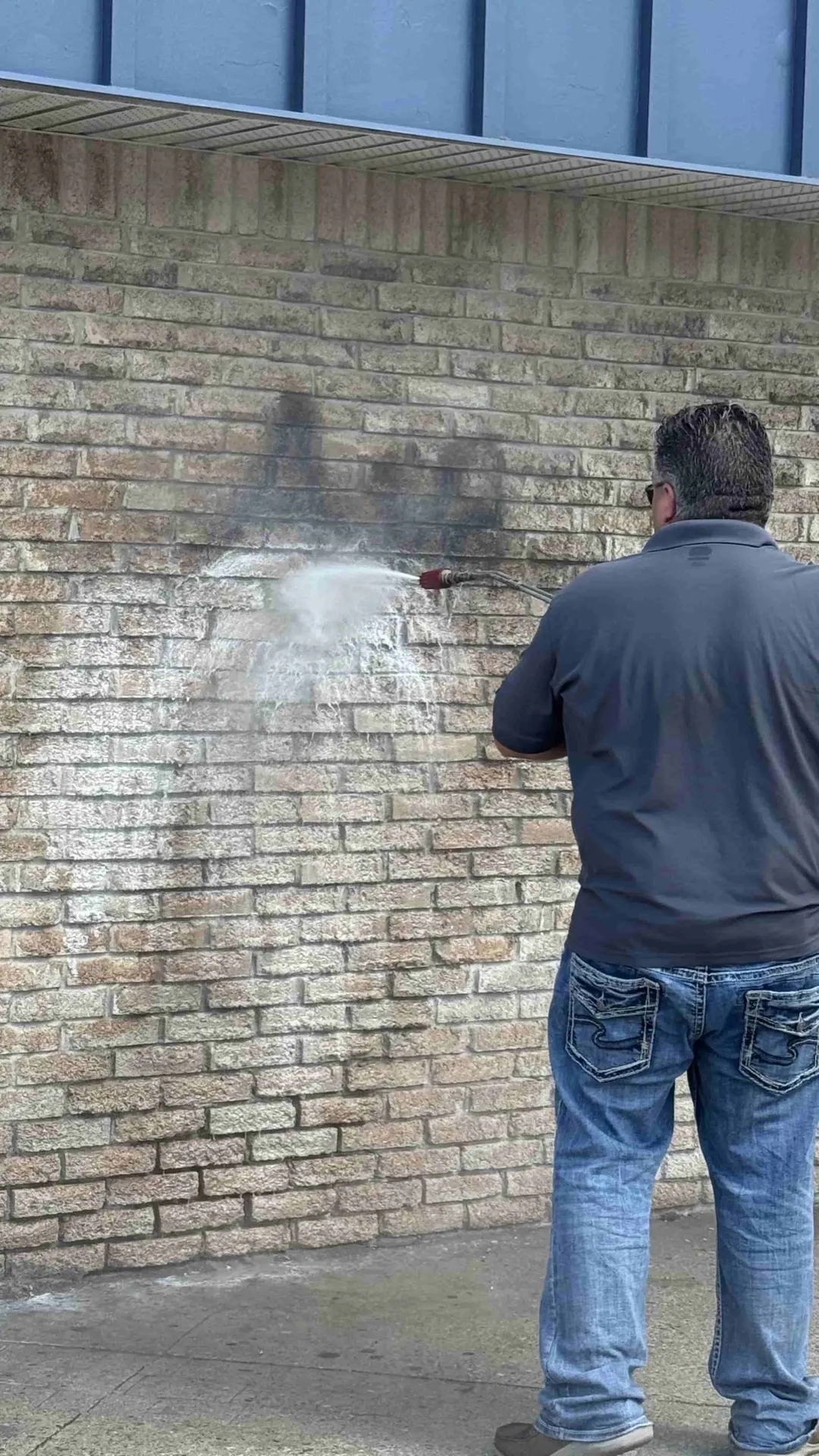
A few small pieces of brass and steel decide most of what a pressure washer does to your house. Learn the five standard tips, what each is for and what each can ruin, and you will avoid the mistakes that cause most DIY damage.
In This Article
How to read a tip before you fit it
The number stamped on a tip is the spray angle in degrees. A small angle squeezes the water into a narrow, hard jet. A wide angle spreads the same water over a bigger patch and softens the blow. Colour codes are a widely used convention, but trust the number on the tip, because makers do not all follow the colours.
Tips also come in different orifice sizes that match a machine's pressure and flow, so buy tips rated for your unit. And change a tip only with the trigger locked and the pressure released, never while the wand is live.
Some machines ship with an adjustable "dial" wand that packs several angles into one nozzle. It is convenient, but the setting is harder to judge than a fixed tip. If you use one, test each position on a hidden patch and note which mark on the dial matches which spray.
The five tips, from harshest to gentlest
- 0 degrees (usually red): the pencil jet. It is a needle of water that can cut wood, score concrete and injure skin. A close jet can inject water and debris under the skin, and that is an emergency even when the wound looks small. Nothing on a house needs it. Leave it in the box.
- 15 degrees (usually yellow): the stripper. A narrow fan for stubborn marks on hard, sound surfaces such as plain concrete. It etches easily, so stay well back and move fast. Never use it on wood, siding, pavers with sand joints or anything painted.
- 25 degrees (usually green): the workhorse. A common choice for sound concrete, steel and hard-wearing surfaces, held about 30 to 45 cm (12 to 18 in) away. Start farther back on brick and never point it at joints, seals or trim.
- 40 degrees (usually white): the gentle fan. The starting tip for wood decks and fences, painted surfaces, patio furniture and anything you are unsure about. Gentle is relative. Close up, it will still fuzz cedar.
- The soap tip (usually black, about 65 degrees): the applicator. It drops the pressure so the machine can draw cleaner from its tank or bottle. Apply the cleaner with it, wait for the dwell time on the label, then switch to a rinse tip.
A word about rotary or turbo nozzles: they spin a pencil jet in a cone. They clean concrete quickly and etch it just as quickly, gouge wood and blast joint sand out of pavers. Treat them as a specialist item, not a sixth everyday tip.
Driveway or patio seen better days?
We pressure wash driveways, patios, decks and walkways across Kitchener, Waterloo, Cambridge & Guelph. Free, no-obligation quotes, ready within 1 business day.
Distance and angle matter as much as the tip
Every tip gets harsher as it gets closer, so the first pass should always start far away. Hold the wand a little off square to the surface, roughly 30 to 45 degrees, rather than pointing straight in. A straight-on jet at close range is the harshest combination there is.
Keep the height steady. A wand that drifts closer as your arm tires is how stripes, etched patches and gouges happen. Test on a hidden spot, let it dry, and judge in daylight before committing to a whole surface. The surface-by-surface pressure guidance is in choosing the right PSI for every surface.
Care, storage and Ontario winters
- Clear blockages with the fine cleaning pin that comes with most machines, with the water off. A partly blocked tip throws a lopsided spray that cuts stripes.
- Rinse off hard-water scale. Water in Waterloo Region and Guelph is hard, and minerals build up in small orifices over a season.
- Keep tips together and dry, in a labelled box, so the wrong one is not fitted in a hurry.
- Drain the wand and hose before the first freeze. Water left inside can freeze and crack fittings.
When no tip is the right answer
House siding, stucco, roofs and delicate trim are better served by a low-pressure wash with a cleaning mix, which is soft washing, than by any of the five tips at close range. Before tackling any of it yourself, read DIY pressure washing safety.
D&D Home Services lists pressure washing and soft washing from $350 each for typical Kitchener-Waterloo homes, with a free quote in writing before work begins.
Key Takeaways
- The stamped number is the spray angle: 0, 15, 25 and 40 degrees plus the low-pressure soap tip make the standard five.
- Leave the 0-degree tip in the box, and treat 15 degrees as a concrete-only stripper used from a distance.
- Start with the widest tip and the greatest distance, hold a steady height and check the test patch when it is dry.
- Siding, stucco and roofs generally call for soft washing, not a closer tip.

Request a home-service quote
Select the service you need and describe the work area and access.