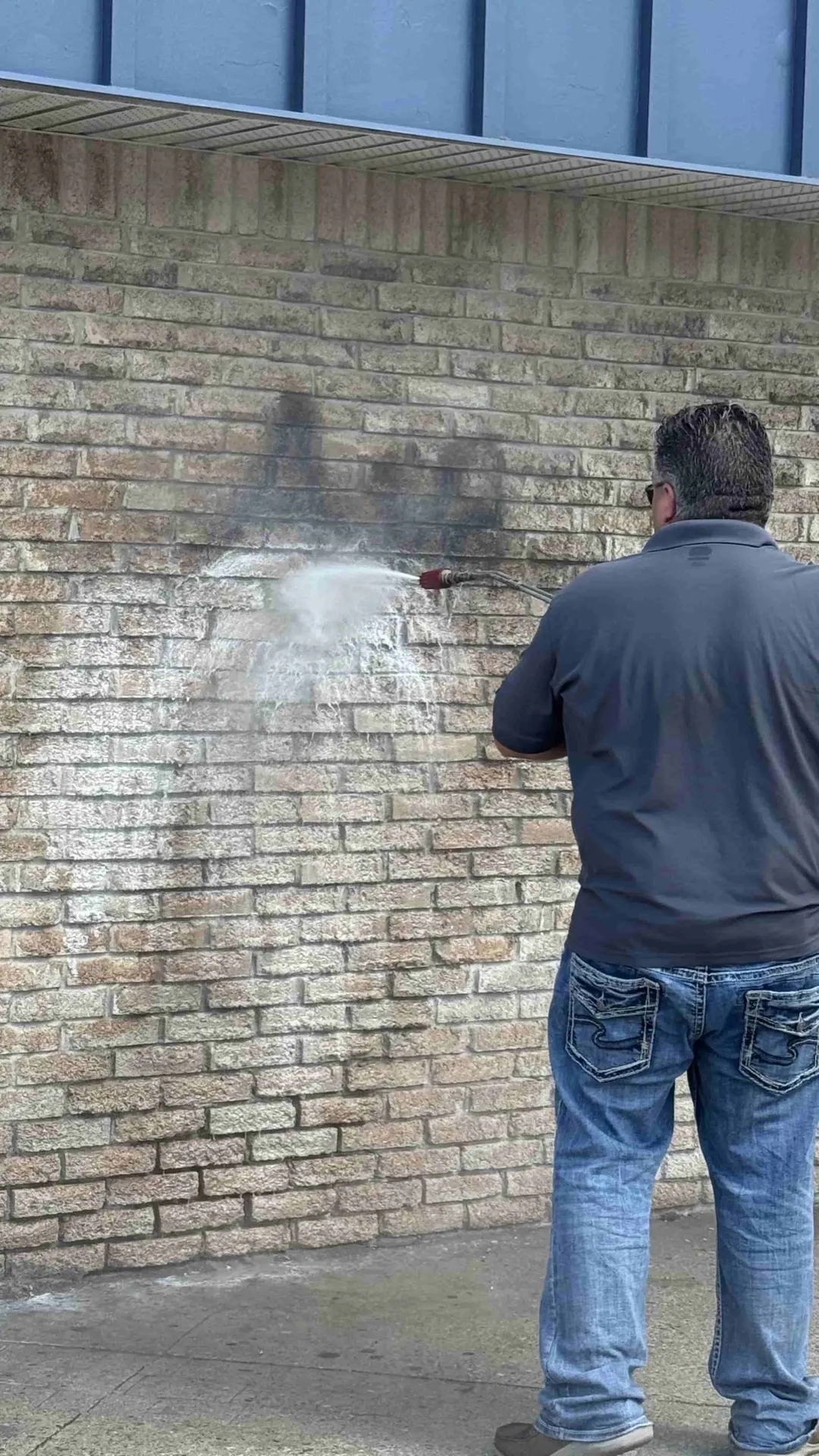
Blasting moss and algae off a patio looks like progress, and it can be the start of faster regrowth. Here is how a jet backfires, what works better, and how to change the conditions that grew the green in the first place.
In This Article
Five ways a jet backfires on a green patio
- It leaves the roots. Moss anchors itself with fine root-like threads in pores and joints. The jet tears off the top growth, and the anchors stay and regrow.
- It roughens the surface. A scoured paver or slab has more tiny hollows that trap water and give spores something to hold. Rough surfaces regrow faster than smooth ones.
- It empties the joints. Sand blasted out of interlock leaves open gaps where seeds, moss and moisture collect, and the units loosen.
- It spreads fragments. Bits and spores land on clean patches, on the lawn and on neighbouring surfaces.
- It leaves everything wet. In shade, a patio that stays damp all afternoon restarts the growth cycle almost at once.
Algae adds a safety problem. A thin green film is slippery when wet, so a patio that was skated on before the wash can be just as slick a few weeks later.
What works better: treat, wait, brush, rinse
- Pick the day. Choose dry weather, with no rain forecast for at least the period the label names, so the treatment is not washed off before it works. Sweep off leaves and loose debris.
- Apply a moss and algae treatment made for patios, exactly as the label directs. Dilute where it says to, keep it off plants and out of drains, and wear gloves and eye protection.
- Wait. Moss usually browns and loosens over days, not minutes, and the label gives the timing. Algae films often fade faster.
- Brush the dead growth loose with a stiff broom or brush.
- Rinse with a gentle, wide spray, or a low-pressure setting, holding the nozzle back and working along the joints.
- Repeat in spots that stayed green, rather than blasting the whole patio.
A caution on products: some iron-based moss killers leave rust-coloured stains on paving and stone. Test on a hidden corner and rinse well.
Driveway or patio seen better days?
We pressure wash driveways, patios, decks and walkways across Kitchener, Waterloo, Cambridge & Guelph. Free, no-obligation quotes, ready within 1 business day.
Rebuild the joints, then leave the surface alone
Once the patio is dry, refill the joints with jointing sand suited to your paving, sweep it in, and compact it if the product calls for it. Reset any units that rock, since a low, tilted paver holds a puddle, and a puddle grows algae. If the surface has already been scoured, stop washing it and put your effort into drainage and light. More scrubbing will not restore what has gone.
For a maintenance rhythm that keeps interlock in shape, see how to clean and maintain your interlock. If weeds have moved into the joints too, weeds growing through interlock cracks covers that side.
Fix the conditions that grew it
Southern Ontario helps moss along. Humid summers and cool, wet spring and fall weather keep shaded paving damp for long stretches, and that is exactly what moss and algae want.
- Light and air. Trim branches and shrubs so sun and breeze reach the patio. Moss struggles on a surface that dries quickly.
- Leaf litter. Wet maple and oak leaves feed growth and stain paving. Sweep them off through late October and November.
- Water sources. Look for a downspout that spills onto the patio, a sprinkler that soaks it, or a slope that sends puddles to one corner.
- Hard water spots. Sprinklers in Waterloo Region and Guelph leave mineral crusts on paving, and rough crusts hold moisture too.
A sealer can make future cleaning easier, but it is not a cure. A sealed surface that stays wet in deep shade can still grow algae.
When to hand it over
A large, shaded patio, delicate stone or paving that is already loose is worth a second opinion, and a gentler method may suit it better than a jet. D&D Home Services lists pressure washing and soft washing from $350 each for typical Kitchener-Waterloo homes, with a free quote in writing before work begins. Ask whichever contractor you choose how they treat moss and what happens to the joint sand.
Key Takeaways
- A jet strips moss tops but leaves roots, roughens the surface, empties joints and spreads fragments, so regrowth can come back faster.
- Treat with a patio product to the label, wait, brush loose, then rinse gently and repeat only on stubborn spots.
- Refill and compact joint sand, reset rocking units and fix drainage so puddles do not feed algae.
- Improve light, clear leaves and redirect downspouts and sprinklers, because damp shade is what grows moss.

Request a home-service quote
Select the service you need and describe the work area and access.