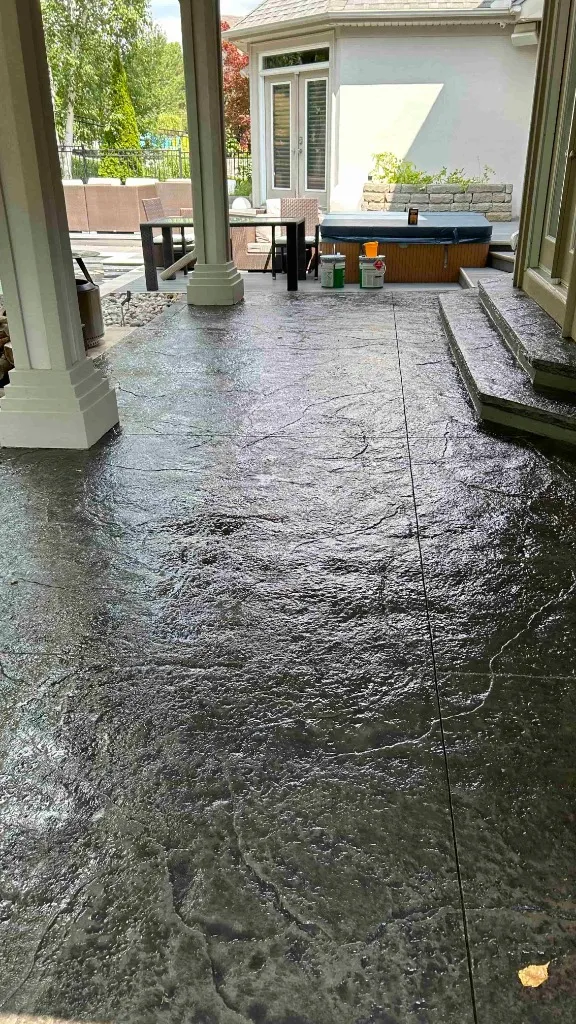
Interlocking stone patios, driveways, and walkways are beautiful when maintained and become a source of frustration when neglected. Weeds in joints, stained stone, joint sand washout, and efflorescence are all common problems, and all preventable with the right maintenance approach. Here's the complete care guide for Ontario homeowners.
In This Article
Types of Interlocking Stone
Understanding your specific product matters because different stones have different care requirements:
- Concrete pavers: The most common type, poured concrete formed into paver shapes. Generally dense and relatively resistant to staining if sealed. The most affordable option.
- Natural stone (granite, limestone, flagstone): More permeable than concrete; more prone to staining; requires pH-neutral cleaners. Generally more expensive.
- Permeable/eco pavers: Designed to allow water infiltration, special care considerations for joint material and sealing

Annual Cleaning Process
Interlock should be cleaned once per year, spring is the ideal time. The full cleaning process:
- Weed removal: Remove all weeds from joints before cleaning, a long-handled weeding tool or putty knife works well
- Pressure washing: Use a 15-degree fan nozzle at 1,200–1,500 PSI to clean the stone surface, lower pressure than concrete, higher than siding
- Wash angle matters: Direct spray along the joint lines (not across them) to avoid dislodging remaining joint sand
- Efflorescence treatment: Apply a diluted efflorescence cleaner (muriatic acid solution or commercial product) to white mineral deposits; scrub and rinse
- Allow to dry completely: Typically 24–48 hours in spring conditions
- Joint sand and sealing: Address after cleaning and drying (see sections below, or our interlock and paver sealing service)
Need a hand with your home's exterior?
From gutters and windows to full exterior washes, we help homeowners across Kitchener, Waterloo, Cambridge & Guelph. Free, no-obligation quotes, ready within 1 business day.
Polymeric Joint Sand: The Most Important Maintenance Item
The joint sand between your interlock pavers is critical, it prevents pavers from shifting and is the main barrier against weed germination. Regular sand washes out over time; polymeric sand contains a binding agent that hardens when wet and is highly resistant to washout and weed growth.
Signs your joint sand needs attention:
- Visible gaps between pavers
- Weed growth in joints (seeds germinating in the organic-rich old sand)
- Pavers beginning to shift or rock when walked on
Re-sanding process:
- Blow out all existing joint material with a leaf blower
- Sweep polymeric sand over the entire surface, working it into joints with a plate compactor or by tamping
- Blow off all excess sand from the paver surface, any remaining will cure and stain
- Lightly mist with water to activate the polymer binder
- Allow to cure for 24 hours before traffic
"Re-sanding with polymeric joint sand every 3–5 years is the single most cost-effective interlock maintenance service. It prevents the weed problem from ever starting."
- D&D Home Services
Sealing Interlock: Is It Necessary?
Sealing interlock is optional but provides significant benefits:
- Locks polymeric joint sand in place, extending its effectiveness
- Protects against staining, oil, rust, and organic stains are much harder to remove from unsealed stone
- Enhances colour (wet look sealers) or preserves natural colour (natural look sealers)
- Reduces efflorescence migration
Sealing is typically recommended every 3–5 years. Re-apply after re-sanding for best results, the sealer locks the fresh polymeric sand in place.
Stain Removal by Type
| Stain Type | Treatment | Notes |
|---|---|---|
| Oil/grease | Commercial degreaser + hot water; or cat litter to absorb fresh spill | Act immediately on fresh stains |
| Rust | Oxalic acid cleaner (Bar Keepers Friend or commercial product) | Don't use on limestone |
| Efflorescence (white deposits) | Diluted muriatic acid or commercial efflorescence remover | Test in inconspicuous area first |
| Organic (moss, algae, leaves) | Sodium hypochlorite solution (diluted bleach) | Rinse thoroughly; protect plants |
| Paint | Paint stripper appropriate to paint type; test first | Professional help often needed |
Weed Control in Interlock Joints
Weeds in interlock joints are an organic material problem, they're growing in the soil and decomposed organic matter that accumulates in joints over time. Effective control strategies:
- Polymeric joint sand (best long-term solution)
- Boiling water poured directly into joints, kills weeds and seeds without chemicals
- Horticultural vinegar (20% acetic acid) sprayed into joints, more effective than household vinegar
- Regular removal before seeds set, prevents the organic matter accumulation that enables growth
- Avoid herbicides containing salt (a common DIY recommendation), salt leaches into surrounding soil and kills nearby plants and lawn
Winter Care for Interlock
Winter Interlock Do's and Don'ts
- ✓ Use calcium magnesium acetate (CMA) de-icer, much safer for interlock than chloride salts
- ✓ Use plastic snow shovels, metal edges can chip and scratch stone
- ✓ Clear snow before it compacts into ice
- ✗ Avoid rock salt, chlorides can cause scaling and discolouration
- ✗ Don't use metal shovels or snow blower steel augers directly on unsealed interlock
- ✗ Don't chip ice aggressively, use de-icer and let it work

Request a home-service quote
Select the service you need and describe the work area and access.