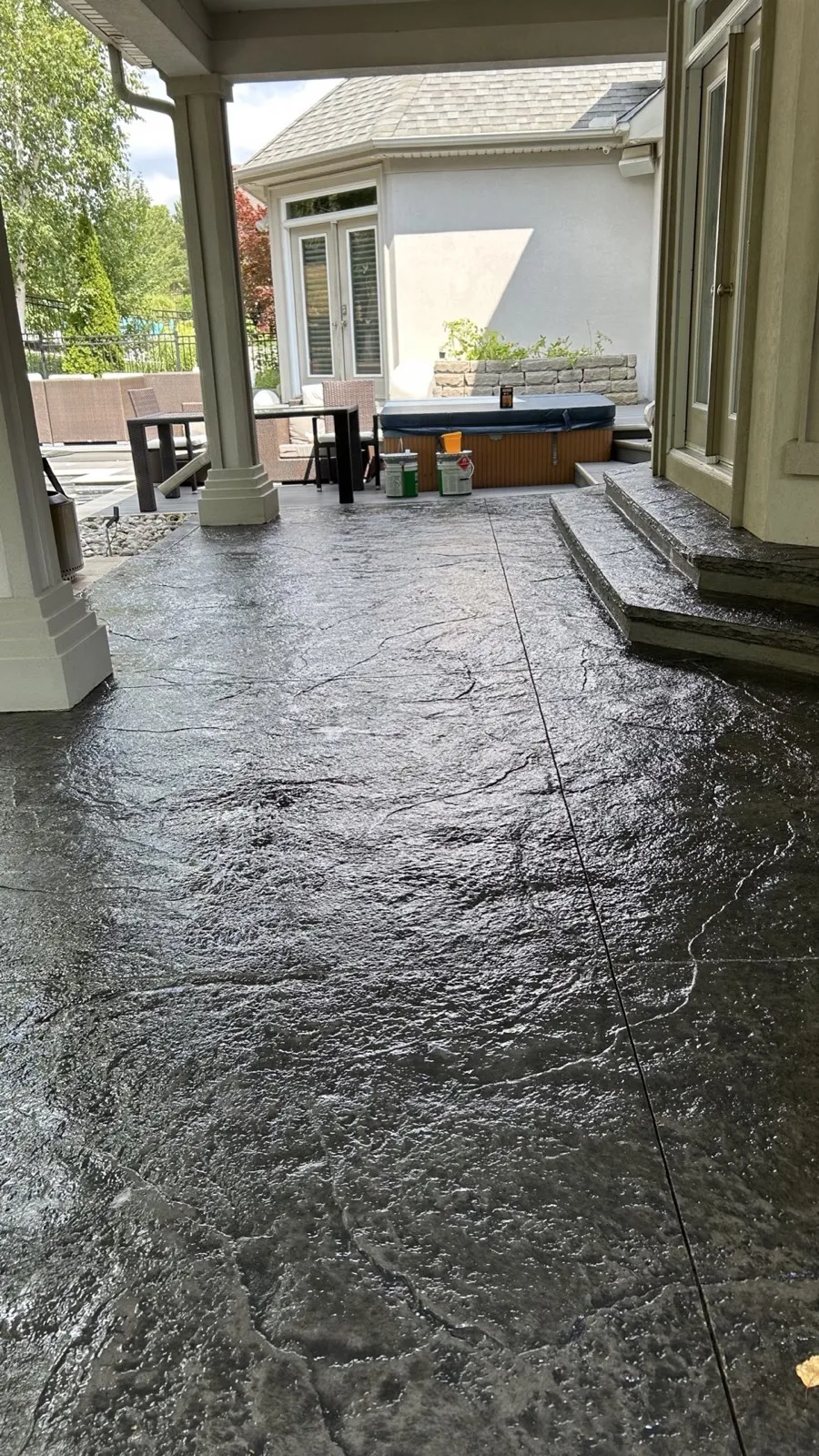
Sealing interlock is not asphalt sealing with a clear pail: the surface, the joints and the way moisture behaves are all different, and each difference is a place where a job can go wrong. Here are five asphalt habits that do not carry over, and the order of work that suits pavers.
In This Article
Asphalt starts with cracks, interlock starts with joints and levels
On asphalt, the first job is filling cracks. Interlock has none to fill, but two things play the same part: levels and joints. A paver that has sunk, tilted or rocks underfoot will still be sunk after sealing, only shinier. Joints that have washed empty stay empty, and a sealer over them can lock the gaps in.
Walk the surface first. Mark rocking or sunken pavers, chipped edges and empty joints, and get them reset or refilled before any coat goes on. A coat covers a surface. It does not repair one.
Dry means dry all the way down
Asphalt is sealed once the surface is dry. Interlock has to be dry deeper. The pavers are porous, and the sand in the joints holds water. A film-forming sealer over damp stone or damp sand can trap the moisture and turn milky as it cures.
Ontario makes this a real risk. Humid summer mornings, dew and a wet spell can leave the joints damp long after the top looks dry. Follow the label on dry time after cleaning, and expect the job to slip by a day when the weather wobbles. A rough check: tape a small piece of clear plastic to the surface for a few hours. Moisture beading underneath means it is not ready.
Want your exact driveway sealing price?
Skip the guesswork, we quote your actual driveway, itemized line by line, free and no-obligation. Serving Kitchener, Waterloo, Cambridge & Guelph, with quotes ready within 1 business day.
New pavers have their own waiting period
Fresh concrete pavers can develop a white haze, called efflorescence, as they weather. Seal too early and the coat can lock the haze in. The asphalt rule applies with a different clock: ask the installer and the paver's maker when the first seal is safe, and get the answer in writing. Note the date the pavers went in, since every later decision starts from it.
An existing white haze is another matter. It may need a cleaner made for it, used as its label directs, before any sealing.
A clear coat is still a choice of products
Asphalt sealcoat is one look. Interlock sealers are several, and the differences matter.
- Penetrating sealers soak in and leave little or no film. They keep a natural look, and there is less surface to wear or peel.
- Film-forming sealers sit on top. They can deepen the colour or add gloss, but wear shows in the wheel tracks, and some turn slippery when wet, so ask about a grip additive.
- Joint-stabilizing products firm the sand to resist washout and weeds. Some sealers combine the two jobs.
Whichever you pick, brush a test patch in a hidden corner and let it cure. The same product can look different on different pavers.
Judge the coat by water and joints, not by colour
On asphalt, a grey tone says the film is thin. On interlock, a dull look can be plain dirt, so wash first and look again. Then ask three questions. Does water bead or soak in? Are stains lifting off or sinking in? Are the joints firm or loosening?
If the film is sound, another coat only builds a thicker layer that can cloud or flake. Renew the coat when its protection is gone, not when the paving looks tired.
Ontario's winters give you a yearly test. Salt and meltwater flush sand out of the joints, and a blade can catch a raised corner. Each spring, look for gaps, top them up and note where wear shows. The interlock cleaning and maintenance guide suggests a routine.
The order of work that suits interlock
- Inspect levels, edges and joints, and mark the problems.
- Reset or replace pavers that have sunk, rock or cracked.
- Clean at a pressure that keeps the joint sand in place. The guide to cleaning interlock paving covers safe methods.
- Let everything dry through, as the label directs.
- Refill and compact the joints with a sand your installer or the sealer's maker approves.
- Test a hidden patch, then apply thin coats.
- Keep off it for as long as the label says.
When you ask D&D Home Services about interlock and paver sealing, describe any sunken stones, moss, stains or empty joints. The quote is free, and the price is settled in writing before the job starts.
Key Takeaways
- On interlock, levels and joints play the part that cracks play on asphalt, and a coat over sunken pavers or empty joints only locks the problem in.
- Pavers and joint sand must be dry through before a film-forming sealer goes on, or moisture can turn the coat milky.
- New pavers can show a white haze as they weather, so wait for the installer's and paver maker's advice on the first seal.
- Choose between penetrating, film-forming and joint-stabilizing products, test a hidden patch and judge wear by water beading and firm joints, not colour.

Request a home-service quote
Select the service you need and describe the work area and access.