Your driveway isn't going to send you a calendar reminder when it needs resealing. But it will give you clear physical signals if you know what to look for. Catching these signs early, before winter arrives, can save you from expensive structural repairs down the road. Here are the five indicators that mean it's time to act.
In This Article
Sign #1: Water Is Soaking Into the Surface
This is the definitive test for sealer condition, and it takes about 30 seconds to perform. On a dry day, pour a cup of water onto several different areas of your driveway, the apron near the street (high traffic), the centre, and near the garage (often protected). Watch what happens.
Good Sealer: Water Beads Up
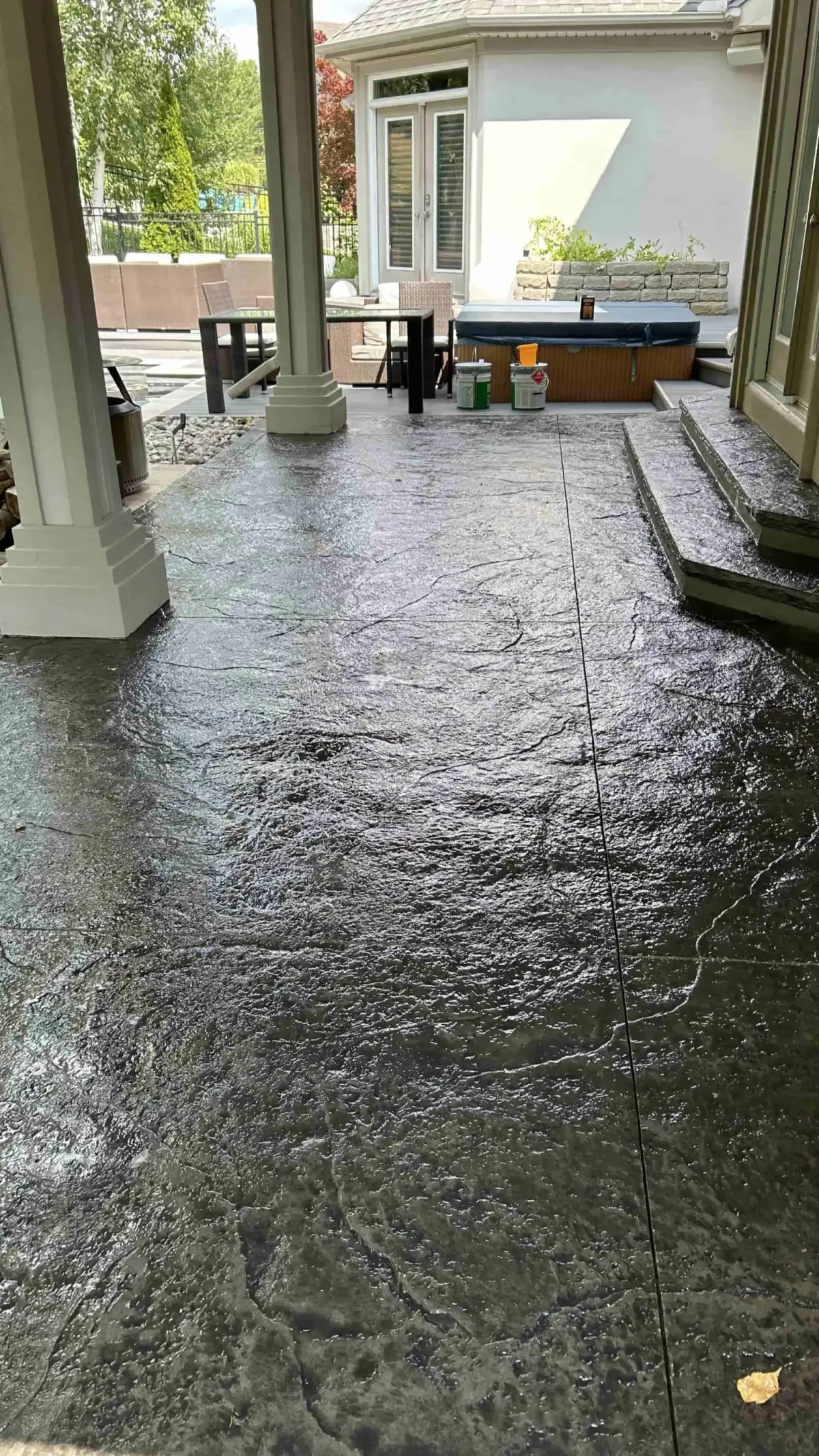
A driveway with functional sealer will cause water to bead and pool on the surface, much like water on a freshly waxed car. The water sits on top of the sealer film rather than being absorbed. This is the protective hydrophobic action you paid for, the sealer is doing its job.
Failed Sealer: Water Absorbs Immediately
If the water you pour darkens the surface and soaks in within a few seconds, the sealer is exhausted. The surface is now porous and unprotected. Every rain event is now directly attacking the asphalt or concrete below. In Ontario's climate, this means every freeze-thaw cycle is now working directly against your driveway's structural integrity.
Pro Tip: Test multiple areas of the driveway, not just one spot. Often the high-traffic areas (wheel tracks, apron) fail sealer first while the centre is still protected. A driveway can be partially protected and partially exposed, test all zones before concluding that the full driveway needs resealing.
Sign #2: Your Driveway Has Turned Grey
Healthy, sealed asphalt should be a consistent dark charcoal or black colour. That dark colour isn't just cosmetic, it indicates the presence of the protective oils and carbon compounds in the sealer that shield the asphalt binder from UV radiation. When these compounds break down under UV exposure and traffic wear, the driveway's colour shifts from black to dark grey, then medium grey.
This colour change is a direct indicator of sealer depletion. The same process that causes fading also removes the UV protection that prevents the asphalt binder, the petroleum-based glue that holds asphalt aggregate together, from oxidizing and becoming brittle. A grey driveway isn't just aesthetically tired; it's structurally vulnerable.
If you look at your driveway on a dry day and it looks uniformly grey rather than dark, that's a clear message: the sealer is gone and the driveway needs attention before next winter.
How to Read Colour Patterns
Often, colour degradation follows a pattern: wheel tracks go grey first (mechanical abrasion), then the apron near the street (highest sun exposure and traffic), and the centre of the driveway last (least traffic, often more shaded). These patterns can tell you which areas were sealed most recently and which areas are most urgently in need of attention.
Want your exact driveway sealing price?
Skip the guesswork, we quote your actual driveway, itemized line by line, free and no-obligation. Serving Kitchener, Waterloo, Cambridge & Guelph, with quotes ready within 1 business day.
Sign #3: New Cracks Are Appearing
Hairline cracks in asphalt are a normal result of temperature cycling, asphalt expands in summer heat and contracts in winter cold. Well-sealed asphalt that's in good structural health handles this expansion and contraction cycle without progressing from hairline cracks to anything wider. But unprotected asphalt is a different story.
When sealer has failed, rain water enters those hairline cracks and reaches the sub-base below. When it freezes, it expands and forces the crack wider. When it thaws, more water enters. Over a single Ontario winter, a hairline crack can become a 6mm crack. Within two winters, you may be looking at significant structural damage that requires crack filling and patching, or worse, a larger asphalt failure.
The Scale of Crack Urgency
- Hairline cracks (under 3mm): Normal aging; fill and seal soon but not emergency.
- Medium cracks (3–12mm): Needs crack filler + resealing before next winter. These are the cracks most homeowners put off too long.
- Wide cracks (12mm+): Requires cold-pour filler with backer rod, or professional patching. May indicate sub-base issues.
- Alligator cracking (interconnected network): This is base failure, resealing alone won't fix it. Professional assessment needed.
New cracks appearing on a driveway that was recently sealed suggest either that the sealing was poorly done or that the driveway has structural issues that need professional attention. On an older driveway with faded sealer, new cracks are expected and signal the need for immediate attention.
Sign #4: Aggregate Is Coming Loose on the Surface
Look closely at your driveway surface in good light. Healthy sealed asphalt has a consistent, somewhat glassy texture where the aggregate (small stones) are locked in place and coated with the asphalt binder. When the sealer fails and UV breaks down the asphalt binder, the bond between binder and aggregate weakens.
The first sign of this is a slightly rough, open texture, you can see small pebbles becoming more prominent on the surface as the binder shrinks. The next stage is raveling: small aggregate pieces actually coming loose from the surface. You might notice a gritty, gravelly layer on your driveway that wasn't there before, or small stones that you can kick loose.
This is a warning sign that shouldn't be ignored. Once aggregate begins loosening, the surface degrades rapidly. More pores open up, more water infiltrates, and the raveling accelerates. Resealing at this point, after thorough cleaning and crack repair, can halt the degradation, but waiting another season may mean sections of the driveway need to be patched or replaced.
"Surface raveling is one of the clearest signs that a homeowner has waited too long. The good news is that if you catch it before it becomes widespread, resealing with thorough prep can stabilize the surface. Wait until the following spring and you may be looking at patches instead."
- Devon, D&D Home Services Founder
Sign #5: Old Sealer Is Visibly Flaking or Peeling
This sign is more specific to driveways that were sealed with a film-forming product or one that was applied incorrectly. If you can see raised edges, bubbles, or sheets of old sealer peeling up from the driveway surface, the previous application has failed.
Peeling sealer is not something you can simply seal over. Applying new sealer over a peeling surface creates the same problem in the new layer, it bonds to the old failing sealer rather than to the asphalt, and will peel along with it. Before resealing a driveway with peeling sealer, the failing material must either be removed (physically scraped or pressure washed off) or fully worn away naturally.
If you're seeing large-scale peeling, this is a signal to call a professional rather than attempt DIY. Assessing whether the old sealer can be sealed over, needs to be stripped, or whether there are underlying structural issues requires experience.
When to Inspect: A Spring Routine
The best time to inspect your driveway is in April or May, after the snow has melted and the surface has dried out from winter runoff. This timing gives you a clear view of any damage that occurred over winter and enough warm weather ahead to schedule sealing work before summer backlog builds up.
Your annual spring inspection should take 5 minutes:
- Look at the overall colour from the street, has it shifted from dark to grey?
- Walk the surface and look for new cracks or widening of existing ones
- Check the apron and wheel tracks (highest-wear areas) for aggregate loosening
- Look for any peeling or bubbling of existing sealer
- Perform the water bead test
If two or more of these checks suggest issues, schedule a professional assessment. Many sealing contractors offer free on-site evaluations and can tell you whether you need full resealing, crack repair, or are fine for another season.
Acting Before Damage Deepens: The Cost Equation
The financial argument for timely resealing is compelling. Driveway sealing for an average two-car driveway in Kitchener-Waterloo runs $200–$500. Professional crack filling adds $100–$300 depending on the extent of cracking. Driveway patching for localized damage runs $300–$800. Full driveway replacement in Ontario currently costs $3,000–$12,000 depending on size and material.
The progression from "needs resealing" to "needs replacement" is not a years-long process in Ontario's climate. A driveway that's showing signs of sealer failure going into October without being addressed can experience significant structural degradation in a single winter with multiple freeze-thaw cycles. The window between "time to reseal" and "time to replace sections" is often one or two seasons.
Key Takeaways
- ✓ Sign #1, Water soaks in: Perform the water bead test, soaking means sealer is gone and resealing is needed.
- ✓ Sign #2, Grey colour: Fading from black to grey signals UV protection is exhausted; reseal before winter.
- ✓ Sign #3, New cracks: New cracks mean water is reaching the sub-base; seal hairline cracks before they widen.
- ✓ Sign #4, Loose aggregate: Surface raveling means sealer and binder have failed; immediate action prevents rapid deterioration.
- ✓ Sign #5, Peeling sealer: Cannot seal over peeling coats; failing sealer must be addressed before reapplication.
- ✓ Inspect every April: A 5-minute spring walkthrough can catch problems early and avoid expensive repairs.
Don't wait until the damage is obvious. If your driveway is showing any of these signs, contact D&D Home Services for a free assessment. Our professional driveway sealing service covers Kitchener, Waterloo, Cambridge, and Guelph.

Request a home-service quote
Select the service you need and describe the work area and access.