🎉Spring Special: 15% off all window cleaning services!
Kitchener • Waterloo • Cambridge • Guelph & Surrounding Areas
(519) 502-3905Mon–Sat 7AM–7PM
Driveway Sealing

How Long Does Driveway Sealing Last? What Ontario Homeowners Can Expect

February 25, 2026 7 min read Driveway Sealing

Ontario homeowners invest in driveway sealing to protect their asphalt from our brutal winters — but how long does that protection actually last? The honest answer depends on several factors, and understanding them will help you time your resealing correctly and avoid costly repairs.

Typical Lifespan of Driveway Sealer

Not all sealers are created equal, and neither are application methods. Here's what you can realistically expect:

Application Type Typical Lifespan Notes
DIY (box store sealer) 2–4 years Consumer-grade, water-based formulas
Professional (commercial-grade) 4–7 years Higher solids content, proper prep
Improper application (any type) 1–2 years Wrong weather, no prep, too thick

The single biggest predictor of longevity isn't the sealer itself — it's surface preparation. A premium sealer applied over a dirty or oily surface will fail in its first year. A mid-grade commercial sealer applied over a properly cleaned, cracked-filled, and dried surface can last the full 7 years.

💡

Pro Tip: Commercial-grade sealers used by professionals have a higher percentage of solids (the protective material left behind after the carrier evaporates). This is why professional applications last longer — not just because of the technique, but because of the product itself, which isn't available at consumer hardware stores.

Factors That Affect How Long Sealer Lasts

Several variables determine whether your sealing job lasts 2 years or 7. Understanding these helps you set realistic expectations and make smart decisions.

1. Traffic Volume

A driveway that sees two vehicles daily will hold sealer far longer than a multi-car household where vehicles are constantly turning and braking. The mechanical abrasion from tire contact — especially turning in the same spot — wears through sealer layers over time. High-traffic driveways in Kitchener-Waterloo often need resealing every 2–3 years regardless of application quality.

2. Sealer Quality and Solid Content

Consumer-grade sealers purchased from hardware stores typically contain 15–25% solids. Professional-grade formulas used by contractors like D&D Home Services often run 30–40% solids. More solids means more actual protective material left on your surface after curing.

3. Surface Preparation Before Application

This is the single most critical factor. Cracks must be filled, the surface must be free of oil stains, dirt, and vegetation, and it must be thoroughly dried. A well-prepped surface allows the sealer to bond properly at a molecular level. Skip this step and you're essentially painting over rust.

4. Application Method

Squeegee application (the professional standard) pushes sealer into the pores of the asphalt for better bonding. Spray application is faster but creates a surface film that is more susceptible to peeling. The number of coats matters too — a single thick coat actually performs worse than two thin coats properly applied.

5. Sun Exposure

UV radiation breaks down sealers over time, just like it degrades paint and rubber. South-facing driveways in full sun will see faster UV breakdown than those shaded by trees or north-facing exposures. This is especially noticeable with coal tar emulsion sealers, which fade from deep black to grey as UV takes its toll.

How Ontario Winters Shorten Sealer Life

This is where Kitchener-Waterloo homeowners face challenges that homeowners in milder climates simply don't encounter. Ontario's freeze-thaw cycle is one of the most aggressive forces acting on your driveway sealer.

Here's what happens: Water infiltrates any microscopic cracks or pores in the sealer. When temperatures drop below freezing, that water expands by roughly 9% as it turns to ice. This expansion exerts enormous outward pressure — up to 57,000 pounds per square inch under the right conditions. When temperatures rise again, the ice contracts. Then it freezes again. And again.

In a typical Kitchener-Waterloo winter, your driveway may experience 30–80 freeze-thaw cycles. Each one works like a tiny wedge, progressively breaking apart the bond between sealer and asphalt. This is why sealed driveways in Southern Ontario consistently need more frequent reapplication than the same driveway would in, say, Vancouver or Toronto's milder urban core.

"Ontario's climate is genuinely one of the harshest environments for asphalt sealers in Canada. The combination of freeze-thaw cycles, road salt, and summer UV creates a relentless attack from every angle. Good prep and quality product are the only real defenses."

— David, D&D Home Services Co-Founder

Road salt compounds this damage significantly. Sodium chloride and calcium chloride used for ice control penetrate asphalt and chemically attack both the asphalt binder and the sealer film. If you regularly use de-icing salts on your driveway, expect the lower end of that lifespan range regardless of application quality.

Signs Your Sealer Is Wearing Off

Rather than relying on a fixed calendar schedule, learn to read the physical signs that your driveway is ready for resealing. Your driveway will tell you what it needs — if you know what to look for.

The Water Bead Test

This is the simplest and most reliable test. On a dry day, pour a cup of water onto various areas of your driveway. If the water beads up and rolls off like it would on a freshly waxed car, your sealer is still functional. If the water soaks in and darkens the surface immediately, the sealer is spent and your asphalt is absorbing moisture.

Colour Change

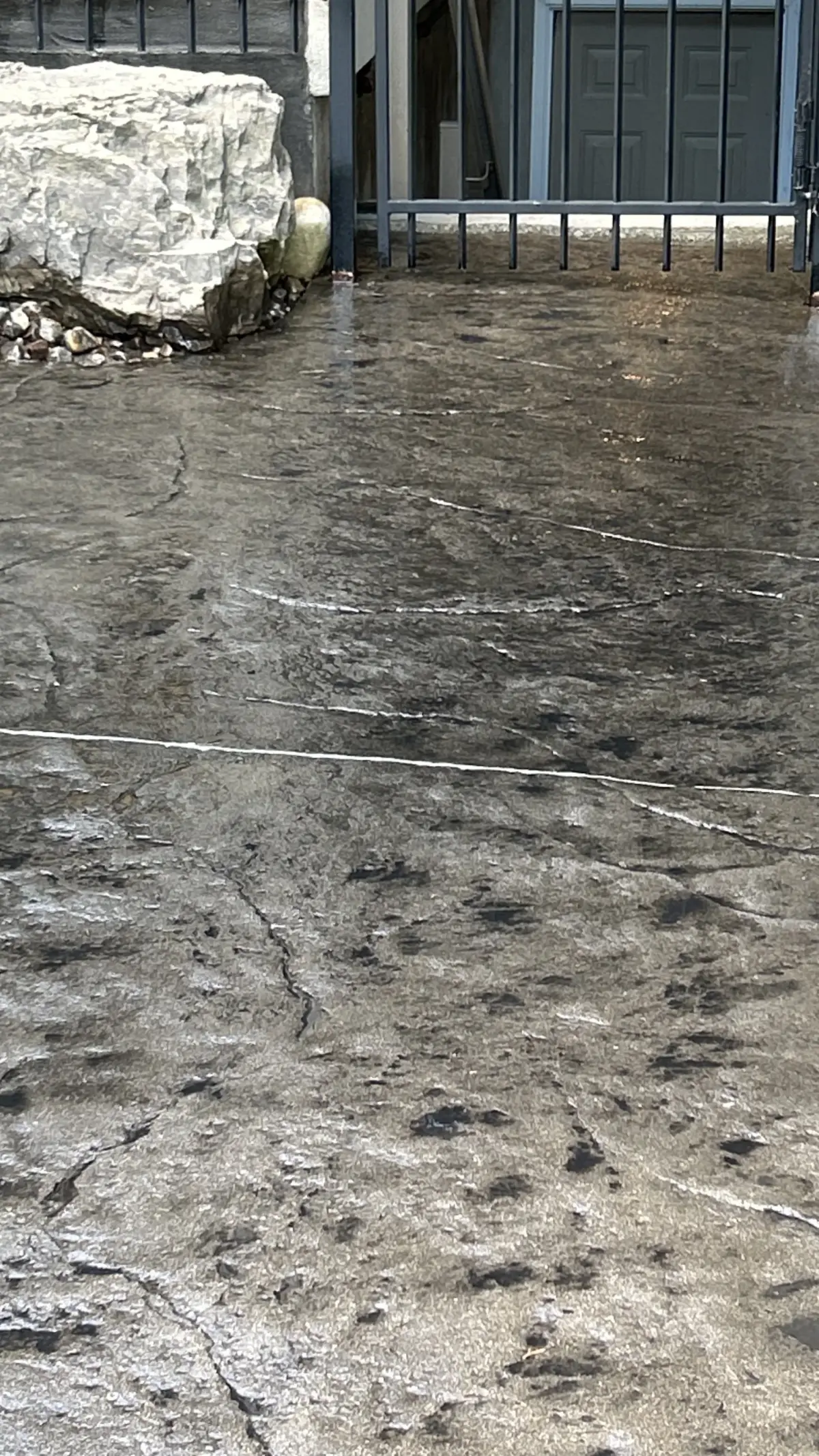
Fresh sealer is deep, rich black. As it ages and UV breaks it down, it transitions to dark grey, then medium grey. A grey driveway isn't just cosmetically tired — the grey colour signals that the protective oils and compounds have broken down and the asphalt is now exposed. Once you see grey patches appearing, it's time to plan for resealing before next winter.

Loss of Surface Texture

Healthy sealed asphalt has a consistent, slightly granular texture. Worn sealer often becomes slick or develops a patchy, flaky appearance where older layers are separating. Run your hand across the surface — if it feels chalky or you see black residue on your palm, the sealer is breaking down.

New Hairline Cracks Appearing

The sealer acts as a barrier that prevents water from penetrating to the sub-base. Once it fails, you'll start to see new hairline cracks forming — the direct result of water infiltration and freeze-thaw damage to the unprotected surface. Don't ignore these early cracks; they grow quickly once water gets inside.

How to Extend the Life of Your Driveway Sealer

You can't control Ontario winters, but you can take steps to maximize how long your sealing investment lasts.

💡

Pro Tip: Never apply a new coat of sealer over a coat that is peeling or flaking. The new sealer will peel right along with the old one. Failing sealer must be stripped or allowed to fully wear away before reapplication — or you're just adding another layer that's bound to fail.

Recommended Resealing Schedule for Kitchener-Waterloo

Given Ontario's climate and typical traffic patterns, here's a practical resealing schedule for local homeowners:

Scenario Recommended Interval
New asphalt driveway Wait 1 year before first seal
Professional application, low traffic Reseal every 5–7 years
Professional application, high traffic Reseal every 3–4 years
DIY application Reseal every 2–3 years
Any driveway showing grey colour or failed water bead test Reseal before next winter

The key insight here is that resealing on a fixed annual schedule (as some contractors recommend) is often unnecessary and can actually be harmful. Applying sealer over a sealer that's still in good condition creates buildup that eventually flakes and peels. Let the physical indicators guide your timing, not the calendar alone.

That said, don't push past the point where damage is occurring. A driveway that has gone several years without sealing and now shows deep cracks, surface raveling, or significant grey patches is developing structural damage that sealing alone won't reverse. At that point, crack filling, patching, or even full replacement becomes necessary — at costs that dwarf the price of timely sealing.

Key Takeaways

  • DIY sealer lasts 2–4 years; professional commercial-grade sealer lasts 4–7 years in Ontario conditions.
  • Surface preparation matters more than sealer brand — a properly prepped surface is the foundation of longevity.
  • Ontario's freeze-thaw cycles are uniquely harsh; expect shorter sealer life than what's advertised on consumer product labels.
  • Use the water bead test to determine if resealing is needed rather than resealing on a fixed annual schedule.
  • Avoid de-icing salts on sealed asphalt to maximize the lifespan of your sealer.
  • Act before damage deepens: grey colour and failing water bead test mean it's time to reseal before cracks worsen.

If your Kitchener-Waterloo driveway is showing the signs above, don't wait until spring cracks turn into expensive structural damage. D&D Home Services offers professional driveway sealing using commercial-grade products with thorough surface preparation included. Contact us for a free quote — we serve Kitchener, Waterloo, Cambridge, and Guelph.

D&D Home Services
D&D Home Services TeamExterior Cleaning Experts

D&D Home Services is Kitchener-Waterloo's trusted exterior cleaning company serving Kitchener, Waterloo, Cambridge, and Guelph.

Ready to Transform Your Home's Exterior?

Get your free, no-obligation quote today. Serving Kitchener, Waterloo, Cambridge & Guelph.

Text for a Free QuoteCall Now