Sandblasting sounds like the heavy artillery for stubborn driveway stains. Sometimes it is. More often it is overkill that damages the slab. This post compares the two by how they work, what they leave behind and what they demand, then finishes with a choose-if list.
In This Article
How each one removes a stain
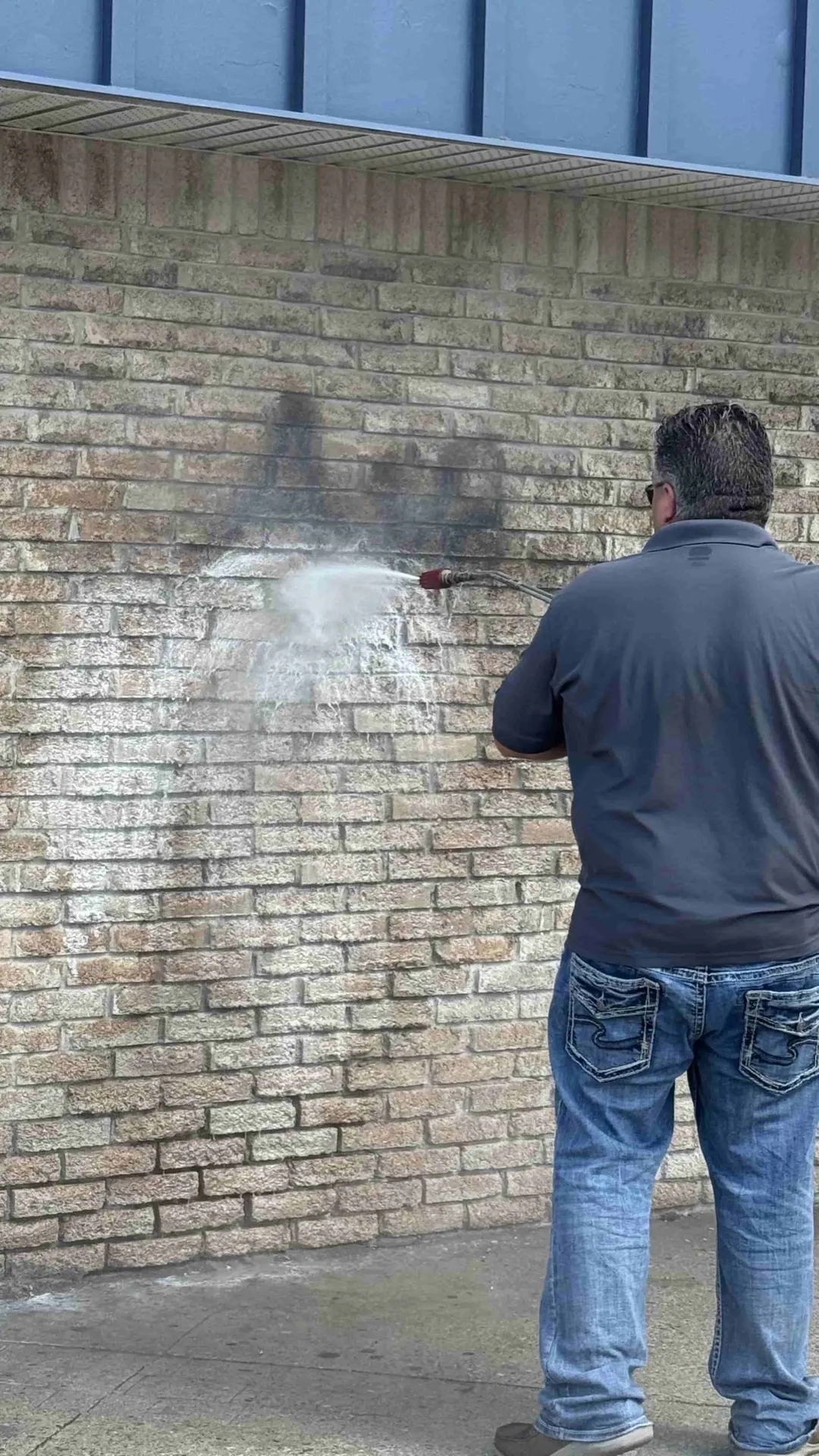
Pressure washing lifts material with moving water, often helped by a detergent or hot water. It works on what sits on the surface or has not gone deep. Sandblasting, more properly abrasive blasting, fires a hard medium such as sand, glass bead or crushed glass at the surface with compressed air. It does not lift the stain. It grinds away the thin layer of slab that holds it.
| Pressure washing | Abrasive blasting | |
|---|---|---|
| What removes the stain | Water force, detergent, sometimes heat | Abrasive medium wearing the surface away |
| Surface afterwards | Unchanged if done well | Thinner, rougher and more open |
| Best for | Dirt, algae, salt film, light and fresh stains | Rust, thick coatings, paint and deep marks |
| Dust and mess | Wet slurry and spray | Fine dust and spent medium that travel |
| Runoff | Wash water to manage | Media, dust and debris to capture |
| Skill and gear | Moderate | Specialist equipment and protective gear |
What blasting does to a slab
A blasted slab looks lighter and more even, but the change is physical, and it cannot be reversed. The smooth surface layer is worn thin, aggregate can show through, and the texture turns rough and matte. Stamped or coloured concrete loses its pattern or its colour along with the stain.
The open, rougher surface is also more porous, so it soaks up the next oil drip faster than before. A blasted driveway generally needs a sealer to protect it. On interlock the blasting cuts the joints and roughens the pavers, and on asphalt it is simply the wrong tool.
Gentler variants exist. Wet blasting mixes water into the stream to cut the dust, and soda blasting uses baking soda to lift paint or grime from softer surfaces with less wear. They reduce the damage without removing it, and both still need containment and a crew that knows the equipment.
Driveway or patio seen better days?
We pressure wash driveways, patios, decks and walkways across Kitchener, Waterloo, Cambridge & Guelph. Free, no-obligation quotes, ready within 1 business day.
Health, mess and the neighbours
This is the part people underestimate. Blasting with silica sand throws respirable crystalline silica dust, a recognized serious lung hazard, and even other media make a cloud that reaches cars, windows and gardens. Responsible crews use suitable media, containment, dust control and proper respirators. It is not a weekend rental for a homeowner.
Cleanup matters too. Spent medium and stain residue must be swept or vacuumed and kept out of street storm drains, which in most Ontario towns lead to a creek or river. Check your municipality's current rules before hiring anyone for blasting.
The ladder to climb before you blast
- Identify the stain. Oil, rust, paint and tannin each need different treatment.
- Degrease or treat it with the product for that stain, and give it the label's dwell time.
- Draw it out with a poultice if the stain is old and deep.
- Rinse with pressure, hot water if available, using a wide tip or a surface cleaner.
- Cover it up if a shadow remains: a sealer, a coating or a resurfacing layer.
- Blast or grind last, and only with a specialist who can explain the finish you will end up with.
The steps for oil are written up in oil stains on your driveway, and why a driveway looks worse after washing shows what happens when pressure is pushed too hard.
Choose washing if, choose blasting if
Choose pressure washing if the slab is sound, the marks are dirt, algae, salt film or oil that has had some treatment, and you want the surface left as it is. It is the right first move for nearly every home driveway.
Choose abrasive blasting if you are removing rust, thick paint or a failed coating, the slab is plain concrete with enough thickness to lose some surface, and you accept the rougher finish and a sealer afterwards.
Abrasive blasting is a specialist trade and is not one of the services D&D lists. For a wash, D&D Home Services offers pressure washing from $350 for typical Kitchener-Waterloo homes, and the quote is free and in writing. If a stain survives, driveway sealing vs concrete coating compares the cover-up options.
Key Takeaways
- Pressure washing lifts stains with water; abrasive blasting wears away the slab surface that holds them.
- Blasting leaves concrete rougher, thinner and more porous, so it usually needs a sealer afterwards.
- Silica dust and spent media make blasting a job for equipped specialists, not a homeowner rental.
- Treat, poultice and pressure rinse first, and consider blasting only for rust, thick coatings or deep marks.

Request a home-service quote
Select the service you need and describe the work area and access.