Asphalt sealcoat and concrete coatings are not rivals for the same driveway, because each protects a different material in a different way. Here is what each does, how each copes with Ontario's freeze-thaw and road salt, and when to choose one, the other or neither.
In This Article
Two different jobs with one shopping word
Asphalt sealcoat is a thin, dark film that goes over asphalt. It slows the drying and greying of the binder that holds the stones together, and it helps the surface shed water. It is a sacrificial layer. Traffic and weather wear it away, and it gets renewed.
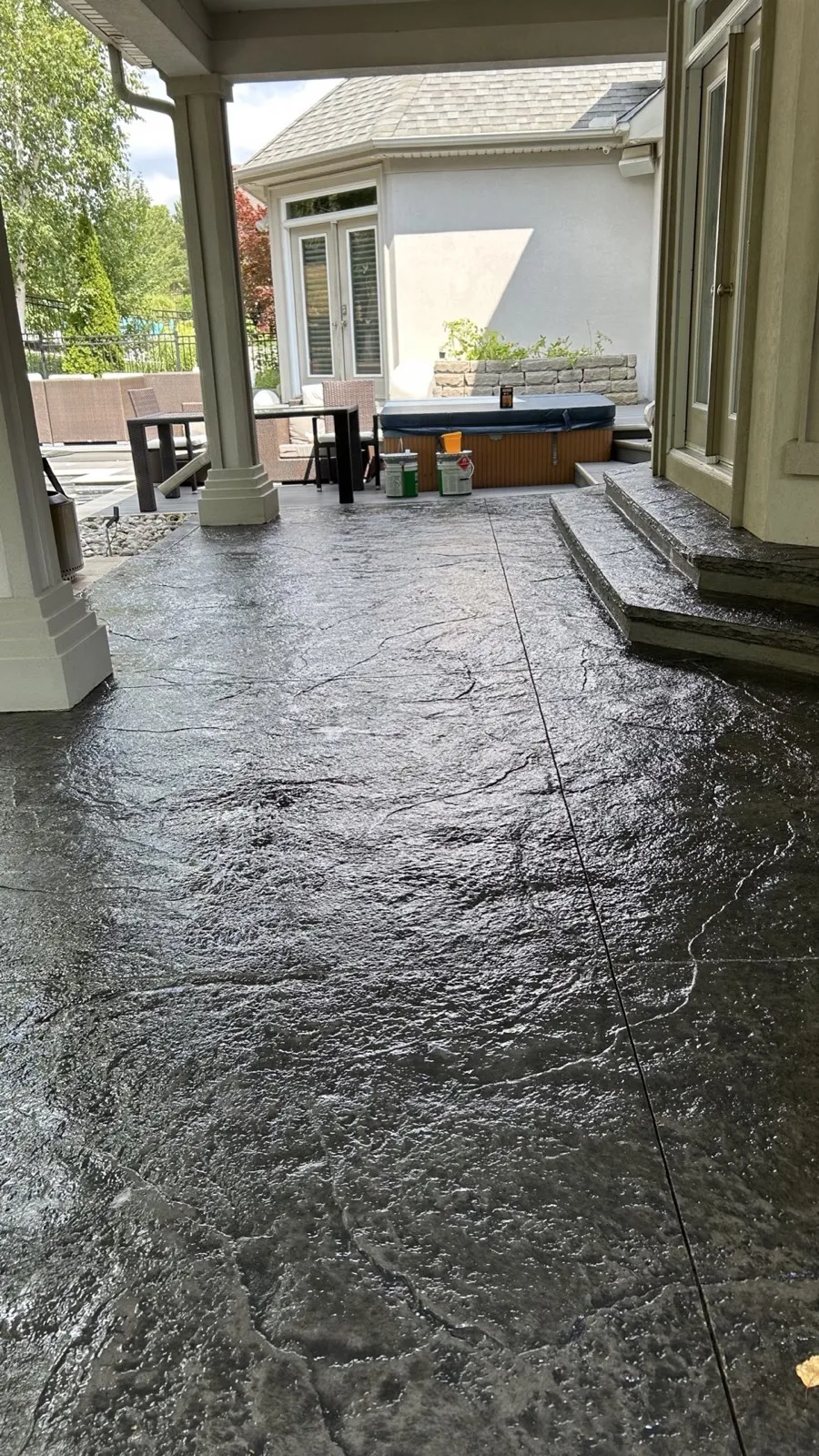
Concrete protection comes in two broad forms. A penetrating sealer soaks into the slab and lines the pores, so less water and salt get in. It leaves little or no visible film. A film-forming coating sits on top and can deepen the colour or add gloss, but it is a layer that can wear, peel or turn slick. Thicker systems such as epoxy or polymer overlays exist too, and they are more common on garage floors than on driveways.
Side by side
| Question | Asphalt sealcoat | Concrete sealer or coating |
|---|---|---|
| Main aim | Slow binder drying, shed water, refresh the colour | Cut the water and salt entering the pores, and sometimes enhance the colour |
| Look | Opaque black or charcoal | Nearly invisible to glossy, depending on the product |
| Ontario's main threat | Water in cracks, freeze-thaw, oxidation | Salt scaling and freeze-thaw of the top layer |
| What it cannot fix | Open cracks, a soft or sunken base | Structural cracks, heaved slabs, deep flaking |
| Preparation | Clean, fill cracks, treat oil, edge | Clean deeply, repair flaking, let the slab dry |
| New surface | Wait as the paving contractor advises | Wait as the concrete installer and the label advise |
| How it wears | Tire tracks, apron and turning area first | Film types can peel, and penetrating types fade from view |
| When to renew | When the film is thin and water soaks in | When water stops beading, or a film looks worn |
Want your exact driveway sealing price?
Skip the guesswork, we quote your actual driveway, itemized line by line, free and no-obligation. Serving Kitchener, Waterloo, Cambridge & Guelph, with quotes ready within 1 business day.
How each copes with an Ontario winter
Freeze-thaw cycles run from roughly November to April, and salt is everywhere. On asphalt, the damage mostly comes from water freezing in cracks, so the coat helps only if the cracks are filled first. The guide to crack filling before sealing explains the order.
On concrete, salt does direct harm. Salty water soaks into the top layer, freezes and pops off flakes, which is called scaling. A sealer reduces how much gets in, but it does not replace sound concrete, and a heavy hand with de-icer can beat any product. Young concrete is the most vulnerable. Ask the installer whether the mix was made for freeze-thaw and de-icing salt, and how long to wait before sealing.
Film-forming coatings can turn slippery when wet or icy, so ask about a grip additive, especially on a slope or steps. On either surface, a steel blade scrapes coatings away, so keep a plastic edge on your shovel.
So which protects better?
Better against what? Sealcoat is the maintenance that counts on a sound asphalt driveway. A penetrating sealer is the maintenance that counts on mature concrete. Neither protects the other's surface, and the chemistry does not swap, as asphalt versus concrete sealer explains.
If you are still choosing a driveway material, the upkeep is part of the decision. Read concrete versus asphalt driveways in Ontario before you pour or pave.
Choose sealcoat, a concrete sealer or neither if
Choose asphalt sealcoat if:
- The driveway is asphalt and structurally sound.
- Cracks can be filled and cured before the coat goes on.
- The surface has greyed and dried, but is not crumbling.
Choose a concrete sealer or coating if:
- The slab is mature and has cured fully.
- You want to cut salt and water intake, or you see the first light flaking.
- You will follow the label on temperature, dry time and re-application.
Choose neither yet if:
- Asphalt shows a web of alligator cracks or a spongy base.
- A slab is heaved, badly cracked or flaking deeply.
- The surface is new and the installer has not cleared it for its first coat.
Questions to settle before you book
Tell any contractor what the surface is made of, how old it is and when it was last treated. Ask which product they would use on that surface, what the label says about temperature and dry time, and what the plan is for cracks. If you ask D&D Home Services about asphalt driveway sealing, whose published starting price is $450 for typical Kitchener-Waterloo homes, or about concrete sealing, ask which surfaces the quote covers. Quotes are free, and nothing starts until the price is confirmed in writing.
Key Takeaways
- Asphalt sealcoat is a sacrificial film for asphalt, while concrete sealers and coatings cut salt and water entering concrete, so they suit different surfaces.
- On asphalt the damage comes mostly from water in cracks, and on concrete from salt scaling of the top layer.
- Neither product fixes structural trouble such as alligator cracking, a soft base, heaved slabs or deep flaking.
- New concrete and new asphalt should wait for the installer's advice before their first coat.

Request a home-service quote
Select the service you need and describe the work area and access.