Reviewed and updated October 6, 2026.
Asphalt and concrete driveways need products approved for different substrates. Start with the surface and any existing coating, then choose a compatible sealer and finish. A product labelled for one material should not be assumed suitable for the other.
In This Article
Asphalt versus concrete: what changes?
| Question | Asphalt driveway | Concrete driveway |
|---|---|---|
| What product should I look for? | A sealer explicitly approved for asphalt or blacktop. | A concrete treatment compatible with the slab and any old coating. |
| Will it change the appearance? | Many asphalt sealers leave a dark surface coating. | Appearance varies between penetrating and film-forming products; test the intended finish. |
| What must be checked first? | Surface condition, repairs, age and previous sealer. | Moisture, curing, surface preparation and coating compatibility. |
| Can it fix structural damage? | No. Settlement, potholes and major cracking need separate assessment. | No. Movement, scaling and structural cracks require their own assessment. |
Sealers for asphalt
Asphalt-emulsion products are one coal-tar-free option. Their application instructions specify the suitable surface, preparation, coverage, weather and traffic restrictions. A seal coat should not be described as universally replenishing the original pavement's binder oils; products sold as surface coatings and products sold as rejuvenators are not automatically equivalent.
As one example, the Henry HE175 technical sheet identifies the product as an asphalt-and-water emulsion for blacktop. It expressly excludes concrete and asphalt less than six months old. Check the current sheet for the product actually being used, rather than extending that rule to every formulation.
Penetrating and film-forming concrete treatments
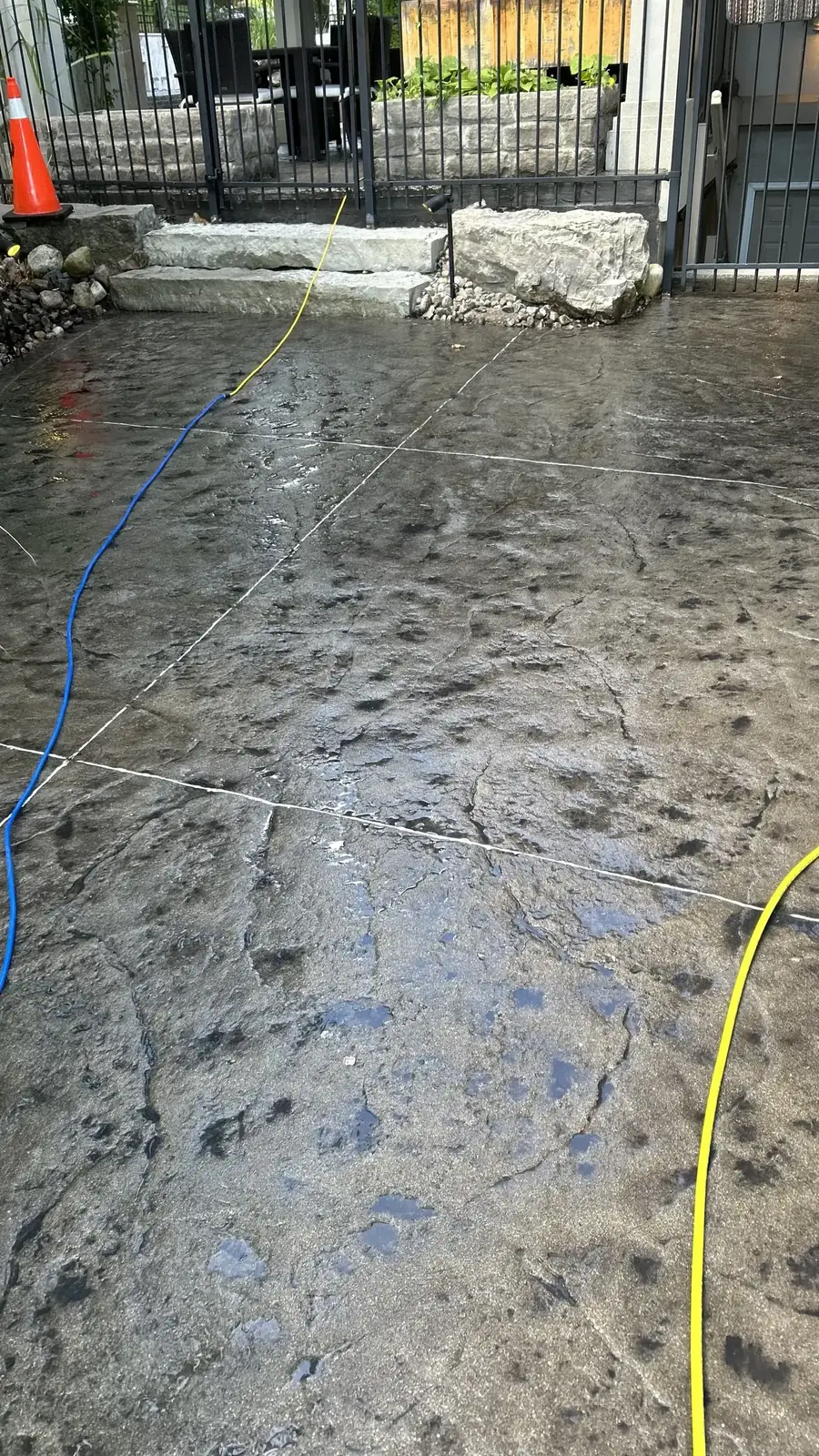
Concrete sealers are offered with different finishes and intended uses. Some penetrate the surface; others leave a film. Ask which product suits the existing concrete, whether the appearance will change, and whether an old coating needs removing first.
Do not choose by “wet look” or “natural look” alone. Check the stated substrate, preparation, exposure limits and maintenance instructions. Decorative concrete, plain concrete, concrete pavers and natural stone can have different requirements.
Check the old coating before applying a new one
Tell the contractor what was previously applied, when it was done and whether it is peeling or uneven. If the product is unknown, say so. A small compatibility test and a preparation assessment can be more useful than adding another coat.
More material is not automatically better. Follow the specified coverage and number of coats. The Black Jack asphalt-sealing FAQ explains how thick applications and cool or humid conditions can slow drying. Its instructions apply to the relevant product, not to every concrete or asphalt sealer.
Compare quotes by preparation and scope
A useful quote identifies the measured area, surface material, cleaner and sealer, crack or joint work, coating removal if required, application method and access restrictions. Compare those details before comparing total prices.
A price for washing and coating sound asphalt is not comparable with a quote that includes extensive repairs or removal of a failed concrete coating. Share photos and the approximate area to obtain a property-specific price.
Weather, cure times and repeat applications
Check the exact product's limits for air and pavement temperature, rain, frost and return to traffic. New pavement needs its own curing check. Follow the paving contractor's and product manufacturer's instructions together.
Repeat applications should depend on surface condition and the product's maintenance guidance, not an automatic annual schedule. See our Ontario driveway sealing timing guide for planning questions.
For local advice, request a driveway sealing quote or review our concrete sealing service. Identify the material and previous treatment so the recommendation fits the surface.
Frequently asked questions
Can I put asphalt sealer on concrete?
Only use a product on substrates its manufacturer approves. Ordinary blacktop sealer should not be assumed suitable for concrete.
Does asphalt sealer restore the original binder oils?
Do not assume that a surface seal coat is a pavement rejuvenator. Check what the specific product is designed to do.
Does concrete sealer always look glossy?
No. The appearance depends on the product and surface. Ask for a test area before choosing a finish.
Will sealing repair cracks?
Some products describe limited filling of small surface defects, but sealing is not a replacement for crack repair or an assessment of structural damage.
Discuss your property
Tell us the service, location and problem you want assessed.
Get My Free Quote (519) 501-5003
Request a home-service quote
Select the service you need and describe the work area and access.