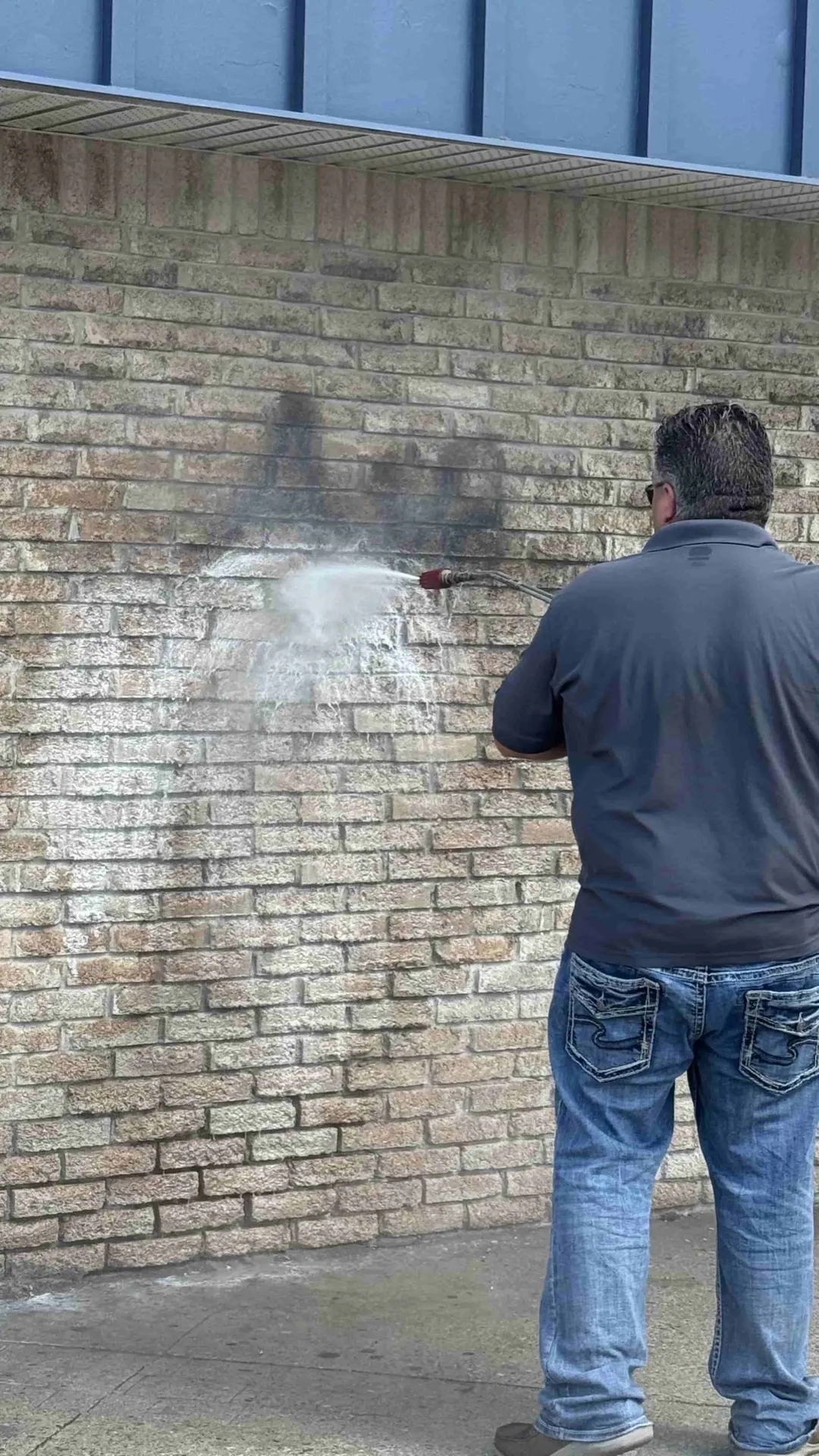
Pressure washing and power washing sound like different services, and sometimes they are. This post explains the one difference the trade recognizes, why the words blur in real life, and the three questions that show what a quote actually offers.
In This Article
The one difference the trade recognizes
Many equipment makers and industry sources draw the line at heat. Pressure washing pushes water at ambient temperature through a pump and nozzle. Power washing does the same job with the water heated by a burner in the machine. Pressure and flow can be identical. Temperature is what changes.
Soft washing is a separate third method, and it belongs in the comparison because homeowners often pick between all three without knowing it.
| Pressure washing | Power washing | Soft washing | |
|---|---|---|---|
| Water | Cold, from the tap | Heated by the machine | Cold, at low pressure |
| Force | High, controlled by tip and distance | High, same controls | Low, with a cleaning mix doing the work |
| Strong suit | Dirt, mud and surface growth on hard surfaces | Grease, oil, gum and sticky residue | Algae and mould on siding, roofs and stucco |
| Main risk | Etching, gouging and blown-out joints | The same, plus extra cost and equipment | Poor rinsing or planting damage if done carelessly |
| Typical jobs | Driveways, patios, fences, decks | Oil-stained slabs, bin pads, greasy floors | House siding, roofs, delicate trim |
Why the two words get mixed up
On trucks, flyers and websites, the words are used as synonyms. A company that advertises "power washing" may run a cold-water machine, and one that says "pressure washing" may own a hot-water unit. Neither is being dishonest. The trade never settled on one vocabulary, and customers searched for both terms, so companies use both.
That is why a label tells you very little. Details do: water temperature, pressure, flow and the method planned for each surface.
Pressure and flow deserve the same scrutiny. "Power" can mean anything, but PSI (force) and GPM (water volume) are numbers a company can state. A machine with high pressure and low flow strips paint and rinses slowly. One with modest pressure and strong flow rinses fast, which suits large flat areas. Asking for both figures shows quickly whether the crew knows its own equipment.
Driveway or patio seen better days?
We pressure wash driveways, patios, decks and walkways across Kitchener, Waterloo, Cambridge & Guelph. Free, no-obligation quotes, ready within 1 business day.
Does a house need hot water?
For most residential work, no. Pollen, algae films, dust, leaf stains and road-salt residue respond to cold water and a suitable cleaner. Heat earns its keep on oil, grease, gum and other sticky residue that cold water only smears around.
Heat can also work against you on some materials, so it is not a free upgrade. The detail is covered in hot water vs cold water pressure washing.
Heat has a cost side as well. Hot-water equipment is dearer to buy, carry and fuel, which is one reason two quotes for an oily job can differ. Steam cleaning is yet another term, and it works differently again, as pressure washing vs steam cleaning for concrete explains.
Which method fits which job
Choose pressure washing (cold) if the surface is sound and hard, such as concrete, paving stone or a well-kept fence, and the dirt is ordinary: dust, mud, light algae, leaf marks.
Choose power washing (hot) if the problem is oily or greasy. Think a garage apron with old drips, a barbecue pad splattered with fat, or gum ground into a walkway.
Choose soft washing if you are cleaning vinyl or painted siding, stucco, a roof or delicate trim. The pressure vs soft washing guide sets out that decision.
Some properties need two methods. A garage apron with old oil drips and a shaded walkway with green algae are different problems, and a careful crew will treat them differently on the same visit.
Three questions that cut through the label
- "Is the water heated for my job, and does it need to be?" A good answer ties the heat to a specific stain, such as oil, not to a sales line.
- "What pressure and tip for each surface?" The answer should change as the surface changes.
- "What is excluded?" Sealing, staining and rust or oil removal are often separate.
D&D Home Services lists pressure washing from $350 and soft washing from $350 for typical Kitchener-Waterloo homes. Ask for the method to be written into the quote, and the quote itself is free.
Key Takeaways
- The trade's usual split is heat: pressure washing uses cold water and power washing uses heated water at the same kind of pressure.
- In everyday advertising the two words are used interchangeably, so ask about temperature, pressure, flow and method instead.
- Hot water earns its place on oil, grease and gum; ordinary dirt and algae on a house rarely need it.
- Siding, stucco and roofs usually call for soft washing rather than either high-pressure option.

Request a home-service quote
Select the service you need and describe the work area and access.