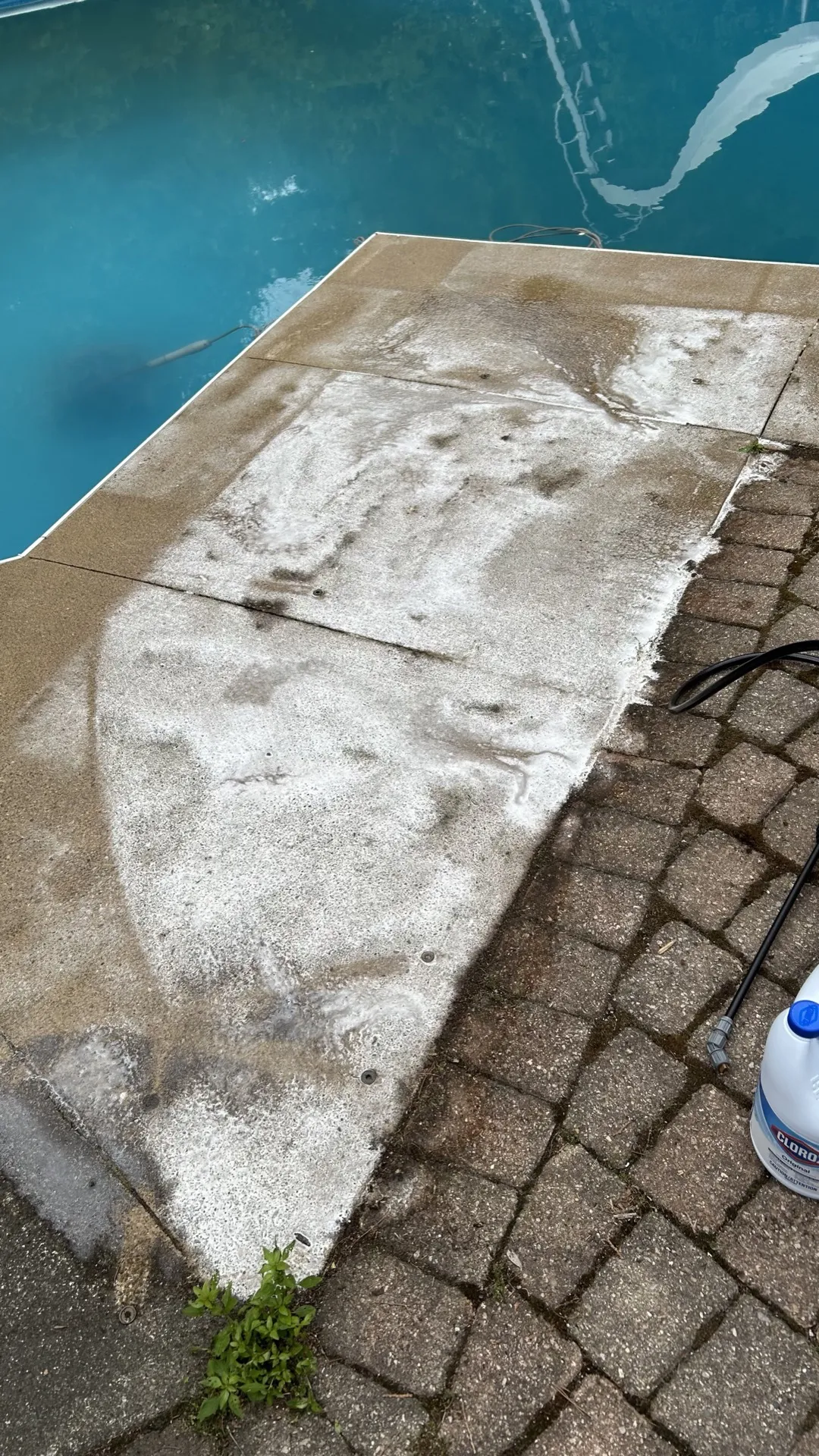
Pressure washing in winter is usually a poor idea in Ontario. The runoff refreezes into ice on steps, walks and driveways, and water can freeze inside your hose, gun and pump. It works only when the air and the surface are above freezing and will stay there until everything has dried or drained. Most jobs belong in fall or spring, and only a few small ones suit a mild thaw.
In This Article
- Pressure washing in winter: the temperature rule
- What goes wrong when you wash in freezing weather
- Do pressure washing companies work in the winter?
- Which jobs wait for spring and which suit a mild thaw
- When to winterize a pressure washer, and how
- Plan the washing year around freezing weather and water rules
- Ice already on the driveway? Call a pro and ask these questions
- Winter pressure washing questions homeowners ask
Pressure washing in winter: the temperature rule
The rule is simple. Wash only when the air is above 0°C, the surface is no longer frozen, and the forecast keeps it above freezing until the water has dried or drained away. Anything less and the water you spray turns to ice somewhere you walk, park or store a hose.
Air temperature alone is a poor guide. A concrete slab, a north-facing wall and a shaded porch hold cold long after the afternoon reads a few degrees above zero. Touch the surface. If it is frosty, hard and cold, it is too early. Then look at tonight's low as well as today's high. Southern Ontario winters swing back and forth across zero, so a mild afternoon followed by a hard frost is common, and that is the worst case for a wet driveway.
Use a refreeze test before you start. If you cannot say the water will be gone or drained before the temperature drops, do not begin. The same test applies to a quick rinse with a garden hose.
Want an exact price for your home?
Skip the guesswork: we look at your actual property and quote it in writing, free and no-obligation. Serving Kitchener, Waterloo, Cambridge & Guelph.
What goes wrong when you wash in freezing weather
- Ice where you walk. Runoff travels to the lowest point, which is often the foot of the driveway, the garage apron or the front walk. A thin film of ice is hard to see and very slick. The Canadian Centre for Occupational Health and Safety (CCOHS) lists wet surfaces among the common causes of slips, and a frozen film is the same problem with less grip.
- Frozen equipment. A pump, hose, gun and wand all hold water. If it freezes, it can crack parts or split a hose. Manuals tell you to drain the machine after use when freezing is possible.
- A glaze on the house. Spray that lands on cold siding, railings, steps or a porch can freeze in place and stay there for days.
- Water in small gaps. Cracked mortar, tired caulk and the joints between pavers take on water. The next freeze expands it and makes the gap wider.
- Nowhere for the water to go. Frozen ground soaks up little, so runoff spreads across the surface toward the street, the storm drain and your neighbour's walk.
- Slow, streaky results. Cleaners work more slowly in the cold, and surfaces stay wet for hours, so dull patches and streaks are likely.
- Wasted effort. Salt you rinse away in January is back after the next snowfall.
Do pressure washing companies work in the winter?
Some do limited work. Exterior home washing tends to pause for the reasons above, and a company that offers it in a freeze should be able to explain how it stops runoff from refreezing. Other work can differ, such as indoor floors or a greasy bin pad, where the water can be controlled.
Hot water does not rescue a winter house wash. It cools fast in cold air, and the runoff still freezes on steps and slabs. The guide to hot water versus cold water pressure washing explains where heat helps, mainly on oil and grease, and where it can damage a surface.
Which jobs wait for spring and which suit a mild thaw
A mild thaw means the day is comfortably above zero and tonight's low stays above zero too. Even then, keep the job small. This table shows how each common job fares.
| Job | Winter verdict | Why |
|---|---|---|
| Driveway, walkway, patio, interlock | Wait for fall or spring | A big wet area, and the runoff refreezes at the lowest point |
| House siding, soffits, trim | Wait | Cold slows cleaners, walls stay wet, and a soft wash needs time to rinse and dry above freezing |
| Roof moss and algae | Wait | A cold, wet roof is slick, and nobody should work on it in that state |
| Deck and fence | Wait | Wood stays cold and wet, and stains and sealers need a dry, mild day under their instructions |
| Concrete or interlock before sealing | Wait | Sealer labels set a minimum temperature and call for a dry surface |
| Garage floor, door closed | Thaw day only | Fine if the garage is above freezing and the water is mopped or drained inside, not pushed out under the door |
| Salt crust on entry steps | Sweep first | Rinse with a bucket only if the temperature stays above zero for the next day, otherwise leave it dry |
Fall is the better time for the surfaces that matter before salt season, and the guide to pre-winter pressure washing in Kitchener-Waterloo covers the order to tackle them. Once nights stay above zero, the spring pressure washing checklist picks up where winter leaves off.
When to winterize a pressure washer, and how
Winterize before the first nights near freezing. In Kitchener-Waterloo that is usually late October to early November, though a cold snap can arrive sooner. Your manual comes first. This is the common outline.
- Turn off the water at the tap, then squeeze the gun trigger until the pressure is gone.
- Disconnect the supply hose and the high-pressure hose. Drain both and coil them loosely.
- Drain the pump the way the manual describes. Do not run a pump dry for longer than the manual allows.
- Use a pump storage liquid only if the manual calls for one, and choose the type it names.
- On a gas machine, follow the manual for fuel and oil before storage.
- Store the machine, hoses and wand indoors, somewhere that stays above 0°C. A shed that drops below zero is not good enough.
Do the same for the outdoor tap and hoses at home. Water trapped in a hose or a tap can freeze and split it.
Plan the washing year around freezing weather and water rules
Two windows work well in Waterloo Region. One is fall, after the maple and oak leaves are down and before nights reach freezing. The other is spring, once nights stay above zero and before summer.
One more rule shapes the calendar. The Region of Waterloo's Water Conservation By-law is in effect from May 31 to September 30. For municipal water, the Region says regular, repeat washing of driveways and house exteriors is not allowed in that period, though you can wash just before applying paint or a treatment. From October 1 to May 30 the by-law does not apply, so the cold, not the by-law, is the winter limit. Check the Region's page for current rules, and your own city if you live in Guelph.
Ice already on the driveway? Call a pro and ask these questions
A driveway that has iced over needs sand, de-icer or a snow crew, not a washer. See dealing with ice rinks on Kitchener driveways, and snow removal if you want it handled each visit.
For a spring or fall wash, D&D Home Services pressure washing starts at $350 for a typical Kitchener-Waterloo home, with a written quote confirmed before work begins. Whoever you hire, and especially if a company offers a cold-weather wash, ask:
- What temperature do you stop at, and what do you do if the forecast changes?
- How will you stop runoff from freezing on my steps and walks?
- Where will the water come from if my outdoor tap is shut off for winter?
- Which surfaces will you leave for warmer weather?
Winter pressure washing questions homeowners ask
Can you power wash in winter?
Only when the air and the surface are above freezing and will stay there until the water has dried or drained. Below that, runoff turns to ice on walks and steps, hoses and pumps can freeze, and cleaners work poorly. A mild thaw can allow a small job, such as rinsing a garage floor, but driveways, siding, decks and roofs should wait.
Can you pressure wash a house in winter?
It is a poor time for it. Cold slows cleaners, walls stay wet and can glaze with ice, and water driven into small gaps can freeze and widen them. House washing suits a mild day with a dry forecast, usually between spring and fall. If a stain bothers you now, leave it and book a wash when nights stay above zero.
Do pressure washing companies work in the winter?
Some do limited work, often indoors or on commercial sites where the water can be controlled. Many exterior home jobs wait for spring because of refreezing runoff and frozen equipment. If a company offers a winter wash, ask for its temperature cut-off, how it prevents ice on your walks, and where the water comes from if your outdoor tap is off.
When should you winterize a pressure washer?
Before nights drop to freezing, which in Kitchener-Waterloo is usually late October to early November. Shut off the water, relieve the pressure, drain the hoses, gun and pump as the manual describes, and store the machine somewhere that stays above 0°C. Water left inside a pump can freeze and crack it.
Does hot water make pressure washing in winter safe?
No. Hot water loosens grease and oil, but it cools quickly in cold air and the runoff still freezes on steps and slabs. The same rule applies to hot and cold machines: stay above freezing during the job and until the surface is dry.
Key Takeaways
- Wash only when the air is above 0°C, the surface is not frozen and the forecast stays above zero until things dry.
- The real winter risks are refrozen runoff on walks and steps, and water freezing inside hoses and pumps.
- Driveways, siding, decks and roofs wait for fall or spring. Only small jobs suit a mild thaw.
- Hot water does not make a winter wash safe, because the runoff still freezes.
- Winterize the machine before the first nights near zero and store it where it stays above freezing.
Sources & References

Request a home-service quote
Select the service you need and describe the work area and access.