Sometimes the snow is gone and the driveway is still a rink. This guide explains how that happens, which shortcuts damage your surface, a four-pass method for clearing the ice safely, and how to stop it returning.
In This Article
How a driveway becomes a rink
A plow or a shovel removes snow. It does not remove ice, and ice forms in several ways that snow removal does not touch.
- Freezing rain glazes a clear surface with a hard, thin sheet, with no snow on top to clear.
- Thaw and refreeze turns a wet surface into sheet ice when the temperature falls after dark. Freeze-thaw cycles are common from November to April.
- Packed snow that tires and boots have polished becomes hard, smooth and bonded to the surface.
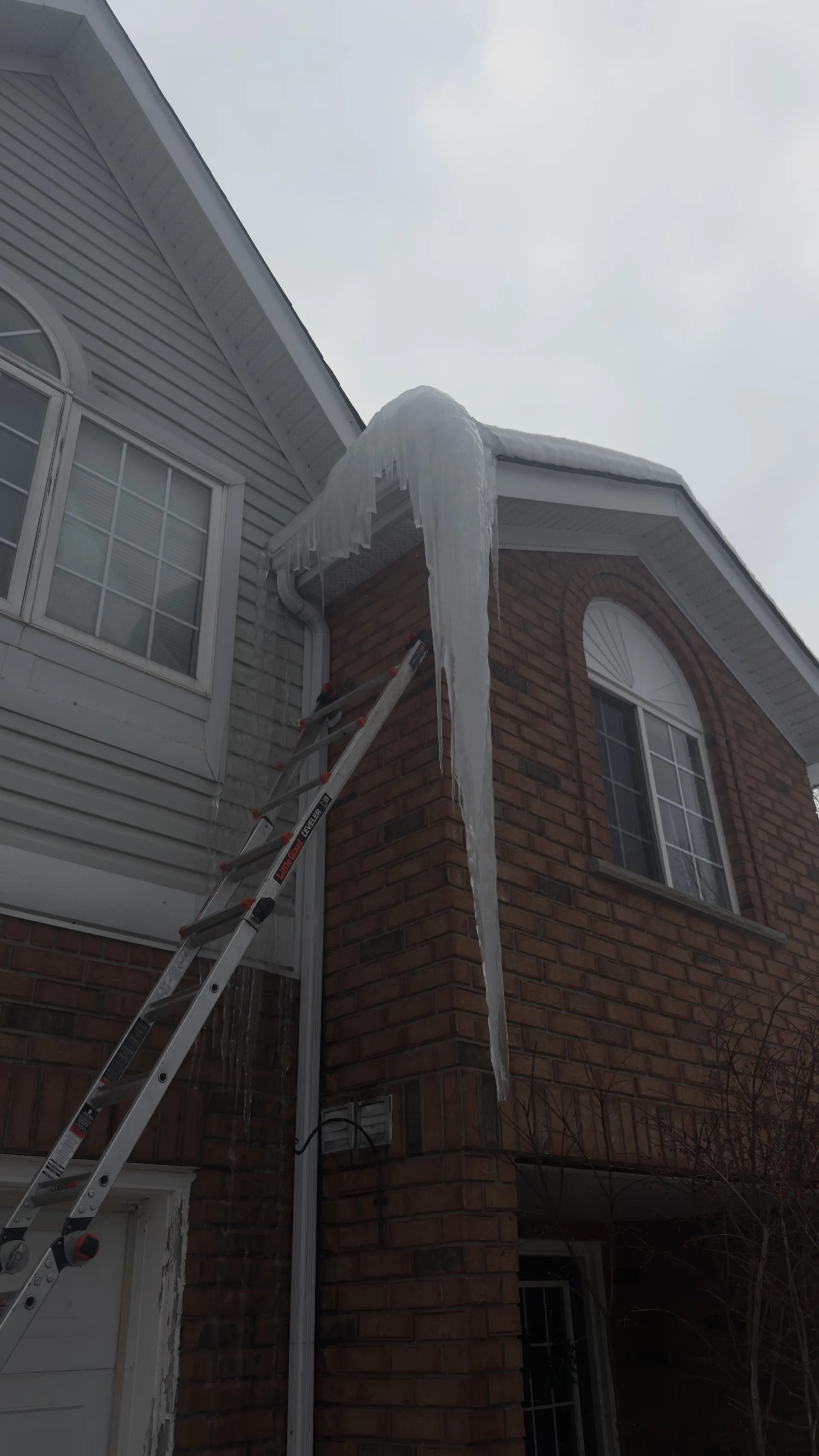
- Meltwater from banks, roofs and downspouts runs across the driveway and freezes in the same low spots.
Most rinks combine two or three of these. That is why the fix has to start with the cause, not only the ice.
Shortcuts that cause damage
- Metal bars, pickaxes and hatchets. They pit and chip concrete, pavers and asphalt, and they gouge the sealer.
- Hot or boiling water. It melts a little, then refreezes as a slicker sheet, and it can damage cold surfaces.
- Heaps of salt. More product does not melt faster. It leaves residue that stresses the surface and washes into the lawn.
- A pressure washer in winter. The water refreezes on the surface.
- A metal shovel scraped hard along pavers. It chips the edges and scrapes out the joint sand.
Want your driveway cleared before 7am?
Seasonal snow removal for homes across Kitchener, Waterloo, Cambridge & Guelph, so winter mornings take care of themselves. Free, no-obligation quotes, ready within 1 business day.
Four passes to clear ice safely
- Make it safe to stand. Sand or grit gives grip at once, at any temperature. Do this first, before any chipping.
- Score and break. With a plastic scraper or an ice chopper, score the ice into sections and lift them with light strokes. Use plastic-edged tools on pavers, and stop if you see the surface start to flake.
- Melt what is left. Use rock salt if it is near freezing, or calcium chloride in deeper cold, spread thinly. Give it time. The guide to salt alternatives for ice and driveways covers other choices.
- Scrape and sweep. Push the slush away before it refreezes, and sweep off the leftovers.
Work at the warmest part of the day, when the sun has loosened the bond. If a thin film remains, leave it and sand it. Forcing the last layer usually takes the surface with it, and a thaw will finish the job for free.
Stopping the rink from returning
- Clear to the surface soon after snow stops, before traffic can pack it. Packed snow is the raw material for ice.
- Keep vehicles off snow you plan to clear, because tires polish it.
- Pre-treat ahead of a forecast freeze, following the label, because thin treatment before ice bonds works better than thick treatment after.
- Trace the water. A downspout outlet, a roof drip or a snowbank melting across the driveway will refill the same patch every day.
- Note the low spots. Mark each one for regrading in spring, since a dip in the paving will hold water every winter.
The snow and ice damage prevention guide covers the roof and drainage side of the same problem.
When to hand the ice to someone else
Call for help when the ice is thick on a slope, when it sits beside steps or vehicles, or when you cannot stand on it safely even with grip. Older adults and anyone with balance or heart concerns should not be chipping ice at all. A crew has the tools, the product and the insurance for it.
Ice treatment often follows a different trigger from snow clearing, so ask how it is handled. D&D Home Services offers snow removal from $80 per visit for typical Kitchener-Waterloo homes, with seasonal contracts available. Get the terms for ice, including the product and the point it starts, into the written quote.
Key Takeaways
- Plowing removes snow, not ice, and rinks come from freezing rain, thaw and refreeze, packed snow and meltwater.
- Skip metal bars, hot water, heaps of salt and pressure washers, all of which damage surfaces or refreeze.
- Sand first, score and lift the ice, melt the rest thinly, then scrape and sweep, and leave a thin film rather than force it.
- Clear early, pre-treat before a freeze and fix the source of the water so the rink does not return.

Request a home-service quote
Select the service you need and describe the work area and access.