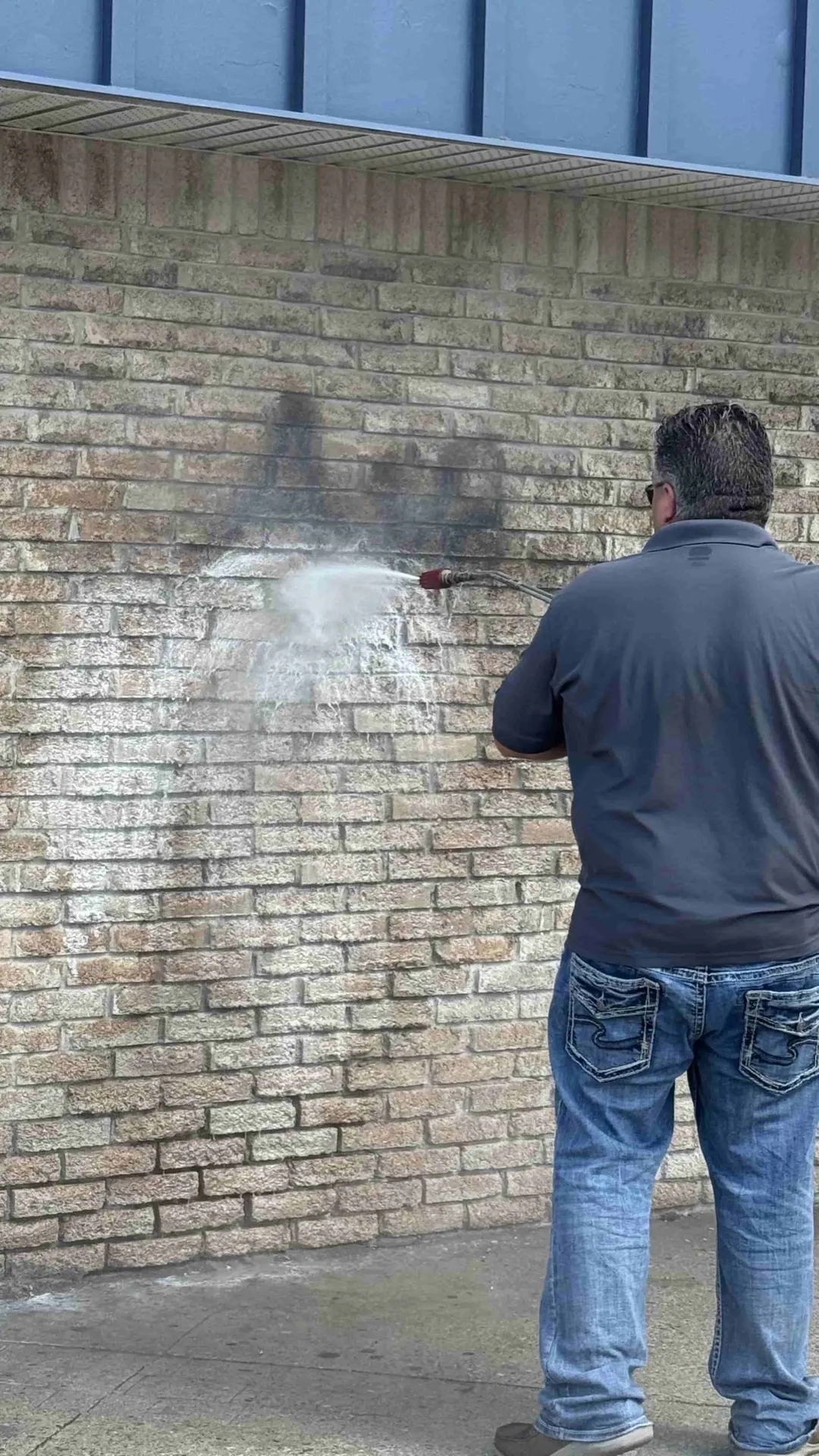
A fence wears the finish that protects its wood, and every board stands on end to a jet of water. This guide shows how to identify your finish, test it and wash so the dirt goes and the stain or paint stays.
In This Article
Identify the finish before you pick a setting
| Finish | How to recognize it | How it reacts to pressure |
|---|---|---|
| Paint or solid stain | Opaque colour with a skin on top and no visible grain | Sound coats survive a gentle wash. Ageing ones flake off in sheets |
| Semi-transparent or transparent stain | Colour with the grain showing through, soaked into the wood | Fades rather than peels, and can be washed off with too much force |
| Bare or weathered wood | Silver-grey, with nothing left on it | Nothing to strip, but the surface fibres are fragile and fuzz easily |
| Vinyl or metal | Smooth, non-wood surface | Not a wood job at all. Use a gentle cleaner and low pressure |
Two quick tests on a hidden board
Pick a board behind a shrub or near a gate hinge and run both tests before you wash anything.
- The tape test (paint and solid stain). Press strong tape flat, then rip it off. If flakes of colour come with it, the coating has lost its grip and pressure will strip it. Wash gently or plan to scrape and repaint.
- The sprinkle test (stain). Flick water on the board. If it beads, the finish is still working, so a gentle clean is enough. If it soaks straight in, the finish is spent, and re-staining is due whether you wash or not.
Then try the washing setup on that same board, let it dry, and judge in daylight.
Driveway or patio seen better days?
We pressure wash driveways, patios, decks and walkways across Kitchener, Waterloo, Cambridge & Guelph. Free, no-obligation quotes, ready within 1 business day.
Technique for upright boards, rails and posts
- Clear the line. Trim vines, tie back shrubs and wet nearby plants. Tell the neighbour if the other face will get wet.
- Apply cleaner from the bottom up so runs do not leave streaks, keep it wet for the dwell time on the label, and do not let it dry.
- Fit the widest fan tip and keep it about 45 cm (18 in) from the wood, or farther on tired boards.
- Rinse from the top down, pulling the spray along the boards in the direction of the grain, never across it.
- Aim slightly downward and avoid firing through the gaps between pickets. That blows grit into the next yard and beats up plants on the far side.
- Ease off at the vulnerable spots: picket tops, where end grain frays, board ends, knots and the base of the posts, where soft wood sits in damp soil.
- Do both faces and finish with the gate and its hardware.
Reading the result and planning the finish
Give the fence a day or two of dry weather. Then look for the outcome you expected. A stain that has faded evenly is normal after cleaning, and often a sign that it was ready for refreshing. Patches where the coating has peeled show the finish was already on its way out.
Two surprises are common and harmless. Cedar and other tannin-rich woods can bleed brown streaks when wet, and nail heads can leave dark rust trails down a board. A wood brightener, used to the label, treats both. Neither means the wash went wrong.
Plan to re-coat within a few weeks, not months. Bare wood left in Southern Ontario sun and rain greys and fuzzes quickly, and the shaded north side will bring back mildew first. A finish applied to fully dry boards, following the maker's instructions, gives the longest life.
When another method is better
An old painted fence that is already flaking, a tall privacy fence that would need a ladder, a shared fence with a neighbour who has plants against it, and a vinyl fence all suit a gentler approach. The guide to cleaning a vinyl fence covers that material, and the guide to pressure washing a wood fence adds further detail.
D&D Home Services lists pressure washing from $350 for typical Kitchener-Waterloo homes, with a free written quote before work begins. Tell any contractor which finish is on the fence, and ask for a test board before the whole run.
Key Takeaways
- Identify the finish first: paint and solid stain peel, transparent stain fades, bare wood fuzzes.
- Run the tape test on paint and the sprinkle test on stain, on a hidden board, before washing anything.
- Apply cleaner from the bottom up, rinse from the top down along the grain, and avoid firing through the gaps.
- Re-coat within weeks, on fully dry boards, because bare wood greys and fuzzes fast.

Request a home-service quote
Select the service you need and describe the work area and access.