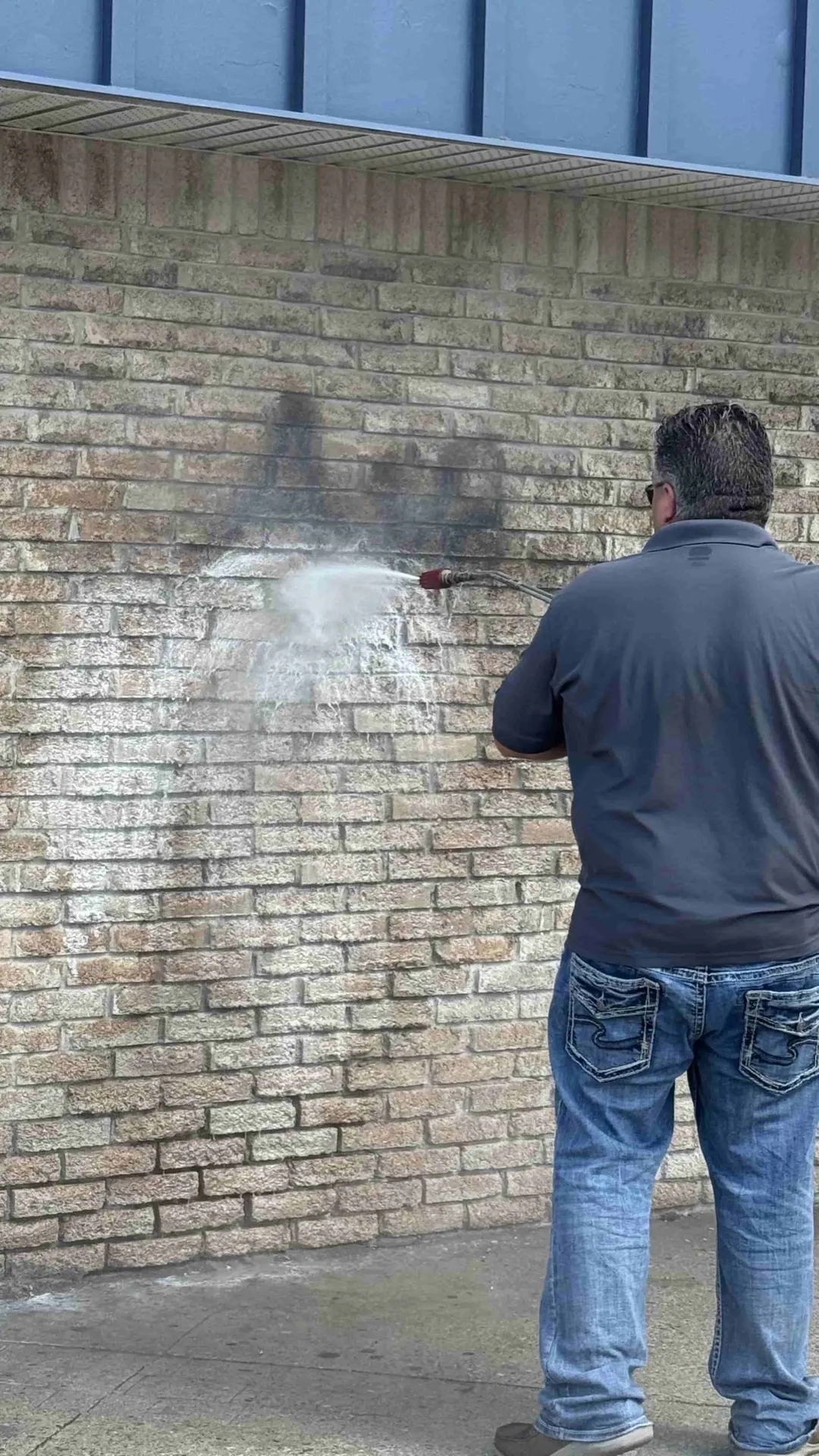
Softwood is softer than it looks, and a pressure washer can carve it faster than most people expect. This guide covers the tip, distance, stroke and drying time that lift grime off a cedar or pine deck while leaving the grain flat.
In This Article
Why a strong jet tears softwood grain
Softwood boards are made of pale, soft spring growth and darker, denser summer growth. A hard jet removes the soft bands first. Push too far and you get ridges that follow the growth rings, a fuzzy mat of loose fibres, or grooves you can feel with a fingertip. Cedar and pressure-treated pine or spruce, the usual Southern Ontario deck woods, all behave this way.
Old, silvery boards are the most fragile. The grey layer is weathered surface fibre, and it comes off easily, which is why a first wash can look dramatic. Removing it is fine. Cutting into the sound wood underneath is the damage. Knots, end grain and board edges give way first.
Set up the machine before the first pass
Fit the widest fan tip you own, normally the 40-degree one, and drop the pressure to its lowest setting if the machine allows it. Leave the 0-degree pencil jet and any rotating (turbo) nozzle in the box. Both can gouge a board in a second.
Then test somewhere nobody will see, such as the last board under a stair. Start about 45 cm (18 in) from the wood and creep closer only until the dirt starts to lift. That distance becomes your working distance for the whole deck.
Sweep first, move the furniture, wet the plants beside the deck and cover the delicate ones. If you use a deck cleaner, follow its label. Sodium hypochlorite (chlorine) mixes must be diluted, rinsed off well and kept away from plants. Oxygen-based cleaners are gentler on fibres and gardens, but they still need their stated dwell time.
Driveway or patio seen better days?
We pressure wash driveways, patios, decks and walkways across Kitchener, Waterloo, Cambridge & Guelph. Free, no-obligation quotes, ready within 1 business day.
Seven steps for a stroke that keeps the grain flat
- Pick the day. Mild, calm and overcast is ideal. Direct sun dries cleaner on the boards before it can work.
- Wet, then treat. Dampen the boards with plain water, apply the cleaner and leave it for the time on the label. Do not let it dry on the wood.
- Brush first. Scrub stubborn patches with a medium-bristle brush, along the grain. The brush does the work so the jet does not have to.
- Turn the fan across the board. Orient the wand so the flat spray spans the width of one board, then pull it along the length, never across the grain.
- Keep moving at one distance. Squeeze the trigger before the spray reaches the wood and keep going until it has passed the far end. Stopping mid-board leaves a pale cut-in spot.
- Finish each board before the next. Overlap passes by about a third and clean one board end to end, so there are no lap marks where two sessions meet.
- Rinse high to low. Rails first, then the deck floor, pushing water away from the house and away from planting beds.
What too much pressure looks like, and how to repair it
Check the boards while they are still damp, then again once dry. Trouble shows up as:
- Fuzz: a furry, pale surface of raised fibres.
- Washboard ridges: stripes that follow the growth rings.
- Lifted splinters at edges, knots and board ends.
- Bright streaks between passes, from an uneven distance.
Fuzz and light ridges usually sand out. Wait until the deck is completely dry, then sand with the grain using medium-grit paper (something in the 60 to 80 range is typical), sweep and vacuum. Deep gouges do not sand out, and a badly cut board may need replacing. The steps in pressure washing damaged my deck: what to do next cover the repair order.
Dry time, brightening and the finish coat
In warm, dry weather most decks need a day or two to dry. Shade, humidity or a soaking rain can double that. A pin-type moisture meter is cheap, and many stain makers print a maximum moisture level on the can. No meter? Give it an extra dry day.
Grey or dark patches that survive the wash are often tannin or mineral stains. A wood brightener (oxalic acid-based) treats them better than more pressure. Follow the label and rinse well.
Apply stain or sealer soon after the wood dries, before pollen and UV start undoing the work. Timing for the whole job is covered in when to pressure wash your deck.
When another method is the safer choice
Very old, splintery boards, railings with peeling paint, upper-level decks that need a ladder and composite decking all call for a rethink. A low-pressure wash with cleaner and a brush is gentler, and composite makers publish their own care rules, which override anything here.
If you would rather hand it over, D&D Home Services does pressure washing from $350 for typical Kitchener-Waterloo homes, with a free quote in writing before the work starts.
Key Takeaways
- Use the widest fan tip and the lowest pressure that lifts the dirt, and set your working distance on a hidden test board.
- Pull the wand along the length of each board with the fan spread across it, and keep moving at one steady distance.
- Fuzz and light ridges sand out once the deck is dry, but deep gouges mean replacing the board.
- Let the wood dry fully, treat leftover stains with a brightener, then stain or seal soon after.

Request a home-service quote
Select the service you need and describe the work area and access.