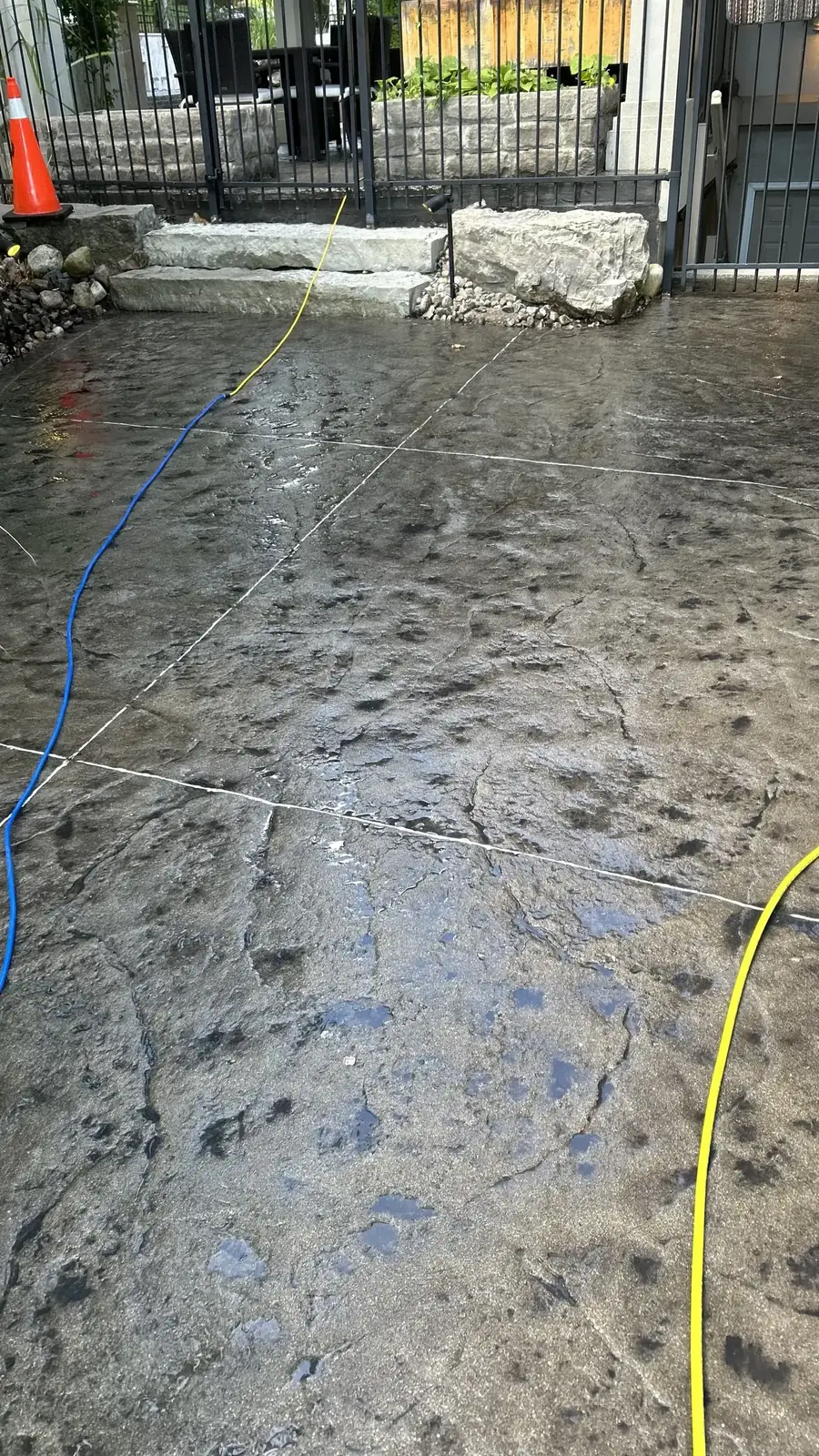
Green algae, black mould, and grey-brown mildew on concrete surfaces are widespread on Ontario properties, patios, driveways, walkways, and garage floors are all susceptible. Concrete's porous structure holds moisture and provides a surface for biological growth, particularly in shaded areas. Removing it properly involves more than pressure washing: effective treatment kills the organism rather than just displacing it.
In This Article
Identifying What's on Your Concrete
Green, slimy growth is typically algae, most common on shaded, moist concrete. Black spots or streaks are usually mould or Gloeocapsa magma algae. A grey-white powdery coating is often efflorescence (mineral deposits), not biological, and treated differently with acidic cleaners. Orange staining is usually mineral contamination, also not biological.
Biological growth needs to be killed, not just washed off, otherwise it regrows from the remaining root structure within weeks.
Don't ignore early warning signs. Small exterior issues compound quickly in Waterloo Region's freeze-thaw climate, what starts as minor staining or overflow can become a structural repair. If you've spotted any of the signs above, have it assessed early.
How to Remove Mould and Algae from Concrete
Mix 1/2 cup household bleach per gallon of water with a small amount of dish soap. Apply to the affected surface, scrub with a stiff-bristle brush, and allow to dwell for 15–20 minutes. Rinse thoroughly. Wear appropriate eye and skin protection during application.
For larger areas or heavy growth, pressure washing with a surface cleaner attachment after chemical treatment provides consistent results. A surface cleaner attachment cleans concrete evenly without the streaked "zebra stripe" pattern that a wand nozzle creates on flat surfaces.
Rinse Nearby Plants: Before applying bleach solution, wet down any plants or grass adjacent to the concrete. After rinsing, water the area again to dilute any remaining residue.
Driveway or patio seen better days?
We pressure wash driveways, patios, decks and walkways across Kitchener, Waterloo, Cambridge & Guelph. Free, no-obligation quotes, ready within 1 business day.
Preventing Regrowth on Concrete
The most effective long-term prevention is applying a penetrating concrete sealer after cleaning. A quality silane-siloxane sealer fills the concrete pores that hold moisture, creating a surface environment significantly less hospitable to algae and mould growth. Sealed concrete also resists Ontario freeze-thaw damage and is easier to clean in future seasons.
Additional measures: improve drainage so water doesn't stand on the surface, trim overhead vegetation that keeps the surface permanently shaded, and keep the surface clear of leaves and organic debris.
Professional Concrete Cleaning
D&D Home Services provides professional concrete and driveway cleaning across Kitchener-Waterloo, Cambridge, and Guelph. We treat and remove biological growth properly, not just wash the surface, and can combine cleaning with concrete sealing for lasting protection. Contact us for a free estimate.
Key Takeaways
- ✓ Professional service saves time and delivers better results than DIY
- ✓ Regular maintenance protects your home's value and curb appeal
- ✓ D&D Home Services proudly serves Kitchener-Waterloo and surrounding areas
- ✓ Get a free no-obligation quote, call or book online anytime

Request a home-service quote
Select the service you need and describe the work area and access.