How often lake-effect snow reaches Kitchener-Waterloo is a question for Environment and Climate Change Canada's forecasters, and their alerts are the place to look. What matters for your property is what fast, heavy, windy bursts of snow do, wherever they come from, and how to be ready for them.
In This Article
A note on the label
Lake-effect snow is the term for bands of snow that develop when cold air crosses relatively warm lake water. Whether a particular event in Waterloo Region is one of those, or the product of a passing storm system, is for forecasters to say. Their forecasts and warnings, including snow squall watches and warnings, are published at weather.gc.ca, and they are the source to trust when a burst is on the way.
For a homeowner the label matters less than the behaviour: snow that arrives quickly, in narrow bursts or heavy bands, often driven by wind. The rest of this guide is about that behaviour and what it does to a house, a driveway and a contract.
What fast, heavy snow does to a property
- It outpaces a once-a-day pass. A few hours of heavy snow can bury a driveway faster than a routine visit can keep up, and every hour it sits, it packs down.
- It cuts visibility, which makes driving and clearing dangerous and slows every crew on the road.
- It drifts. Wind piles snow across driveway ends, against garage doors and around walls. It can also cover low vents and meters that were clear an hour before.
- It can load a roof unevenly, with drifts collecting in the wind shadow of a roof step or a wall, so one section carries far more than the rest.
- Totals can vary from street to street, because narrow bands can hit one neighbourhood harder than the next.
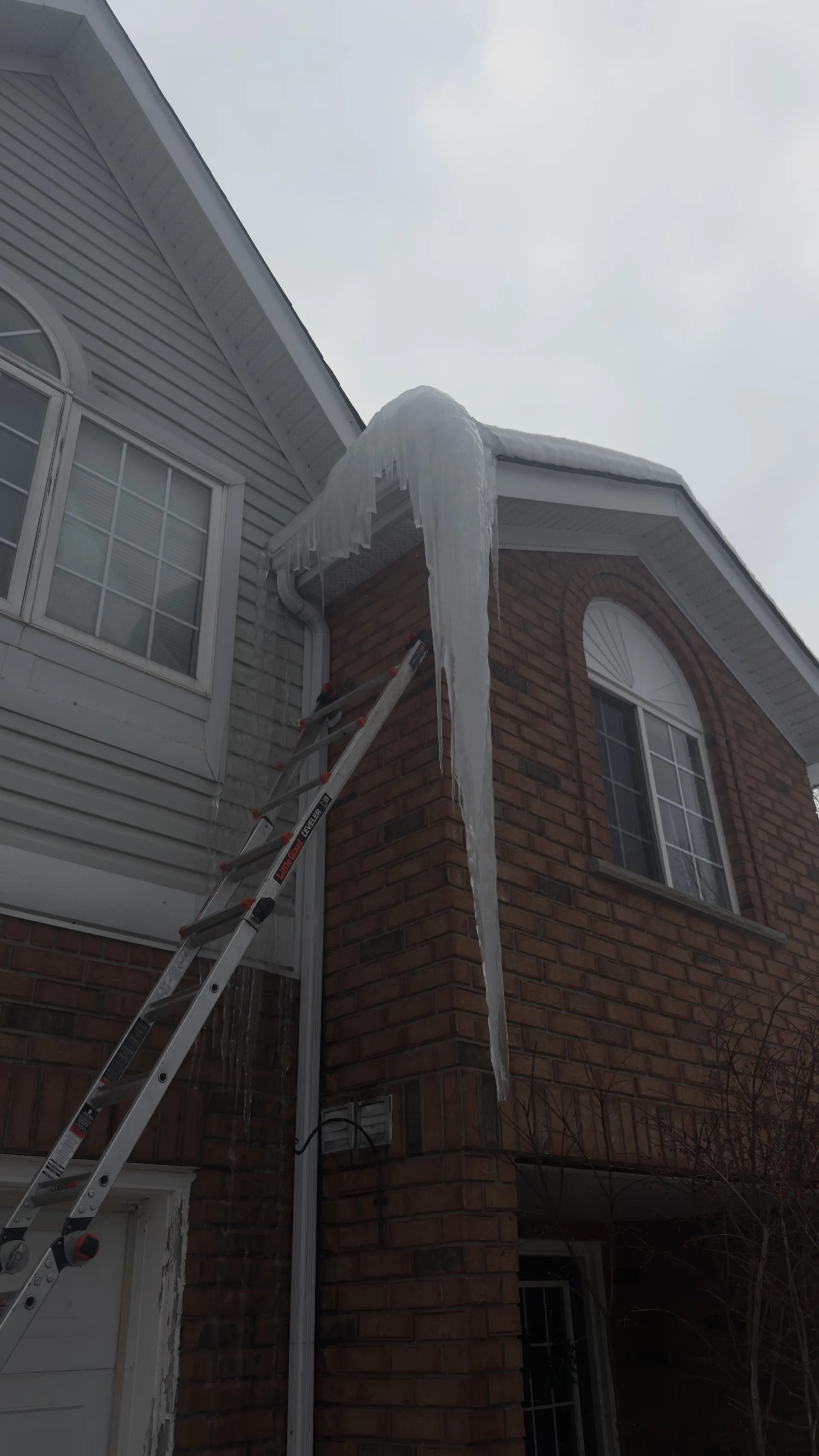
- It can be followed by a refreeze when temperatures swing, so the ice arrives after the snow.
Want your driveway cleared before 7am?
Seasonal snow removal for homes across Kitchener, Waterloo, Cambridge & Guelph, so winter mornings take care of themselves. Free, no-obligation quotes, ready within 1 business day.
Vents, meters and other low points that vanish first
Drifts bury the lowest items on the property first, and several of them matter for safety.
- Furnace and water heater vents. A high-efficiency furnace vents through the wall, usually close to the ground. A blocked intake or exhaust can shut the furnace down, and blocked exhaust is a carbon monoxide risk. Dig out a generous area around each vent by hand, and check again after the wind picks up.
- The gas meter and regulator. Keep them clear so a technician can reach them. Use a soft broom, not a shovel or a chipper, and never hack ice off the regulator. If you smell gas, leave the house and call your gas utility or 911 from outside.
- Dryer and fresh-air vents, and basement window wells, which fill with snow and then with meltwater.
Working carbon monoxide alarms near the bedrooms are the backstop for all of it. Test them before winter, not during a storm. The Technical Standards and Safety Authority publishes fuel safety information for Ontario homeowners.
How your contract treats a burst
A contract's trigger and response window were written with an ordinary storm in mind. A burst tests both, so ask the questions in advance.
- If snow keeps falling, does the crew come back, or is there one visit per event?
- Does each return count as its own visit, and does a cap apply?
- Will you be told when the crew is running behind?
- Is ice treatment part of the visit, and when does it start?
Each contract sets its own trigger, so read yours and get the answers in writing. D&D Home Services offers snow removal from $80 per visit for typical Kitchener-Waterloo homes, with seasonal contracts available.
Clearing in stages during a burst
When snow falls fast, one big effort at the end is the hardest way to do it. Work in stages instead.
- Before it starts: move cars off the street, put the shovel, ice chopper and salt or sand at the front of the garage, and mark the driveway edges with stakes tall enough to stay visible.
- While it falls: take a quick pass to keep a path open to the door and the car, then stop and go inside if visibility drops.
- When it eases: clear the driveway and walks down to the surface while the snow is still light.
- When it ends: finish the ridge, treat any ice, and cut the pile at the driveway mouth so you can see traffic and pedestrians.
Take breaks. Shovelling a heavy fall is hard exercise, and cold makes it harder.
After the burst: a short property check
- Doors and garage: dig out the swing area so that doors open fully.
- Roof: scan from the ground for heavy drifts or an ice ridge. Read roof snow removal: when and how before you consider raking.
- Downspout outlets: look for ice cones that could spill water onto the walk.
- Neighbours: check on anyone who may struggle to dig out.
The snow and ice damage prevention guide explains what to do if a burst is followed by a thaw and a hard freeze.
Key Takeaways
- Lake-effect is a forecasting term, so use the Environment and Climate Change Canada alerts for what is coming and treat a snow squall watch as a cue to prepare.
- Fast, heavy snow outpaces a once-a-day pass, cuts visibility, and drifts across driveways, doors, vents and meters.
- Dig out furnace vents and the gas meter by hand, and never chip ice off a regulator.
- Ask how your contract treats repeat visits during one event, and get the answers in writing.
Sources & References

Request a home-service quote
Select the service you need and describe the work area and access.