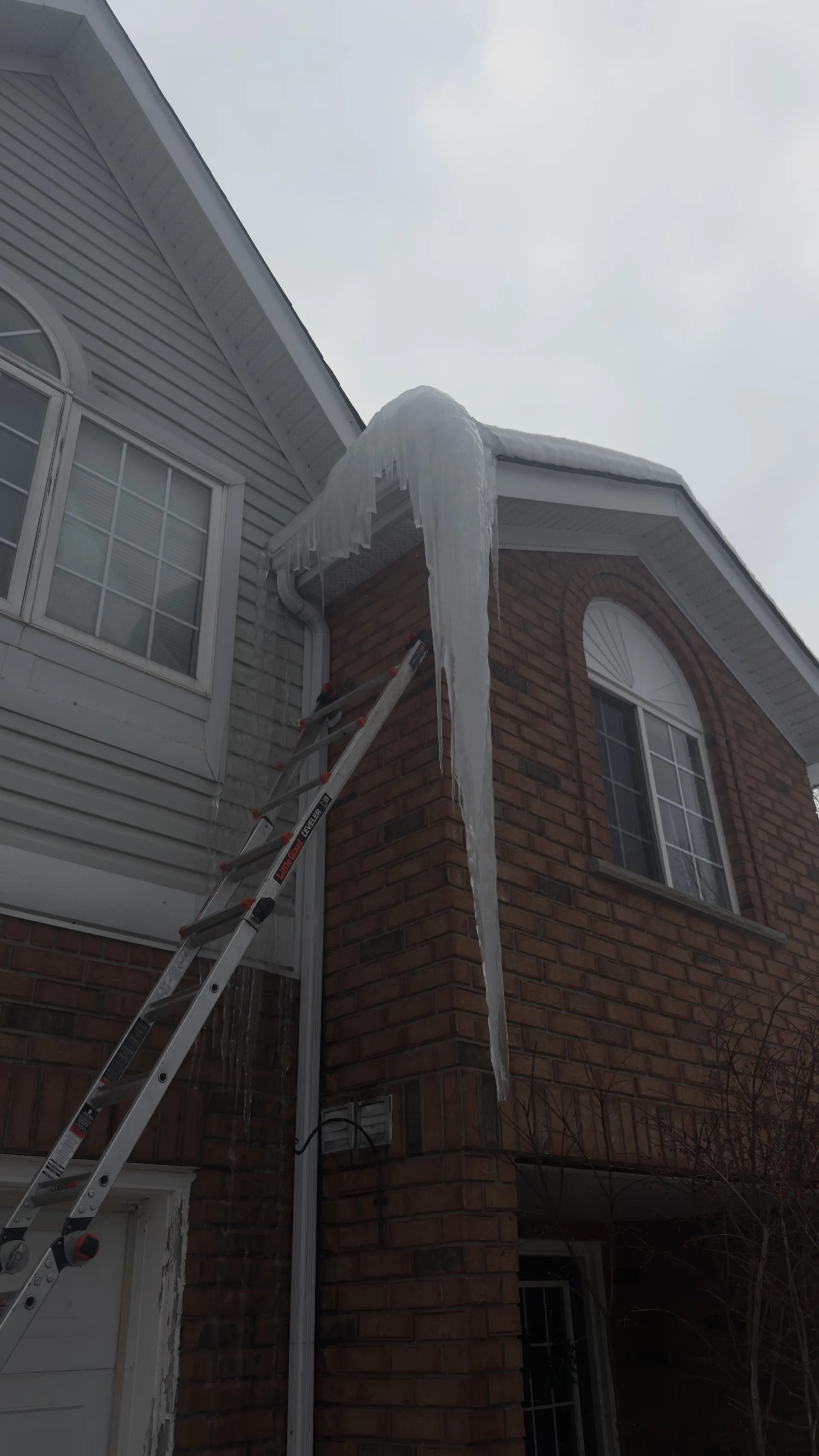
Most Ontario homeowners never need to remove snow from their roofs. Modern residential roofs are engineered to handle significant snow loads, including the heavy, wet snow that Kitchener-Waterloo gets. But there are specific circumstances where roof snow becomes a genuine structural concern, and knowing the warning signs can prevent serious damage or injury.
In This Article
When Roof Snow Actually Becomes Dangerous
The idea that you need to clear your roof after every snowfall is a myth that leads to unnecessary work and, more importantly, unnecessary risk (roof falls are a significant cause of winter injuries). The reality is more nuanced.
Snow Weight: The Key Variable
Not all snow is the same weight. This is the central fact that determines whether a given snow load is concerning for your roof. Dry, fluffy snow, the kind that falls in very cold temperatures, weighs as little as 75–100 kg per cubic metre. Wet, heavy snow, the kind that falls near 0°C and is common in southern Ontario, can weigh 300–500 kg per cubic metre. The same apparent depth of snow on your roof can represent 3–5x the actual weight depending on moisture content.
A fresh 30 cm accumulation of dry snow might weigh 50 kg per square metre. The same depth of wet Ontario snow could weigh 150–200 kg per square metre. These are dramatically different structural loading scenarios.
Ontario Building Code and Roof Load Design
The Ontario Building Code specifies ground snow loads for different regions of the province. In the Kitchener-Waterloo area, design snow loads for residential structures are typically in the 1.2–1.5 kPa (kilopascals) range, approximately 120–150 kg per square metre at ground level. Roof snow loads are typically somewhat lower due to roof angle, wind exposure, and other factors.
A properly designed and maintained residential roof built to code can handle Ontario's normal snow accumulations without any intervention. Most residential roofs are significantly stronger than their minimum design threshold because structural engineers apply safety factors in their calculations.
The cases where roof snow becomes genuinely concerning are:
- Older homes built before modern building codes
- Roofs with known structural issues or deferred maintenance
- Unusually heavy or wet snow events combined with rapid additional accumulation
- Flat or very low-slope roofs, which don't shed snow and accumulate it horizontally
- Roofs where ice dams have formed, adding ice weight on top of snow
- Multiple storm events without sufficient melt between them (rare but possible in Ontario)
Pro Tip: Flat-roof homes and buildings are at significantly higher structural risk from snow accumulation than pitched roofs. If your home has a flat or nearly flat roof (common in many post-war Kitchener bungalows), you need to monitor roof snow loading more carefully than typical pitched-roof homeowners.
Want your driveway cleared before 7am?
Seasonal snow removal for homes across Kitchener, Waterloo, Cambridge & Guelph, so winter mornings take care of themselves. Free, no-obligation quotes, ready within 1 business day.
Warning Signs That Your Roof May Be Overloaded
These signs indicate that snow loading may be approaching or exceeding safe limits. If you notice any of them, take action immediately, remove snow if you can safely do so from the ground, or evacuate and call a professional.
Sounds: Cracking, Popping, or Creaking
Sounds you haven't heard before, particularly cracking, sharp popping, or sustained creaking from the ceiling or walls during or after heavy snowfall, are serious warning signs. Structural wood members under excess stress will make these sounds as they begin to deflect beyond their normal range. Any new, unexplained structural sounds during heavy snow deserve immediate investigation.
Doors and Windows Sticking
Roof deflection under excess load can cause subtle racking of the structure that shows up as doors or windows that suddenly don't open or close properly. If interior doors or windows that operated normally are suddenly sticking or won't latch after a heavy snowfall, this may indicate structural movement that warrants investigation.
Visible Sagging
Look at your roofline from the street after heavy snowfall. A roofline that appears to have visible sagging or deflection in the centre where it was previously straight is a serious warning sign. Similarly, interior ceiling sags that weren't present before require immediate attention.
Leaking From Unexpected Locations
While roof leaks during snowfall can have multiple causes (including ice dams), water intrusion from areas that have never leaked before, particularly at ridge lines or in the centre of a span, may indicate deflection creating new gaps in the roofing assembly.
Roof Rakes vs. Shoveling: The Safe Method
If you've identified a genuine need to reduce snow load on your roof, or you're in the preventative practice of clearing snow from the lower 60–90 cm of your roof edge to reduce ice dam risk, a roof rake is the safe method for most homeowners.
Roof Rakes: The Safe Homeowner Option
Roof rakes are long-handled tools (typically 4–8 metres extended) designed to be used from the ground to pull snow off the lower portions of a roof. You never climb on the roof, never use a ladder, and stand clear of the snow as it falls. A good roof rake with a telescoping handle can reach the eaves of most single-story homes and the lower portions of two-story roofs from the ground.
Use a roof rake with downward-angled blades (not dragging the blade along the shingles) to avoid damaging shingles. Work from the edge upward, pulling snow down in manageable sections rather than trying to move the full depth of snow in a single pass.
What Roof Raking Accomplishes
A roof rake can effectively remove the bottom 60–90 cm of snow from your roof eaves. This is valuable primarily for ice dam prevention (removing the snow that melts and refreezes at the cold eaves) rather than for structural load reduction on a large roof. If structural loading is the concern, a professional with the appropriate equipment and fall protection is needed for a thorough removal.
What You Should Never Do When Removing Roof Snow
The following actions cause injuries and roof damage every winter in Ontario. None of them are worth the risk.
- Never walk on a snow-covered or icy roof. There is no such thing as adequate footing on an icy roof. Falls from roofs are frequently fatal or cause permanent injury. This task should only ever be performed by professionals with proper fall arrest systems.
- Never use a metal shovel to scrape roof snow. Metal shovels on shingles damage the granular coating, creating early failure points and voiding roofing warranties. Plastic shovels and roof rakes with plastic or rubber edges are the safe options.
- Never stand directly below the area you're clearing. A roof rake works from the ground, but you need to stand to the side of where the snow will fall, not directly below. A mass of roof snow falling on you can cause injury.
- Never use a roof rake during a storm or in high winds. Extended roof rakes become unwieldy and dangerous in wind. Wait until conditions are calm.
- Never apply road salt or de-icing chemicals directly to roof shingles. Salt damages shingles and runs off to damage gutters, downspouts, siding, and the ground below. Calcium chloride in fabric socks placed horizontally across a roof (as an ice dam treatment) is acceptable, but not bulk salt scattered on shingles.
"Every year we get calls from people who went on their icy roof with a shovel and wish they hadn't. Roof work during winter requires the same fall protection as any other elevated work. If you're not equipped for it, the ground is where you stay."
- Devon, D&D Home Services Founder
Professional Roof Snow Removal
Professional roof snow removal is the appropriate response when:
- Any of the warning signs described above are present
- The roof accumulation is too deep or your roof too steep/tall for safe ground-based clearing
- You have a flat or low-slope roof that requires walking on to clear
- You've had previous roof or structural issues
- You're a landlord with liability for tenant safety
Professional roof snow removal services use harnesses, ropes, and proper fall arrest systems. They have appropriate tools for rooftop work and can assess structural conditions while on the roof, identifying ice dams, damage, and other issues that aren't visible from the ground.
D&D Home Services offers professional snow removal in Kitchener, Waterloo, Cambridge, and Guelph. Contact us if you need assistance with roof snow after a heavy event.
Insurance Considerations
Ontario homeowners' insurance policies typically cover sudden and accidental damage from the weight of snow and ice, but with important caveats. Damage resulting from a roof in poor condition, inadequate maintenance, or deferred repairs may be denied on the basis that the failure was due to pre-existing conditions rather than the snow event itself.
Review your policy's snow and ice damage provisions. Some policies have specific exclusions for flat roofs or require documentation of maintenance. If a heavy snow event damages your roof, document everything with photos and contact your insurer promptly, don't make repairs before the adjuster has had a chance to inspect the damage.
Key Takeaways
- ✓ Most Ontario roofs don't need clearing after normal snowfall, they're engineered for local snow loads.
- ✓ Wet snow is 3–5x heavier than dry fluffy snow; southern Ontario's near-freezing snowfall is the more dangerous type.
- ✓ Warning signs of overloading: cracking sounds, sticking doors/windows, visible sagging, new leaks.
- ✓ Roof rakes from the ground are the safe DIY method for clearing lower roof edges; never walk on icy roofs.
- ✓ Flat roofs carry significantly higher risk than pitched roofs and need more careful monitoring.
- ✓ Never use metal shovels, road salt, or ladders without fall protection for roof snow removal.

Request a home-service quote
Select the service you need and describe the work area and access.