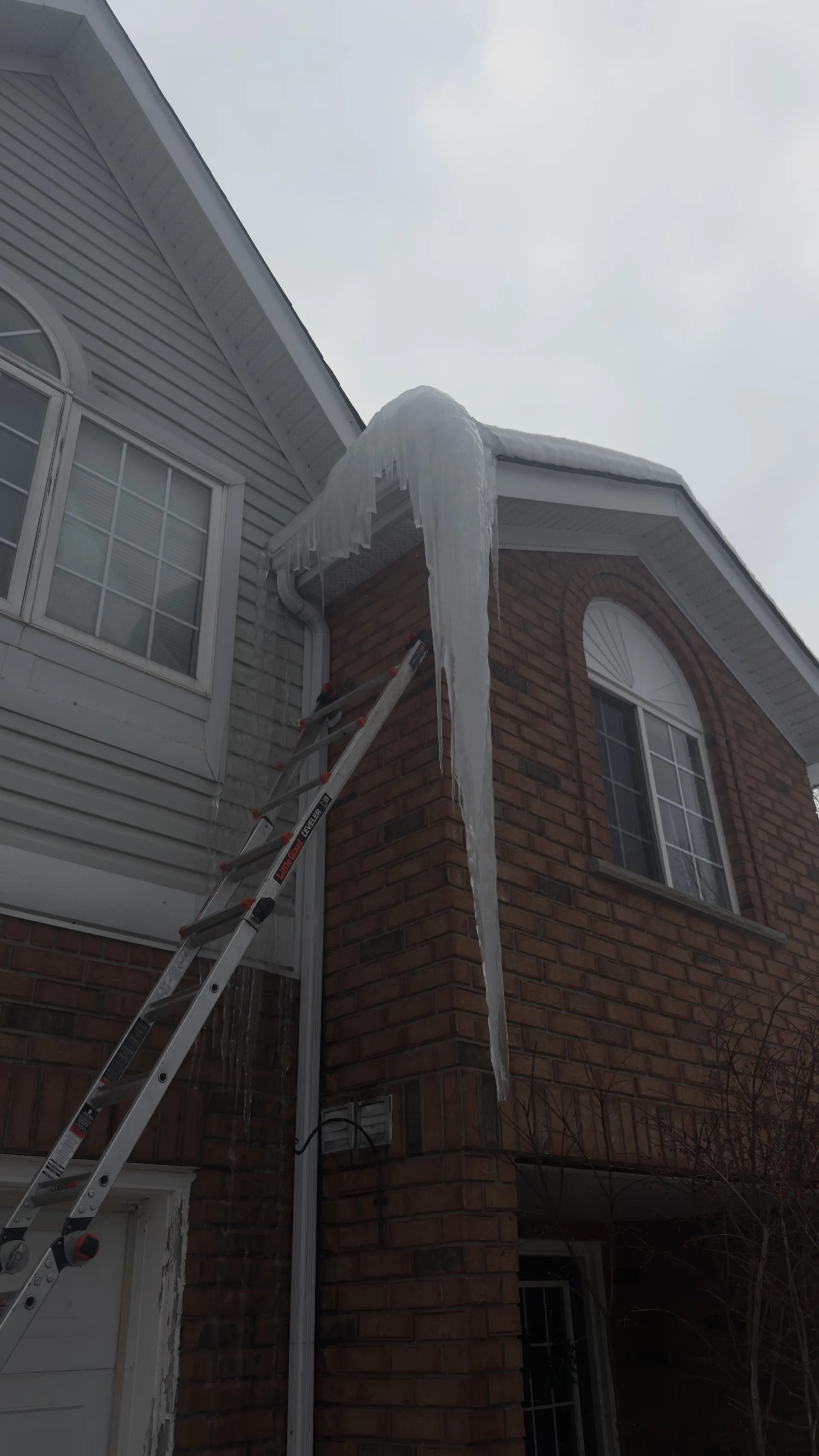
Most damage from de-icing comes from too much product on the wrong surface at the wrong time, not from de-icing itself. This method gets you grip and melting where you need it while protecting concrete, interlock and asphalt.
In This Article
Why de-icers hurt surfaces at all
Concrete and pavers are porous. Water soaks in, freezes and expands. Salty water keeps the surface wet for longer and sends it through more freeze-thaw cycles, and each cycle pops off a little more of the top layer. That flaking is called scaling. Some products also react chemically with concrete, and the ammonium-based ones are the usual offenders.
Physical damage is the other half. Metal blades chip paver edges, ice chopped with a pick pits the surface, and scraping wears through sealers. So the aim is twofold: limit how much water and chloride enter the surface, and stop attacking it with hard tools.
Know your surface first
| Surface | Main risk | Approach |
|---|---|---|
| New poured concrete, in its first winter or so | Scaling of a young surface | Ask the installer how long to wait. Avoid chloride de-icers, and use shovelling and sand |
| Mature concrete | Scaling, worse when unsealed | Use chloride lightly. A sealed surface tends to fare better |
| Interlock pavers | Scaling, lost joint sand, chipped edges | Use a plastic-edged shovel, spread lightly, and top up the joints in spring |
| Asphalt | Water freezing in cracks, gouging by blades | Sand is harmless. Keep cracks sealed and raise plow shoes |
| Stamped or exposed-aggregate concrete | Surface finish and sealer wear away | Treat it like new concrete, and go easy on chloride |
Tell your snow contractor which surface you have, where the raised edges are and whether the concrete is new. Blade height and product choice both depend on it.
Want your driveway cleared before 7am?
Seasonal snow removal for homes across Kitchener, Waterloo, Cambridge & Guelph, so winter mornings take care of themselves. Free, no-obligation quotes, ready within 1 business day.
The low-damage method, step by step
- Clear the snow first, down to the surface, with a plastic-edged shovel or pusher. De-icer works on thin ice, not through a blanket of snow.
- Match the product to the temperature. Near freezing, rock salt is enough. Colder, use a product rated for the cold. Too cold for anything to melt, use sand.
- Spread a light dusting, evenly, with a hand spreader. The surface should look lightly seasoned, not white.
- Wait, then scrape. Give the product time, and push the slush off before it refreezes.
- Add sand to any spot that still feels slick.
- Sweep up leftovers, and spread fresh product only if a new freeze is forecast.
- Fix the water source. A downspout or a low spot that keeps re-wetting the surface will undo every pass. The salt alternatives guide lists other options for problem spots.
How light is light? You should still see the surface between the granules. If the product looks like a frost on the ground, you have used too much.
When it is too cold to melt anything, sand is the plan. Spread it thinly over the ice or packed snow so it embeds and grips. It does no chemical harm to concrete or interlock, and a shallow layer is enough. Sweep it up in spring so it does not clog drains or pile up at lawn edges.
What to avoid
- Fertilizer-type products. Ammonium nitrate and ammonium sulfate are known to attack concrete, and they are not designed to melt ice.
- Heaps of product. More does not melt faster. It just leaves more residue to soak into the surface and wash into the lawn.
- Chopping ice with a pick or bar. Use a plastic scraper and let the product loosen the bond first.
- Metal blades on pavers. They chip edges and scrape out the joint sand.
- Pouring hot water on ice. It refreezes downstream as a fresh, slicker sheet.
Spring recovery for concrete and interlock
Once the ground thaws and the surface is clear, work through this list.
- Sweep up leftover sand and salt.
- Rinse the surface with a hose to flush chloride out of the joints and pores.
- Look for scaling, cracks and sunken or tilted pavers.
- Re-sand the joints once the surface is dry. If they were filled with polymeric sand, use the same type.
- Ask your installer about a sealer, which slows water and salt entering next winter.
The guide to cleaning interlock paving covers the deeper clean. For asphalt, cracks are the concern, and driveway sealing keeps water out of them. For concrete, concrete sealing cuts how much salty meltwater soaks in. If you would rather hand the winter work to someone else, D&D Home Services offers snow removal from $80 per visit for typical Kitchener-Waterloo homes, and can tell you which de-icer goes down on your surface.
Key Takeaways
- Scaling happens when salty water keeps freezing and thawing in porous concrete or pavers, so limit both the product and the water.
- Shovel to the surface first, spread a light dusting, and sweep up what is left.
- Avoid ammonium-based products, metal blades on pavers and chopping ice with metal tools.
- In spring, rinse, re-sand interlock joints and check for scaling or sunk pavers before summer.

Request a home-service quote
Select the service you need and describe the work area and access.