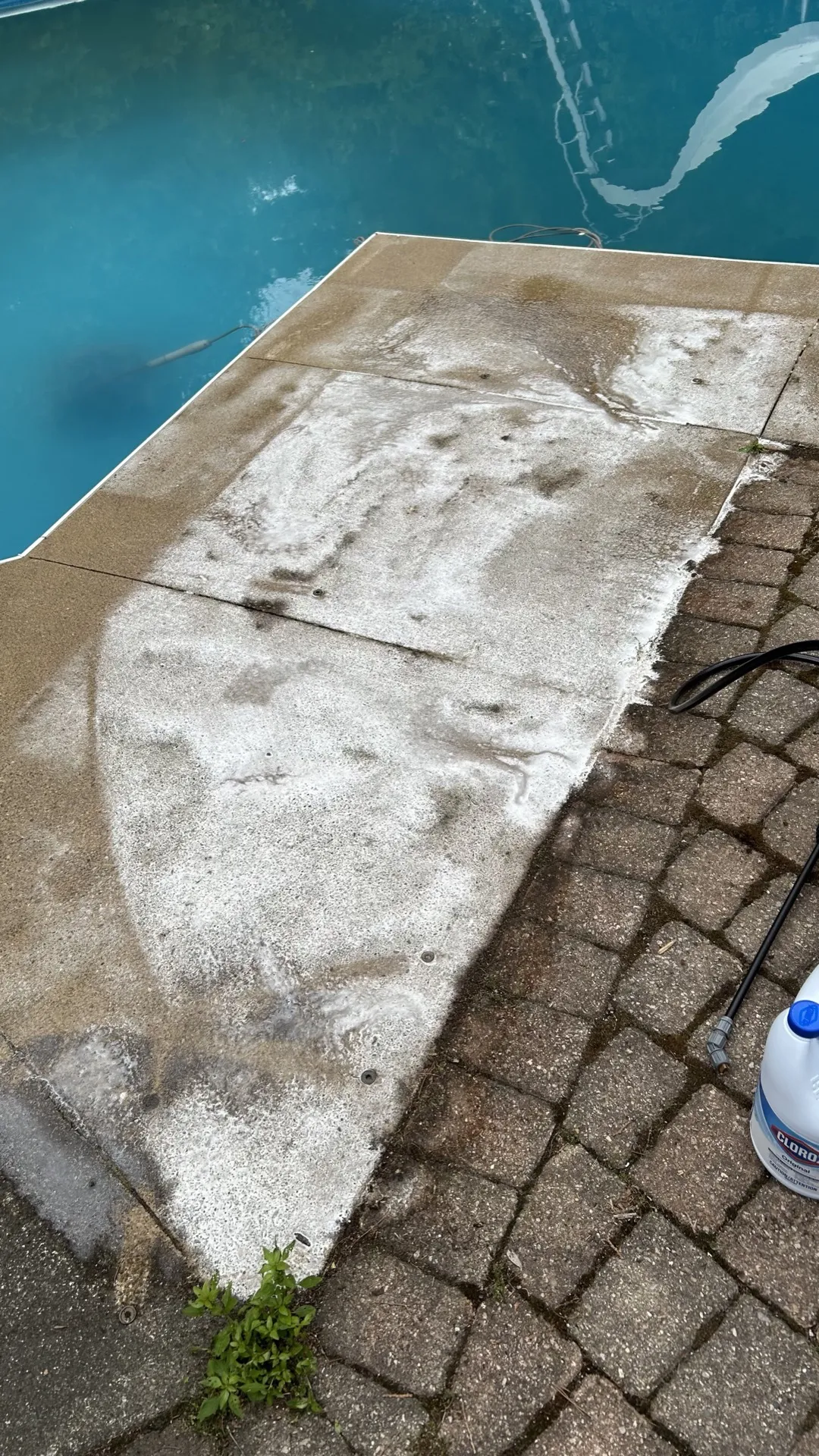
Can you pressure wash in the rain? A light shower will not stop a plain-water wash of concrete, but rain still causes real problems: slippery footing, diluted cleaning mix, shortened dwell time on soft washes and a shock risk with electric machines. Heavy rain, thunder or freezing air mean reschedule. This guide shows which kind of day you have and how a contractor decides.
In This Article
- Can you pressure wash in the rain? It depends on the job
- What rain actually changes
- Can you soft wash in the rain?
- Do roof cleaners work in the rain?
- Waterloo Region weather: when a rain day is worth moving
- How a contractor decides to wash or reschedule
- If you are washing it yourself: a go or no-go list
- Washing in the rain: questions answered
Can you pressure wash in the rain? It depends on the job
The water itself is not the issue. A pressure washer is already throwing water at the surface. The trouble starts with what else the job involves: a ladder, a cleaning mix, an electric motor or a coating that follows the wash.
| Job | Light rain | Steady or heavy rain |
|---|---|---|
| Plain-water wash of a concrete driveway or walkway | Usually workable, though results are hard to judge | Reschedule. Puddles hide missed patches and footing gets slick |
| Soft wash of siding with a cleaning mix | Better to wait | Reschedule. The mix dilutes and runs off |
| Roof cleaning | Wait. Wet shingles and algae are slick | Reschedule |
| Anything on a ladder | Wait | Reschedule |
| Washing before sealing, staining or painting | Wait. The surface must dry first | Reschedule |
| Electric pressure washer | Only under cover, on a GFCI outlet | Reschedule |
So the honest answer is yes for a simple, low-risk rinse of a hard surface, and no for almost everything else. The same goes if you ask whether you can power wash in the rain, since power washing and pressure washing are the same job.
Want an exact price for your home?
Skip the guesswork: we look at your actual property and quote it in writing, free and no-obligation. Serving Kitchener, Waterloo, Cambridge & Guelph.
What rain actually changes
Five things change when it rains, and each is a reason to stop.
- Footing. Wet rungs, wet boots and wet steps raise the odds of a slip. CCOHS advises against climbing a ladder with wet soles and against using one on ice, mud or other slippery surfaces.
- Mix strength. Rain falling during a soft wash waters down the mix and carries it off before it has done its job. You get a patchy result and an extra pass.
- Electricity. CCOHS says not to expose electric power tools to rain, since wet tools raise the chance of shock, and to plug electric pressure washers into a GFCI outlet. It also says never to spray near a power source.
- Lightning. CCOHS says that if you can hear thunder, you are within striking distance of lightning. Go to a well-constructed building and stay in for at least 30 minutes after the last thunder.
- Judging the result. Wet concrete and siding look different from dry ones. Streaks, missed spots and stains only show once the surface dries, which in a cool, damp week can take a day or more.
Heavy rain adds runoff, which moves faster toward flower beds and drains. Wind adds mist, which carries spray where you do not want it. Both are reasons to wait.
Can you soft wash in the rain?
Soft washing works in three steps: apply a cleaning mix at low pressure, let it dwell for the time the product label sets, then rinse. Rain interferes with the middle step. Water falling on the surface while the mix sits there dilutes it, and a diluted mix may not kill the algae or mould it was meant to treat.
Rain after the rinse is harmless and even helps flush the last of the residue. So the question is timing. A careful crew checks the forecast for the whole window of the job, including the dwell and the rinse, and starts only if that window is dry. A passing sprinkle may be tolerable. Steady rain is a reason to wait.
If you are curious how strength, dwell time and weather trade off, see our post on dilution ratios for soft wash mixes.
Do roof cleaners work in the rain?
This one has two answers, because "roof cleaner" can mean two different products.
A soft wash roof treatment is applied by a crew and needs a dry enough day. Rain dilutes the mix, and a wet roof covered in algae or moss is slippery. This is where Working at Heights training matters, and why careful crews avoid wet roofs. D&D Home Services offers roof cleaning in Kitchener-Waterloo.
Roof cleaning tablets and metal strips are different. They release trace amounts of zinc or copper when rain runs over them, so they rely on rain by design. They prevent growth rather than clear what is already there. Our post on soft washing versus roof cleaning tablets compares the two.
Waterloo Region weather: when a rain day is worth moving
Spring and fall give the most rain days in the washing season, and they are also the cool ones.
- Spring. Showers are frequent and surfaces dry slowly. Shaded north sides of a house can stay damp long after the sun side dries, and this is when algae shows. Waiting for a dry stretch costs little.
- Summer. Pop-up thunderstorms are the risk. Start early in the day so the work is done before afternoon storms, and stop at the first thunder.
- Late fall. Wet leaves, shorter days and cooler nights slow drying. Water left on a surface can freeze overnight, so a wash needs the air to stay above freezing until everything has dried.
Check the Environment Canada forecast for your town the evening before and again in the morning, and look at the hourly outlook, not just the daily one. Our guide to the best time to pressure wash a driveway in southern Ontario covers the seasons in more detail.
How a contractor decides to wash or reschedule
A professional runs through a short list before loading the truck.
- The forecast for the full job window. That means wash, dwell, rinse and the drying afterward, not only the hours on site.
- Thunder or lightning nearby. If so, the crew stops and waits.
- Temperature. Air and surfaces should stay above freezing until the job is dry.
- Wind. Strong wind blows spray and mix onto windows, cars and plants.
- The access needed. Ladders and roofs need dry footing.
- What comes next. Sealing, staining and painting need a dry surface, so the wash is timed to leave room for that.
Ask any company what its rain policy is before you book, and get the answer in writing. A good one reschedules without fuss and gives you the new date. D&D Home Services gives free written quotes for pressure washing, from $350 for typical Kitchener-Waterloo homes, and confirms the details before work begins.
If you are washing it yourself: a go or no-go list
For a homeowner with a rented or owned machine, the simple version looks like this.
- Go: dry weather or the lightest drizzle, no thunder, above freezing, a plain-water wash of a hard surface, a GFCI outlet and firm footing.
- Wait: steady rain, standing water around cords, strong wind, any ladder work, any roof, and any job using a cleaning mix.
Read DIY pressure washing safety before you start. The water jet can break the skin, so never point it at a person, and wear eye protection.
Washing in the rain: questions answered
Does rain ruin a freshly pressure washed driveway?
No. Rain after a wash only rinses the surface again. It matters only if you planned to seal, stain or paint, because those need a dry surface and the label's dry time, often a day or two or more in cool weather. Wait for a dry spell before the next step.
Can you power wash in the rain safely?
A light shower is tolerable for a plain-water rinse of a hard surface if you have solid footing, no thunder and a GFCI outlet. Electric machines should not be left exposed to rain, and ladders, roofs and cleaning mixes are better left for a dry day. Stop at the first thunder.
Can you soft wash in the rain?
It is best not to. Rain during the dwell time dilutes the mix, so the cleaning is patchy. A passing sprinkle may be fine, but steady rain is a reason to wait. Rain after the rinse does no harm. Ask your contractor how they decide, and expect them to check the hourly forecast.
Do roof cleaners work in the rain?
Soft wash roof cleaning needs a dry enough day, since rain dilutes the mix and wet algae makes shingles slippery. Roof cleaning tablets are the exception because they depend on rain to carry zinc or copper down the roof, but they prevent growth rather than clean what is already there.
Key Takeaways
- Rain is not the main issue. Footing, ladders, electricity, diluted mix and what comes next are.
- A light shower can be tolerable for a plain-water rinse of a hard surface with a GFCI outlet and no thunder.
- Soft washing and roof cleaning need a dry window for the whole dwell, rinse and drying time.
- Stop at the first thunder and wait 30 minutes after the last thunder.
- Ask a contractor for their rain policy in writing before you book.
Sources & References

Request a home-service quote
Select the service you need and describe the work area and access.