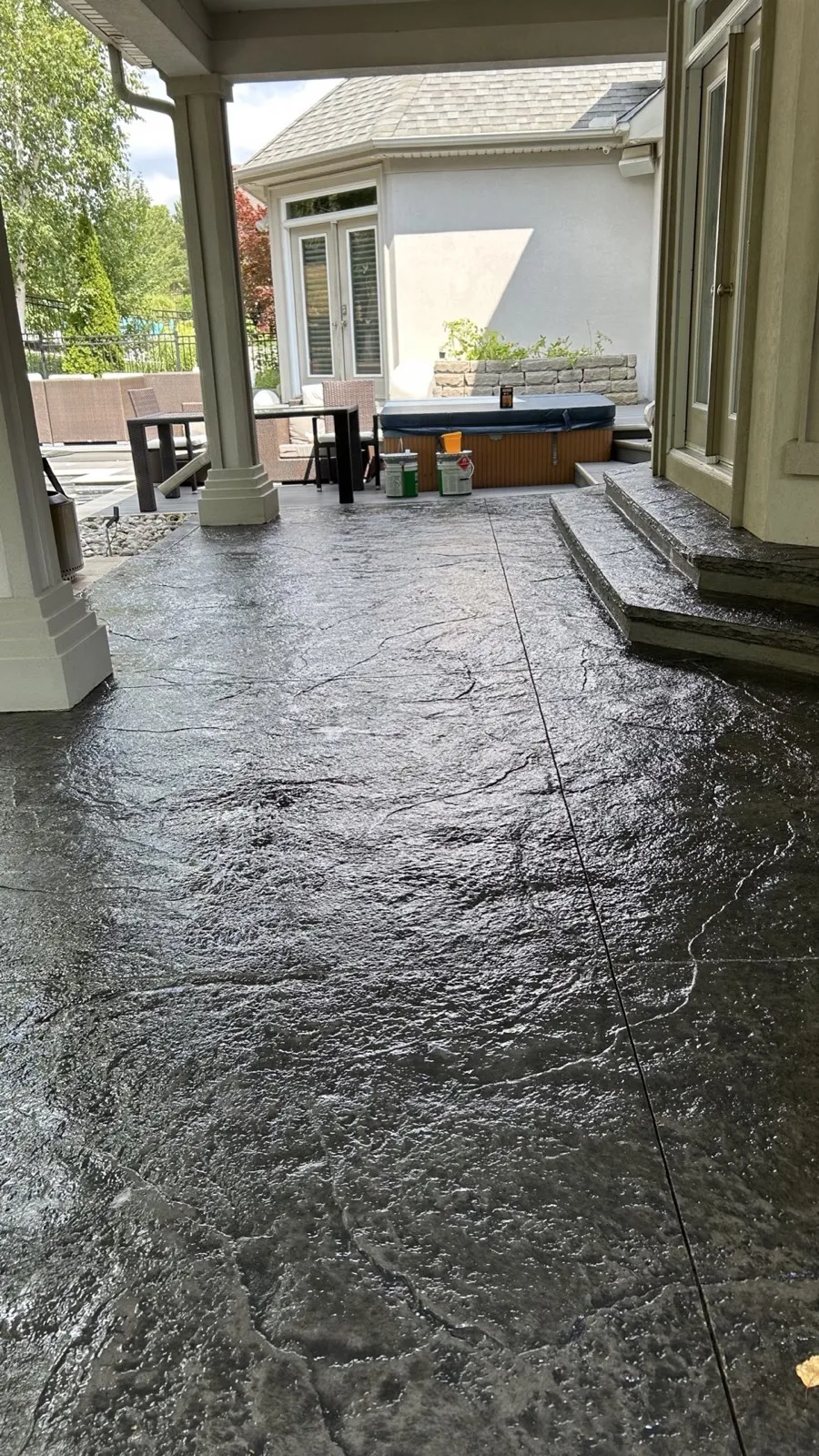
A label says how long to stay off a new coat, but not what to do about the sprinkler timer, the downspout, the morning dew or the teenager with the car keys. Here is a three-day plan for protecting a fresh sealcoat in Ontario weather, and what to watch in the weeks after.
In This Article
Before the crew leaves: a two-minute walk-through
The easiest moment to catch a problem is while the crew is still in the driveway. Walk the edges with the person in charge and look for:
- Missed strips along the garage door, the lawn edge and the apron.
- Puddles of product in low spots, which can stay soft for longer.
- Cones or barricades at both ends, so nobody drives in by mistake.
Ask for the product's name and its foot and vehicle times, and save them in your phone. Then photograph the finished coat with the date visible. That picture is your baseline if anything changes later.
Hours 0 to 24: switch off what wets and moves
- Sprinklers. Turn off any timer whose spray reaches the driveway, including the one that runs at 5 a.m.
- Downspouts. If rain is forecast, aim roof water off the pavement with a temporary extension, so a concentrated stream does not hit the fresh film. The downspout extensions guide shows simple options.
- The garage. Park the cars on the street beforehand, and tape a note to the door switch so nobody backs out by habit.
- Pets and children. Keep dogs indoors or on a leash away from the driveway. Bikes, scooters and sidewalk chalk can wait.
- The first night. Compare the overnight low with the label. If frost or a downpour is forecast before the film has set, call whoever applied it that day, so they can advise.
Want your exact driveway sealing price?
Skip the guesswork, we quote your actual driveway, itemized line by line, free and no-obligation. Serving Kitchener, Waterloo, Cambridge & Guelph, with quotes ready within 1 business day.
Hours 24 to 72: the quiet stretch and the first drive
Leave the middle of the driveway alone. Foot and vehicle times come from the label, and cool, damp or shaded conditions stretch them. The guide to how long after sealing you can drive lists typical waits. Until they pass, avoid these:
- Hosing the surface, running a leaf blower or sweeping. Water can mark a soft film, and blowers throw grit into it.
- Setting down anything wet or heavy, such as bins, planters, salt bags or buckets. They leave rings and dents.
- Stepping across it to check. Use a corner that hides easily if you must look.
When the label says a light vehicle may return, make the first drive gentle. Roll in straight and slowly, do not turn the wheels while stopped, and park a little off the usual spot. Look at the tracks afterwards. Fresh marks mean the film is still soft, so stay off for longer.
What is normal, and what to raise
| What you see | Usually means | What to do |
|---|---|---|
| A deep black that flattens to a duller finish | The film is drying as it should | Nothing, and give it time |
| Faint scuffs from a warm afternoon | A young film that is still firming up | Avoid repeat parking on the spot, and see whether they fade |
| Pinholes or small bubbles | Trapped moisture, or pavement that was too hot | Photograph them and tell the contractor, and do not pick at them |
| A patch that stays tacky well past the label's time | A thick spot, a low area or damp weather | Mark it, keep off it and ask the contractor to look |
| Product tracked onto the garage floor | Someone crossed too early | Wipe it up at once, following the label's cleanup advice |
| Lifting or peeling within days | Poor bond, often from a dirty or damp surface | Call the same day with photos |
Weeks two to four: the coat is still hardening
A coat keeps hardening for weeks after it is safe to drive on. In that stretch:
- Skip sharp turns on the apron, and do not steer while stopped.
- Do not park on exactly the same patch every hot afternoon. Alternate between two spots.
- Rake off wet leaves promptly, since they stain a young coat.
- If early snow arrives, use a plastic-edged shovel, and check the label before spreading de-icer.
- Write the product name, the date and your photos in a driveway log.
Whoever seals your driveway, ask what would bring them back, such as a spot that stays tacky, and how to reach them if it does. At D&D Home Services, driveway sealing starts at $450 on a typical Kitchener-Waterloo home, and the quote is free and comes in writing before work starts.
Key Takeaways
- Walk the finished coat with the crew, note the product and its label times, and photograph it with the date visible.
- In the first day, switch off sprinklers, redirect downspouts, park the cars away and keep pets and children off the driveway.
- Make the first drive gentle: roll in straight, do not turn the wheels while stopped and check the tracks for fresh marks.
- A coat keeps hardening for weeks, so avoid sharp turns, rotate parking spots and rake off wet leaves promptly.

Request a home-service quote
Select the service you need and describe the work area and access.