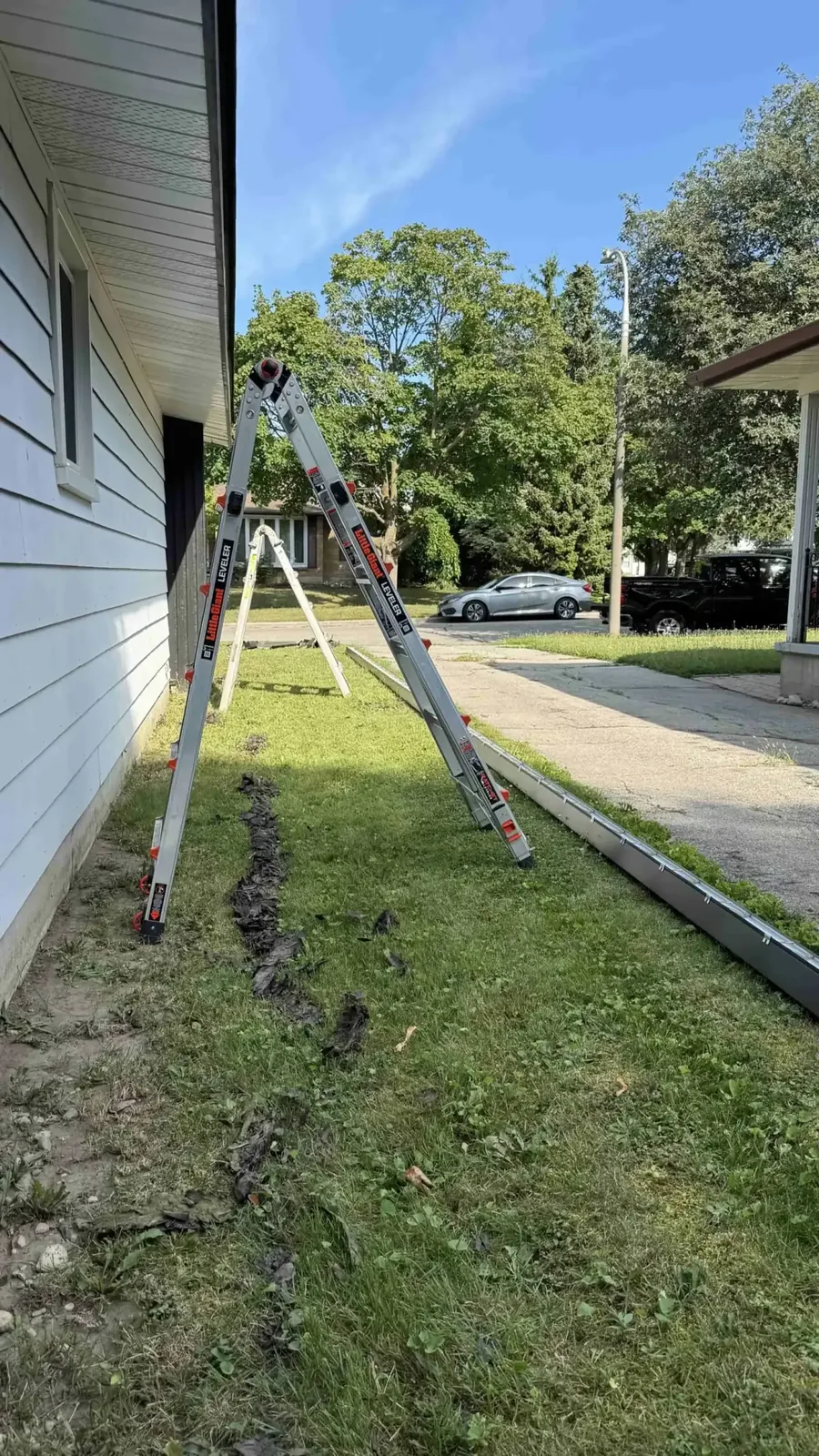
Your gutters collect thousands of litres of water from your roof every year, but where that water goes after the downspout is just as important as collecting it in the first place. Without proper downspout extensions, all that water dumps directly at your foundation, where it can cause basement leaks, foundation cracks, and soil erosion that costs tens of thousands of dollars to repair. It's one of the most overlooked and easiest-to-fix problems on Ontario homes.
In This Article
Why Extensions Are Essential
The soil immediately around your foundation is different from the soil a few feet away. During construction, the area adjacent to the foundation is backfilled with loose, disturbed soil that compacts over time but is never as dense or drainage-efficient as undisturbed soil. This means water dumped at your foundation pools there rather than draining away, and that pooled water puts hydrostatic pressure on your foundation walls.
Over time, this pressure forces water through hairline cracks in poured concrete or through mortar joints in block foundations. Even a small but consistent amount of water infiltration causes significant damage: efflorescence (white mineral deposits on basement walls), mould growth, damage to finished basement spaces, and ultimately structural cracking. In freeze-thaw climates like Kitchener-Waterloo's, water that infiltrates foundation cracks expands when it freezes, widening those cracks each winter cycle.
The good news is that proper downspout extensions are inexpensive, easy to install, and genuinely effective at preventing these problems. A $15 to $40 extension is an extraordinary value compared to a $5,000 to $30,000 foundation waterproofing or repair job.
The 4 to 6 Foot Rule
The general guideline recommended by most Ontario building professionals and the Ontario Building Code for drainage grading is to direct water at least four to six feet away from your foundation before it is released onto the surface or allowed to percolate into the soil. The rationale is that soil within this distance is most likely to be the disturbed backfill that drains poorly and holds water against the foundation.
In practice, six feet is better than four, and longer is even better on properties where the natural grade slopes toward the house or where soil drainage is known to be poor. Conversely, if your yard has excellent drainage and slopes naturally away from the foundation at more than 6 inches of drop over the first ten feet, shorter extensions may be adequate, but only if the water is truly moving away from the house at the point of discharge.
Don't terminate extensions near window wells, basement stairwells, or low-lying areas where water will pool. The point of discharge needs somewhere to go, ideally a swale that leads to the street, a drainage ditch, or a rain garden planted with water-tolerant species that can absorb the periodic discharge.
Gutters overflowing, or overdue for a clean?
We clean and flush gutters across Kitchener, Waterloo, Cambridge & Guelph, and catch small problems before they reach your foundation. Free, no-obligation quotes, ready within 1 business day.
Types of Extensions
Rigid aluminum extensions are the most durable option and match standard aluminum downspouts visually. They connect directly to the existing downspout with a simple slip-fit or sheet metal screw attachment. Rigid extensions hold their position, don't kink, and can be painted to match your home's exterior. They cost $10 to $25 per extension at any home improvement store and last as long as the downspout itself.
Flexible vinyl extensions, often called corrugated drainage extensions, are the most common type found in Ontario hardware stores. They're inexpensive ($5 to $15), easy to cut to length, and flexible enough to route around obstacles like garden beds or air conditioner units. The downside is that they can kink and trap debris, don't hold their angle well over time, and look less polished than rigid options. Rodents can also chew through them.
Roll-out extensions (often called "Flip-It" or roll-up splashguards) are an interesting option for homeowners who mow close to the foundation. When dry, the extension remains rolled up in a compact cylinder. When water flows through during rain, the water pressure unrolls it to full extension, typically four to six feet, and then it rolls back up when the rain stops. They're convenient and low-profile but less durable than rigid aluminum.
| Extension Type | Durability | Aesthetics | Cost Each | Best For |
|---|---|---|---|---|
| Rigid aluminum | Excellent | Good (paintable) | $10–25 | Most homes |
| Flexible vinyl | Moderate | Functional | $5–15 | Routing around obstacles |
| Roll-out (Flip-It) | Good | Excellent (compact) | $15–30 | Mowing-area lawns |
| Underground PVC | Excellent | Invisible | $500–1500 installed | Clean appearance |
Underground vs Above-Ground
Underground downspout drainage connects your downspout through a buried PVC pipe to a discharge point further from the house, typically daylighting to a lower point in the yard, connecting to a storm sewer, or terminating in a pop-up emitter. The result is invisible and effective, making it popular in landscaped front yards where above-ground extensions look out of place.
For Kitchener-Waterloo, underground systems come with a specific caution: Ontario's frost depth is typically 3.5 to 4 feet. PVC drainage pipes installed shallower than the frost line will freeze solid during cold snaps, blocking drainage at exactly the time, spring melt, when you need it most. Frozen underground downspout pipes can also cause water to back up into the downspout and refreeze there, potentially causing expansion damage to your gutters and downspouts. Professional installation that accounts for frost depth is essential.
A properly installed underground system with a pop-up emitter or daylight outlet at the correct depth and with a gentle, consistent slope is the best long-term solution for drainage management. It eliminates the tripping hazard of above-ground extensions, looks professional, and handles large volumes of water efficiently. For a complete assessment of whether underground drainage is right for your property, our team can evaluate your yard's drainage patterns and soil conditions.
Installation Tips
Before purchasing extensions, measure the distance from each downspout to where you want water to discharge. Account for any obstacles, air conditioner pads, garden beds, walkways, that you'll need to route around. If using rigid extensions, you may need one or more elbow fittings to navigate around these obstacles while maintaining the correct downward slope.
Always install extensions with a slight downward slope from the downspout to the discharge point. An extension that runs level will pool standing water that attracts mosquitoes, develops algae, and can freeze in place in winter. Even a subtle one-inch drop over six feet is sufficient to keep water moving.
Secure extensions with sheet metal screws at the connection point so they don't pull free when stepped on or hit by lawn equipment. In areas where extensions run across lawn or garden areas, consider burying the extension a few inches below soil level and covering with mulch, it keeps them out of the way while maintaining above-freezing depth in most conditions.
Common Mistakes
The most common mistake is a too-short extension that deposits water only two or three feet from the foundation, still well within the disturbed backfill zone. Another is pointing the extension discharge toward a neighbouring property, which can create drainage disputes with neighbours and may violate local drainage bylaws.
Don't discharge directly onto hardscape like patios, driveways, or sidewalks where water has nowhere to go but pool or run toward the house. Avoid terminating extensions in low spots that accumulate water, you're just creating a saturated area that will eventually find its way back to the foundation through the soil. And never connect your downspout extension to your sanitary sewer system, this is illegal under Ontario's Sewer Use Bylaw in most municipalities and can cause significant fines.
Pro Tip: Walk your property during a heavy rain event and watch where water flows. This reveals your actual drainage patterns better than any dry-day assessment. You'll see which downspouts are discharging correctly, which are too short, and whether your yard's overall grading is directing water toward or away from your home.
Key Takeaways
- ✓ Non-negotiable: Every downspout needs an extension of at least 4–6 feet to protect your foundation from water damage.
- ✓ Best option: Rigid aluminum extensions are durable, low-maintenance, and match most homes' downspout systems.
- ✓ Ontario caveat: Underground extensions must be installed below the 3.5–4 foot frost line or they will freeze solid in winter.
- ✓ Slope required: Extensions must slope downward from the connection point, level or upward-sloping extensions trap water.
- ✓ Discharge location: Point water toward lawn areas, swales, or rain gardens, never toward neighbours, hardscape, or low-lying areas.

Request a home-service quote
Select the service you need and describe the work area and access.