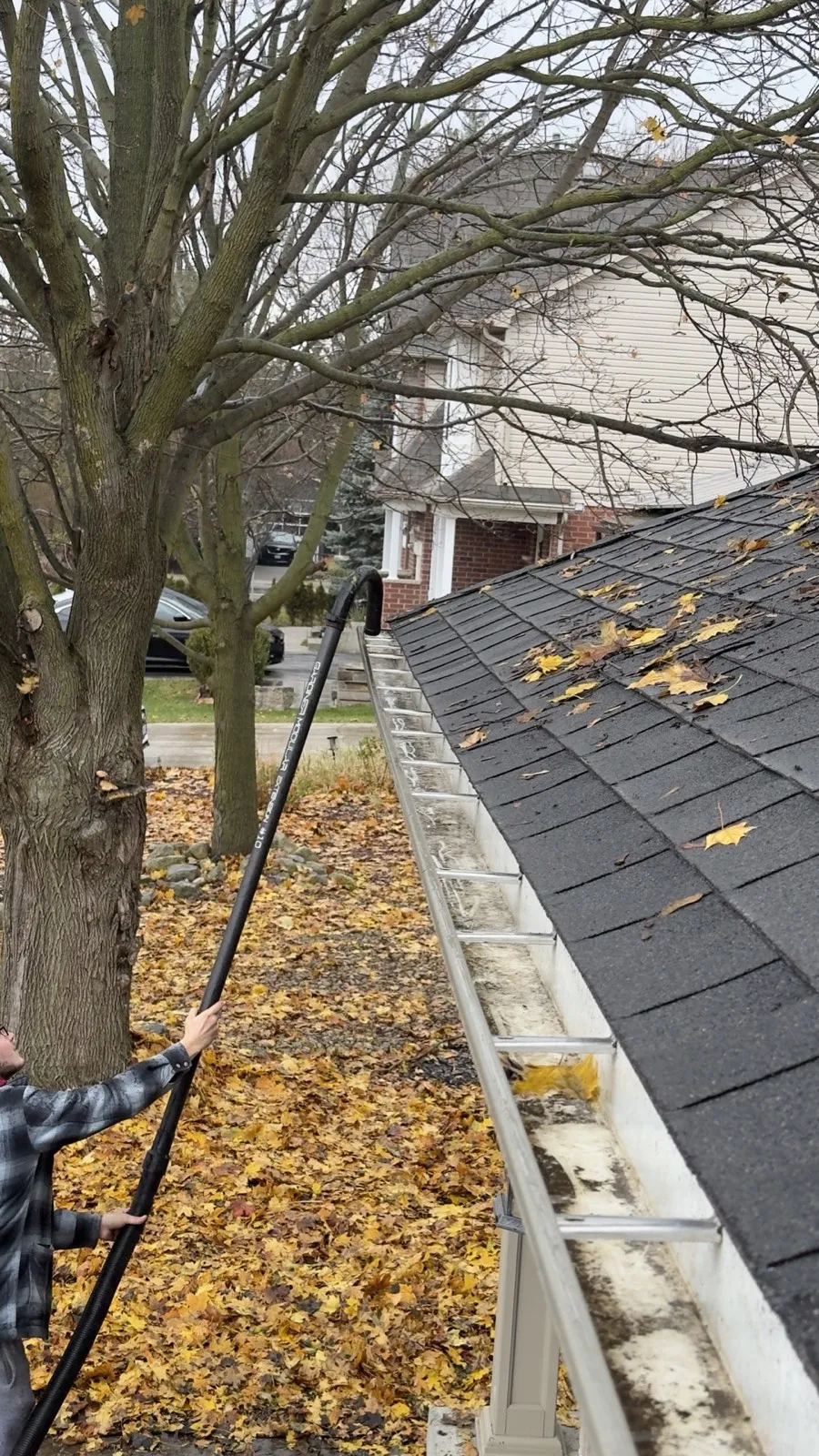
Gutter damage rarely announces itself dramatically. It develops quietly through the seasons, a slight sag here, a leaking joint there, until the consequences show up as a wet basement, rotted fascia board, or eroded landscaping. Knowing what to look for lets you catch these problems while they're still cheap fixes rather than expensive repairs.
In This Article
Why Gutter Inspections Matter
Your gutters are one of your home's primary water management systems. When they're working correctly, they collect roof runoff and channel it safely away from your foundation. When they fail, whether through blockage, damage, or improper pitch, all that water has to go somewhere, and it typically goes somewhere you don't want it: down your siding, pooling at your foundation, or soaking into your soffit and fascia boards.
In Kitchener-Waterloo, the post-winter inspection is the most critical one of the year. Ontario's freeze-thaw cycles are brutal on gutters. Heavy ice formation can pull hangers loose, crack seams, and bend gutter profiles, damage that may not be visible from the ground until water starts going where it shouldn't. A spring inspection after the ice has cleared gives you a full picture of the winter's impact before the spring rains put your gutters to the test.
The good news is that most gutter damage is visible with a careful inspection from the ground combined with a close-up look from a ladder at specific concern areas. You don't need to be a professional to know what damaged gutters look like, you just need to know what to look for.
Signs of Sagging or Pulling Away
Stand back from your home and look along the length of each gutter run. Properly hung gutters follow a consistent, gentle slope from the high end toward the downspout. Any dip or sag in the profile, a visible low point between hangers, indicates that one or more hangers have failed or pulled loose from the fascia board. This is among the most common gutter problems in Ontario, caused primarily by the weight of ice loads that exceed what the original hanger spacing was designed to handle.
Gutters that have pulled away from the fascia leave a visible gap between the back of the gutter and the fascia board. Water that overshoots this gap during rain runs directly down the fascia and soaks into the wood rather than entering the gutter. Even a half-inch gap is enough to direct significant water volume onto your fascia. Check the roofline gap from ground level, it's often visible with binoculars or from an angle where sunlight reveals the gap.
Sagging can also result from gutters that haven't been cleaned regularly. A gutter full of decomposing leaves, seeds, and debris weighs considerably more than an empty one, particularly after rain when debris becomes waterlogged. This accumulated weight progressively pulls hangers loose over years, leading to the sagging profile. Regular gutter cleaning is the most effective preventive measure.
Gutters overflowing, or overdue for a clean?
We clean and flush gutters across Kitchener, Waterloo, Cambridge & Guelph, and catch small problems before they reach your foundation. Free, no-obligation quotes, ready within 1 business day.
Rust and Corrosion
Most residential gutters in Ontario are aluminum, which doesn't rust. However, older homes may have steel gutters, and certain components, screws, brackets, hangers, are often galvanized steel that can rust over time. Rust staining on the outside face of gutters (orange streaks running down the gutter profile) is a reliable indicator that steel components are oxidizing somewhere in the system.
On aluminum gutters, look instead for oxidation, a chalky, dull white or grey surface where the protective oxide layer has broken down. This is mostly aesthetic but can indicate the aluminum has been under sustained chemical stress (from certain fertilizers, pool chemicals, or acid rain) that may accelerate future deterioration.
Interior rust or corrosion in older steel gutters appears as pitting, thin spots, and eventually small holes in the gutter floor. These are difficult to see without looking inside the gutter, but from below you may notice water dripping through small holes during rain, or orange-brown staining on the fascia or siding directly below the gutter. These holes typically cannot be permanently repaired, they indicate the metal is failing throughout and replacement is warranted.
Leaking Joints and Holes
Sectional gutters, the most common type on older Ontario homes, consist of lengths of gutter connected by slip joints that are sealed with butyl sealant. Over time, this sealant dries, cracks, and fails, allowing water to drip from the joint during rain. The freeze-thaw cycle is particularly destructive: when water inside the joint freezes, it expands and forces the joint open further, accelerating sealant failure.
To check for joint leaks, run water into the gutter with a garden hose and watch the joints from below. Active dripping from a joint is a clear indication of sealant failure. Small holes from corrosion or physical damage will also be visible as streams of water. Catch this early and it's a $10 DIY repair with a tube of butyl gutter sealant. Ignore it and the dripping water saturates the fascia below, leading to rot, mould, and potentially a full fascia replacement at $500 to $2,000.
For a detailed repair guide, see our post on how to repair leaking gutter joints. If you have seamless gutters and notice leaking, the source is typically an end cap, an outlet, or a mitre joint, all repairable with sealant but worth addressing promptly.
Peeling Paint and Water Stains
Peeling exterior paint or dark staining on your siding directly below the gutters is one of the most reliable indicators of long-term gutter overflow or leaking. When gutters consistently overflow, from blockage, undersizing, or improper pitch, water runs down the siding repeatedly. This repeated wetting and drying cycles damage paint adhesion and can cause mould growth on the siding surface.
Look for vertical staining streaks running down the siding from the roofline, particularly at the corners of the house and at downspout locations. These streaks are often darker than the surrounding siding and may have a green or black tinge from algae or mildew growth encouraged by persistent moisture.
Dark water staining on the soffit (the underside of the roof overhang) is a serious sign that water is getting behind the gutter or overflowing toward the house rather than away. This indicates a pitch problem, the gutter slopes slightly toward the house rather than toward the downspout, or a blockage that causes persistent overflow in the wrong direction. Left unaddressed, soffit water damage leads to mould in your attic insulation and rafters.
When to Repair vs Replace
The repair-vs-replace decision comes down to three factors: the age of the gutters, the material, and the extent of damage. Aluminum gutters with minor issues, a failed hanger, a leaking joint, a loose end cap, are nearly always worth repairing. These fixes cost $50 to $200 and extend the system's life by years. Aluminum gutters in good structural condition can last 20 to 30 years with proper maintenance.
Replacement becomes the better choice when gutters are heavily corroded throughout (especially older steel systems), when multiple sections have failed simultaneously suggesting the entire system has aged out, when the fascia board behind the gutter is rotted (making it impossible to re-hang the gutter securely), or when you want to upgrade from sectional to seamless gutters to eliminate future joint problems.
If you're unsure whether repair or replacement is the better value, our team offers free gutter assessments as part of our eavestrough service. We'll give you an honest assessment of whether your current gutters are worth salvaging or whether replacement offers better long-term value.
Seasonal Inspection Checklist
Conduct your primary inspection in late April or early May, after the last freeze and before the main spring rainy season. Walk the perimeter of your home and check each of the following:
| What to Check | What to Look For | Action Needed |
|---|---|---|
| Gutter profile | Sags, dips, uneven slope | Re-hang or replace hangers |
| Fascia gap | Gap between gutter back and fascia | Re-secure with new hangers |
| Joints (sectional) | Drips during hose test | Clean and reseal joint |
| Gutter surface | Rust, corrosion, holes | Patch or replace section |
| Siding below gutters | Staining, peeling paint | Investigate overflow source |
| Soffit | Dark staining, soft spots | Check pitch and blockage |
| Downspouts | Loose straps, damage, clogs | Re-strap or clear blockage |
Pro Tip: Do your spring gutter inspection during or right after a heavy rain. Active problems, overflows, leaks, drips, are immediately visible with water flowing through the system. A dry inspection can miss intermittent issues that only appear under rain load.
Key Takeaways
- ✓ Inspect in spring: The post-winter check is the most important, ice damage may not be visible until snow and ice clear.
- ✓ Sagging is serious: A drooping gutter profile means failed hangers, water will overshoot and damage your fascia.
- ✓ Read the siding: Peeling paint or dark staining below gutters is a reliable indicator of chronic overflow or leaking.
- ✓ Test with water: Running a hose through the system reveals leaking joints, improper pitch, and blockages all at once.
- ✓ Repair early: A $50–200 repair caught early prevents $500–5,000 in fascia, foundation, or basement damage later.

Request a home-service quote
Select the service you need and describe the work area and access.