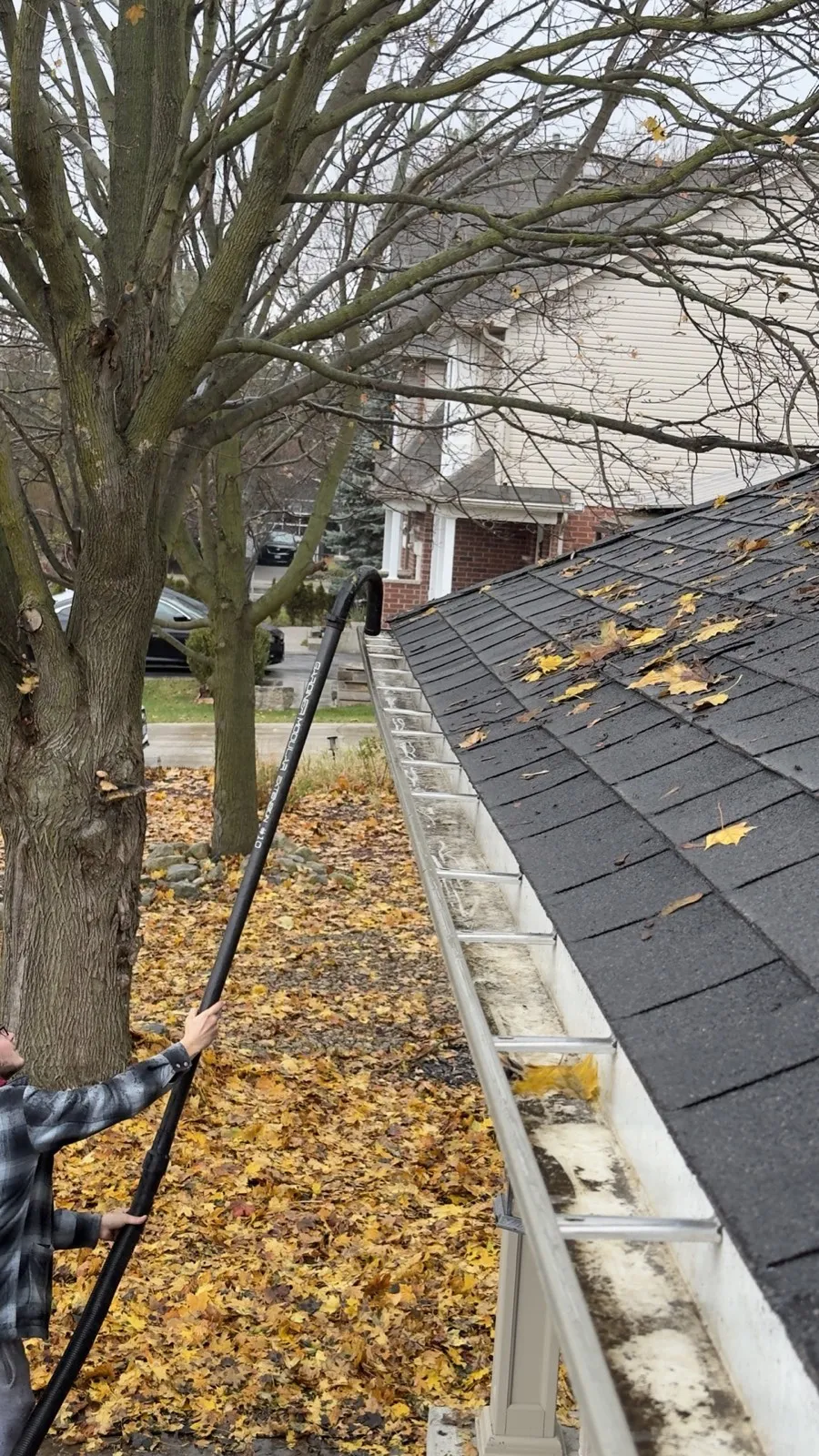
A leaking gutter joint is one of the most fixable home maintenance problems, the materials cost under $20 and the repair takes less than an hour on a dry afternoon. But done wrong, a resealed joint fails again within a season. Here's exactly how to do it correctly the first time, including the specific product choices that make the difference between a lasting repair and a frustrating repeat job.
In This Article
Why Gutter Joints Fail
Sectional gutters are connected at overlapping slip joints sealed with butyl rubber sealant applied at installation. This sealant is flexible when new, forming a watertight barrier between the two overlapping gutter sections. Over time, however, two forces work against it: thermal cycling and UV degradation.
Aluminum gutters expand and contract with temperature changes. On a clear Ontario summer day, a gutter can reach 50°C to 60°C in direct sun, then cool to 20°C or below at night. Over years of these daily cycles, the joint flexes open and closed repeatedly, gradually fatiguing the sealant and opening small channels through it. Ontario's freeze-thaw cycles accelerate this dramatically, when water in the joint freezes and expands, it forces the overlapping sections apart more aggressively than simple thermal cycling does.
UV exposure also degrades butyl sealant at joints exposed to sunlight, causing it to crack and harden rather than remaining flexible. Once hardened, sealant no longer accommodates joint movement and separates from the aluminum surface rather than stretching with it. The combination of mechanical fatigue and UV degradation means virtually every joint in an older sectional gutter system eventually fails, it's a question of when, not if. For a permanent solution to this problemseamless gutters eliminate mid-run joints entirely.
Tools and Materials You'll Need
Before you climb the ladder, gather everything you need to avoid multiple trips. The list is short but specific product choices matter significantly.
For tools, you'll need a stiff wire brush (a standard household wire brush works well), a putty knife or old screwdriver for scraping, clean rags or paper towels, a caulking gun, and a cordless drill with self-tapping sheet metal screws (size 1/4-inch hex head, 3/8 to 1/2 inch long). Safety equipment, non-slip shoes, a stable ladder, and a spotter, are non-negotiable.
The critical material choice is the sealant. Use butyl rubber gutter sealant specifically, not general-purpose silicone caulk, not paintable latex caulk, not clear RTV sealant. Butyl gutter sealant (GE, Tremco, or DAP Butyl-Flex are common brands available at Home Depot or Rona) remains flexible through Ontario's temperature range, adheres well to aluminum even after years of weathering, and is waterproof immediately rather than requiring cure time before rain exposure. Silicone caulk seems similar but is much harder to adhere to surfaces with any existing oxidation and loses adhesion more quickly in this application.
| Item | What to Buy | Cost |
|---|---|---|
| Gutter sealant | Butyl rubber gutter sealant (DAP, GE, or Tremco brand) | $10–15/tube |
| Sheet metal screws | 1/4" hex head, 3/8" long, self-tapping | $5–8/box |
| Wire brush | Standard stiff-bristle wire brush | $5–8 |
| Putty knife | Standard 2-3" flexible blade | $5–10 |
Gutters overflowing, or overdue for a clean?
We clean and flush gutters across Kitchener, Waterloo, Cambridge & Guelph, and catch small problems before they reach your foundation. Free, no-obligation quotes, ready within 1 business day.
Step-by-Step Repair Process
Step 1: Confirm the leak location. Run water into the gutter above the suspected joint using a garden hose and watch from below where dripping occurs. Joint leaks drip from the seam; end cap leaks drip from the ends; downspout outlet leaks come from the outlet fitting. Confirm before you work so you address the right location.
Step 2: Wait for a dry period. The joint must be completely dry before applying sealant, butyl sealant does not bond well to wet aluminum. Wait at least 24 hours after rain and work on a dry, moderate-temperature day. Very cold days (below 5°C) make butyl sealant too stiff to work with properly; very hot days (above 30°C) make it runny and difficult to control.
Step 3: Remove all old sealant. This is the step most DIY repairs skip, and it's the primary reason resealed joints fail quickly. Use a putty knife to scrape out as much old sealant as possible from inside the joint, then use the wire brush to remove residual sealant and oxidation from the aluminum surfaces. You don't need to get to bare shiny metal, but the surfaces should be clean and free of loose material. Wipe with a clean dry rag to remove debris.
Step 4: Re-secure the joint mechanically. If the joint has opened (visible gap between sections), press the sections back together and drive two or three sheet metal screws through both layers of the joint, one at the bottom and one on each side. These screws hold the sections in proper alignment while the sealant cures and prevent the joint from opening again. Pre-drill pilot holes to prevent the screws from deforming the aluminum profile as they go in.
Step 5: Apply sealant from the inside. Load the sealant tube in your caulking gun and cut the nozzle at a slight angle for a small bead. Working from inside the gutter, run a continuous bead of butyl sealant along the full length of the joint seam, the line where the two gutter sections overlap. Cover the entire joint length including the corners where the gutter profile changes direction. Apply a second bead at any point where the first bead didn't fully cover the seam.
Step 6: Tool the sealant. Use a wet finger or a smooth stick to press the sealant bead firmly into the joint seam and smooth it to a consistent profile. The goal is to fully fill the gap and create a concave surface that sheds water rather than collecting it. Clean excess sealant from the gutter floor with a rag while it's still fresh.
Pro Tip: Apply sealant from inside the gutter, not from outside. Water flows on the interior surface of the gutter, this is where the watertight seal must form. Sealant applied only to the exterior of the joint seam is cosmetic, not functional, and won't stop leaking.
Choosing the Right Sealant
The product choice is worth elaborating on because hardware stores stock many sealants that look similar but perform very differently in this application. Butyl rubber sealant is the professional standard for gutter joints because its chemical properties align specifically with this application: it remains flexible from -40°C to +80°C, resists water without requiring cure time, and adheres to oxidized aluminum without requiring primer.
Silicone sealant, even high-quality silicone, is problematic in gutter joints. It does not adhere well to aluminum surfaces that have any oxidation (which is essentially all outdoor aluminum), it's very difficult to remove when it fails making subsequent repairs harder, and it remains slippery when cured which reduces adhesion to subsequent sealant layers. If a previous repair used silicone, scrape it out as thoroughly as possible before applying butyl.
Flex Seal and similar rubberized spray coatings are sometimes used as quick fixes for gutter leaks. They can temporarily stop small leaks but don't hold up through Ontario's freeze-thaw cycles and are extremely difficult to remove for proper repair. Avoid them for joint repairs, they're a temporary measure that complicates future proper repair.
When DIY Won't Cut It
Joint resealing is appropriate when the joint has simply lost its original sealant and the aluminum sections are still in sound condition. Several situations call for professional repair or replacement instead.
If the gutter sections around the joint are heavily corroded, physically bent, or otherwise compromised, resealing the joint will not address the underlying degradation and the repair will fail quickly. If multiple joints throughout the system are failing simultaneously, this indicates the gutters have aged out, replacing the system is better value than resealing each joint every two to three years. If the fascia behind the joint is rotted, the gutter needs to be removed, the fascia repaired, and the gutter properly re-hung with secure hanger attachment before joint sealing will be durable.
Seamless gutters represent the permanent solution to recurring joint problems. Our eavestrough installation service replaces sectional systems with custom-fabricated seamless aluminum gutters that eliminate mid-run joints entirely. If you're on your third or fourth repair of the same joints, the economics of seamless replacement typically make more sense than continued patch work.
Professional Repair Option
If you're not comfortable working on a ladder, if the joints are on upper-floor gutters, or if you'd prefer to have the repair done with a warranty, D&D Home Services provides gutter repair services throughout Kitchener, Waterloo, Cambridge, and Guelph. We assess the entire system when we repair individual joints, so you get a clear picture of whether targeted repair or full replacement is the better investment. Contact us for a free assessment.
Key Takeaways
- ✓ Root cause: Joint failure in Ontario gutters is caused by freeze-thaw cycling fatiguing the sealant, all sectional gutter joints eventually fail.
- ✓ Sealant matters: Use butyl rubber gutter sealant, not silicone or latex, butyl remains flexible through Ontario's temperature range and adheres to oxidized aluminum.
- ✓ Remove old sealant first: New sealant over old, failed sealant will not bond properly, this step is the most important and most skipped.
- ✓ Work from inside: Water flows on the gutter interior, sealant must seal the interior surface of the joint to stop leaks.
- ✓ Permanent fix: Seamless gutters eliminate mid-run joints entirely, if you're repairing the same joints repeatedly, consider upgrading.

Request a home-service quote
Select the service you need and describe the work area and access.