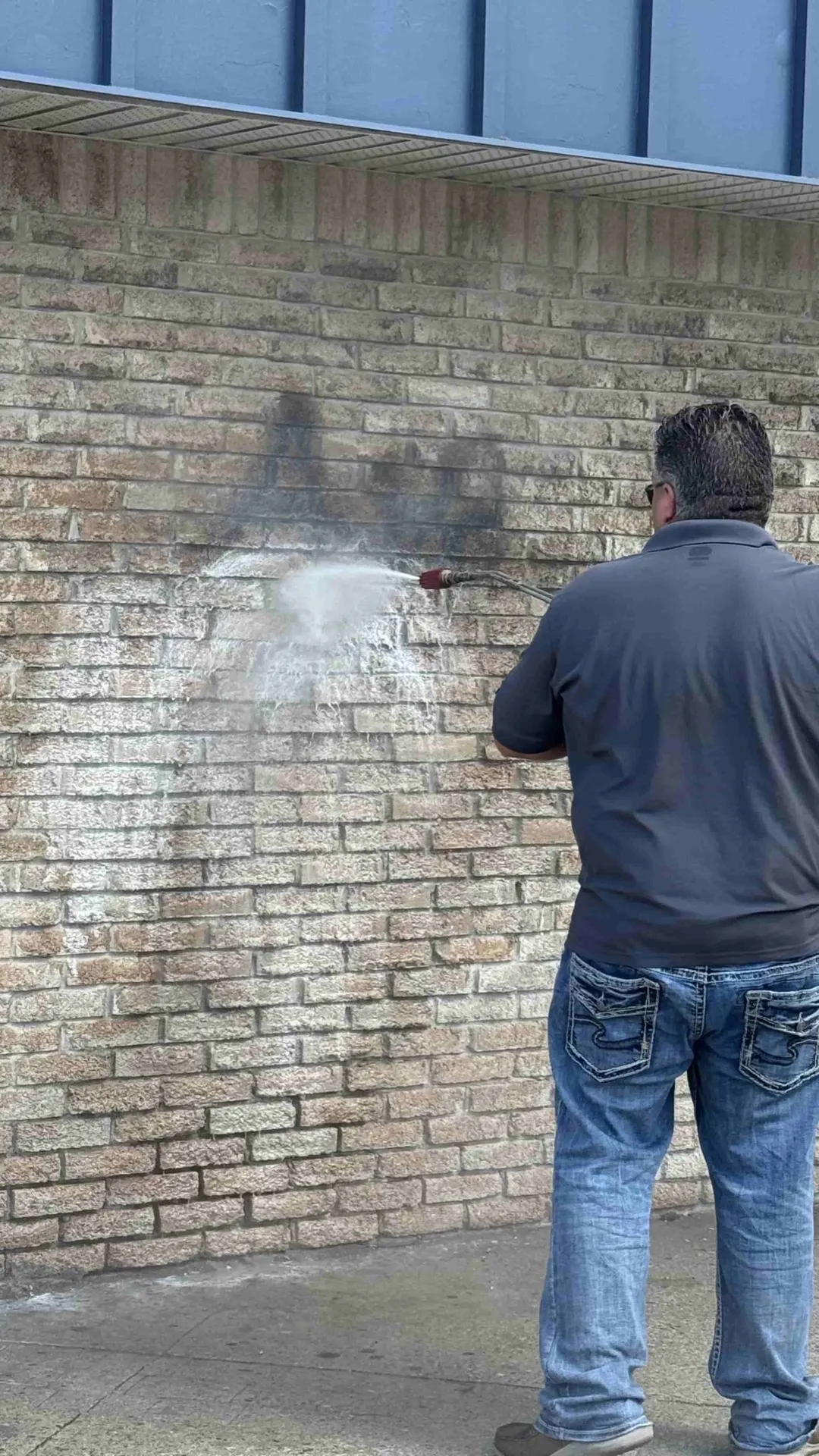
Pressure alone seldom removes graffiti. It removes what is loosely stuck. Success depends on identifying two things before treatment: what the mark is made of and what it sits on. This guide separates the jobs where washing helps from those where it does harm.
In This Article
Two questions that decide the job
First, the mark. Spray paint, permanent marker, latex paint, scratched or etched lines, and stuck-on stickers or paste each respond to a different product. Etching cannot be washed away at all, because the surface itself is cut.
Second, the surface. A smooth, sealed surface lets paint sit on top. A porous one lets paint soak in, and that is where washing runs into trouble.
| Surface | What tends to work | What to avoid |
|---|---|---|
| Painted metal, such as a garage door | A graffiti remover made for painted surfaces, a soft cloth, then a gentle rinse | Strong solvents that lift the base paint along with the mark |
| Vinyl siding or fence | Mild cleaner, a soft brush, low-pressure rinse | Aggressive solvents, which can dull or distort vinyl. Test first |
| Brick and concrete block | A tested, masonry-compatible treatment; deep pigment may need a poultice. Use the approved removal and rinse method. | High pressure and wire brushes, which strip the brick face and wear the mortar |
| Poured concrete | A treatment tested for the concrete and its coating; do not assume the same remover suits every masonry surface. | A narrow tip held close, which etches the slab |
| Raw or stained wood | Remover, then light sanding with the grain | Pressure, which raises fibres and spreads the stain |
| Stucco | A patch test, then repainting if the mark persists | Any high-pressure rinse. Stucco absorbs water |
What the pressure washer actually contributes
Water can carry away loosened material, but the removal and rinsing method must suit the graffiti, substrate and product. NPS Preservation Brief 38 explains that even moderate pressure can damage some historic masonry. Treat the following as checks for an approved method, not one universal washing recipe:
- Test the remover on a hidden patch and wait for the result.
- Apply it to the mark and give it the label's dwell time. Do not let it dry out.
- Agitate with a brush that suits the surface.
- Remove or rinse the treatment using the product’s approved method for that surface; do not assume a wide tip and moderate pressure make it suitable.
- Assess the test result before repeating. If pigment remains or the surface changes, stop and obtain advice on further treatment rather than assuming each pass will improve it.
The mistake to avoid is turning up the pressure when the mark refuses to budge. Brick has a hard, fired outer face. Blast it off and what is left is softer and absorbs water, which then freezes and flakes off in a Southern Ontario winter. The mark is gone and the wall is worse.
Driveway or patio seen better days?
We pressure wash driveways, patios, decks and walkways across Kitchener, Waterloo, Cambridge & Guelph. Free, no-obligation quotes, ready within 1 business day.
Ghosts, scars and when to repaint
Porous masonry can retain a faint pigment outline, or ghost. Do not automatically paint over it: NPS warns that coatings can change the appearance of unpainted historic masonry and may be difficult to remove. A conservator can help decide whether further treatment, leaving a faint mark or a compatible coating is appropriate.
To make the next incident easier, ask about anti-graffiti coatings. Some are sacrificial and come off with the paint, while others are permanent and let paint be washed away. Neither is magic, and each has to be reapplied or maintained as the maker directs.
Safety, runoff and reporting
Removers are strong. Wear chemical-resistant gloves and eye protection, work with the air moving, and never mix products. Keep the rinse away from plants, and do not let it reach a street storm drain, since paint flakes and solvent-laden water have no business in a creek. Collect it with absorbent material where you can.
Photograph the damage before you touch it. Vandalism can be worth reporting, and your insurer may want the record. Utility boxes, municipal signs and bus shelters belong to someone else, so report them instead of cleaning them, and check your municipality's current process.
When a wall needs a second opinion
Old brick, soft mortar, heritage-style masonry and large areas are worth a professional's eye, because a wrong first move cannot be undone. Whoever you ask, expect a hidden test patch, the method in writing and a straight answer about whether a ghost may remain.
D&D Home Services offers pressure washing from $350 for typical Kitchener-Waterloo homes, with a free written quote. The guide to pressure washing brick in Ontario explains why brick needs extra care, and pressure vs soft washing shows when a gentler method fits better.
Key Takeaways
- Pressure removes loosened paint but rarely dissolves it, so identify the mark and the surface before choosing a method.
- Identify and test the material-specific treatment and rinsing method; a generic moderate-pressure recipe is not suitable for every wall.
- High pressure can strip the hard face of brick and leave a wall that flakes in winter.
- Photograph damage and contain runoff; if a ghost remains, assess the options before coating an unpainted masonry wall.

Pressure washing quote (from $350)
Tell us the surface, such as driveway, patio, deck or walkway, and its rough size.