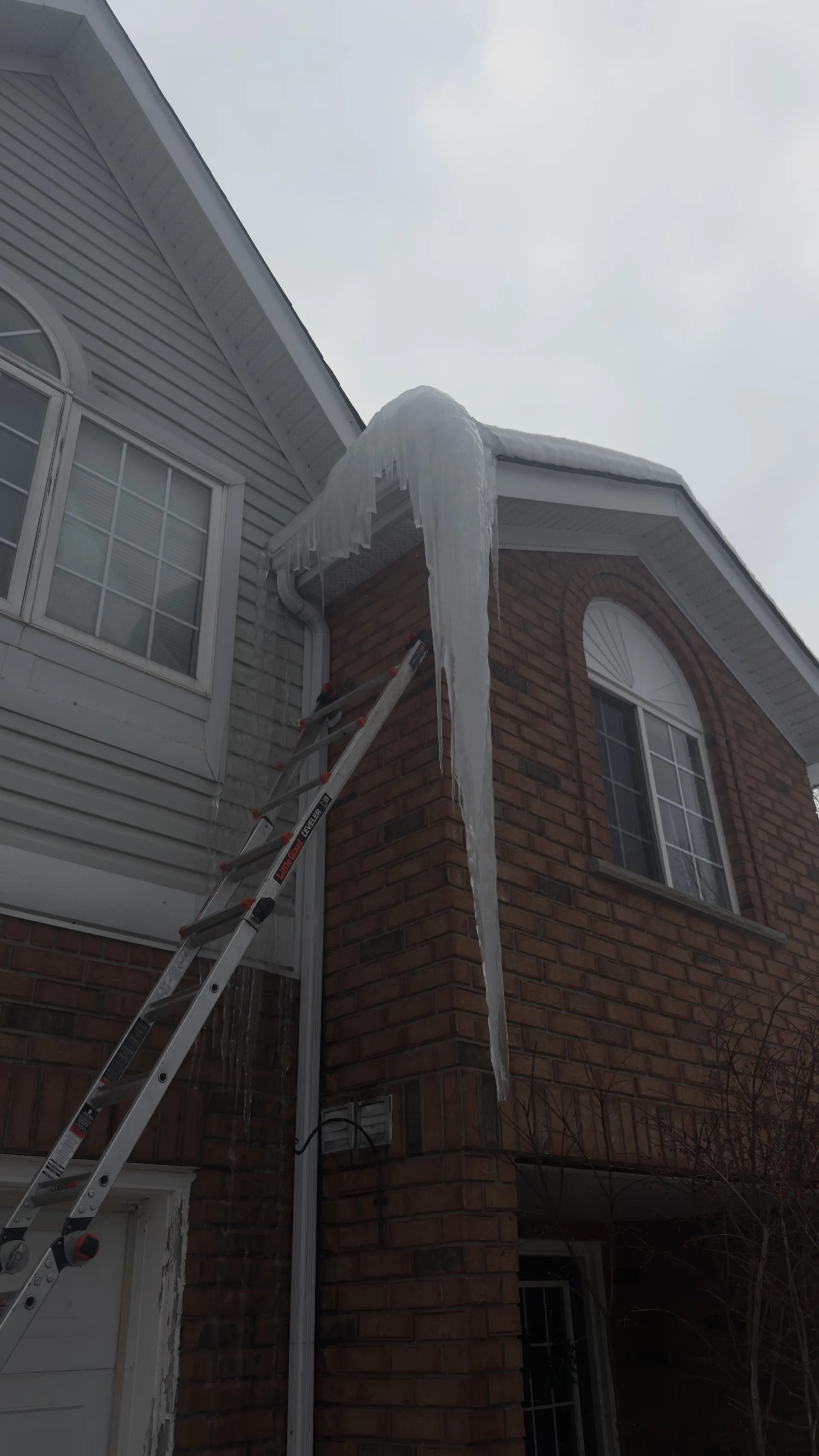
Ice dams form when heat escaping from your house melts roof snow that then refreezes at the cold eave. Work through the six fall jobs below to cut the heat, keep the eaves cold and keep water moving, then use the winter section to handle whatever still forms.
In This Article
How an ice dam forms, in plain terms
Snow on a roof sits above an attic. When warm air leaks from the living space into that attic, the roof deck warms and melts the snow from underneath. The meltwater runs down the slope until it reaches the eave, which the house does not heat. There it freezes. Over several days the frozen edge grows into a ridge that holds back the water behind it, and that pooled water can creep under shingles and into the ceiling or wall.
Southern Ontario supplies the ingredients: snow cover, cold nights, and freeze-thaw cycles that are common from November to April. The fix is rarely at the eave. It is upstairs. Keep the attic cold, and the roof stays close to one temperature from ridge to edge, so the snow melts slowly or not at all.
Six jobs to finish before the snow stays
- Clear the eavestroughs and downspouts. Wait until the leaves are down, then flush each run so meltwater has a path out. A homeowner-friendly gutter cleaning pass also shows you any sagging or loose hangers.
- Seal the air leaks into the attic. Weatherstrip the attic hatch and fit an insulated cover. Seal gaps around wiring, plumbing pipes, the tops of interior walls and pot lights, using materials suited to the gap and to the heat of the fixture. Use fire-rated materials near chimneys and flues.
- Check where the fans exhaust. Bathroom and kitchen fans should vent outside, not into the attic, where their moist, warm air feeds the problem.
- Look at the insulation. Thin, uneven or compressed patches are heat leaks. Keep insulation from smothering the soffit vents, and use baffles to hold it back.
- Confirm the attic can breathe. Soffit vents should be open, not painted over or stuffed, and ridge or gable vents should be clear so air can flow along the underside of the roof deck.
- Inspect the roof edge. Look from the ground for loose flashing, lifted shingles and a damaged drip edge at the eaves. Ask a roofer about a waterproof membrane at the eaves the next time the roof is replaced.
Want your driveway cleared before 7am?
Seasonal snow removal for homes across Kitchener, Waterloo, Cambridge & Guelph, so winter mornings take care of themselves. Free, no-obligation quotes, ready within 1 business day.
Which jobs are yours and which are a trade's
| Job | Homeowner? | Notes |
|---|---|---|
| Clean eavestroughs | Yes, on a single-storey eave | Use a ladder standoff and keep three points of contact. Hand higher eaves to a crew |
| Weatherstrip the hatch, seal small gaps | Yes | Wear a dust mask and gloves, and step only on the framing, never on the drywall between joists |
| Add baffles or top up insulation | Small jobs, yes | Large insulation projects and any ventilation redesign suit a trade or an energy adviser |
| Re-route fan ducts | Sometimes | Leave any wiring to a licensed electrician |
| Roof-edge repairs and membranes | No | A roofer's job, with fall protection |
| Heating cables | No | A stopgap. Have them installed properly, on a protected circuit |
Once the snow arrives, work from the ground
Watch for icicles, a ridge of ice along the eave and brown stains on the soffit or ceiling. Then keep your feet on the ground.
- Never chip ice. Hammers and ice picks tear shingles and dent eavestroughs, and a ladder on an icy day is a fall waiting to happen.
- Use a roof rake from the ground to pull the lowest metre or so of snow off the eave, and keep it away from powerlines. Read roof snow removal: when and how before you start.
- If water is coming in, catch it in buckets, move belongings, photograph the damage and call a roofer. Tell your insurer promptly.
Heating cables can cut a channel for meltwater, but they treat the symptom. The cause is still heat loss into the attic. The snow and ice damage prevention guide covers both sides.
Where the eavestrough fits in
Eavestroughs do not cause ice dams, but a clogged or sagging trough gives meltwater nowhere to go and adds the weight of ice to the fascia. A clean run with clear downspouts lets water leave before it freezes. Gutter guards reduce fall clogging, but they do not stop dams, and the guide to heated gutter systems and ice dam prevention explains what heat can and cannot do.
If the eaves are too high or the ground too uneven for a ladder, D&D Home Services offers gutter cleaning from $125 for typical Kitchener-Waterloo homes, with the final price confirmed in a written quote.
Key Takeaways
- Ice dams start with heat leaking into the attic, so air sealing, insulation and ventilation matter more than anything done at the eave.
- Clean eavestroughs and clear downspouts in fall so meltwater has a way out.
- In winter, work from the ground: never chip ice or climb an icy roof or ladder.
- If water is entering the house, catch it, photograph the damage, and call a roofer and your insurer.

Request a home-service quote
Select the service you need and describe the work area and access.