Neither method wins every job. Pure-water cleaning wins on reach, frames and spot-free drying, and soap and squeegee wins on stubborn film and fine detail. Here is how each one works, a side-by-side table and a simple way to choose.
In This Article
What is in local tap water, and why glass shows it
The Region of Waterloo says most of its drinking water comes from groundwater wells, and that this groundwater is typically considered hard because of the minerals it picks up underground. The City of Guelph describes itself as the largest community in Canada that relies almost completely on groundwater. Hard water is safe to drink, but it matters on glass.
When a droplet of hard water dries, the water leaves and the dissolved minerals stay behind as a white spot. Both cleaning methods are answers to the same question: how do you leave the glass dry without leaving minerals on it?
How pure-water cleaning works
A pure-water system strips dissolved minerals out of tap water before it reaches the glass. Deionization (DI) passes water through resin that swaps out mineral ions. Reverse osmosis (RO) pushes water through a fine membrane, and many setups follow RO with a DI stage to polish the result. A handheld TDS meter, which measures dissolved solids, should read close to zero at the end of the line.
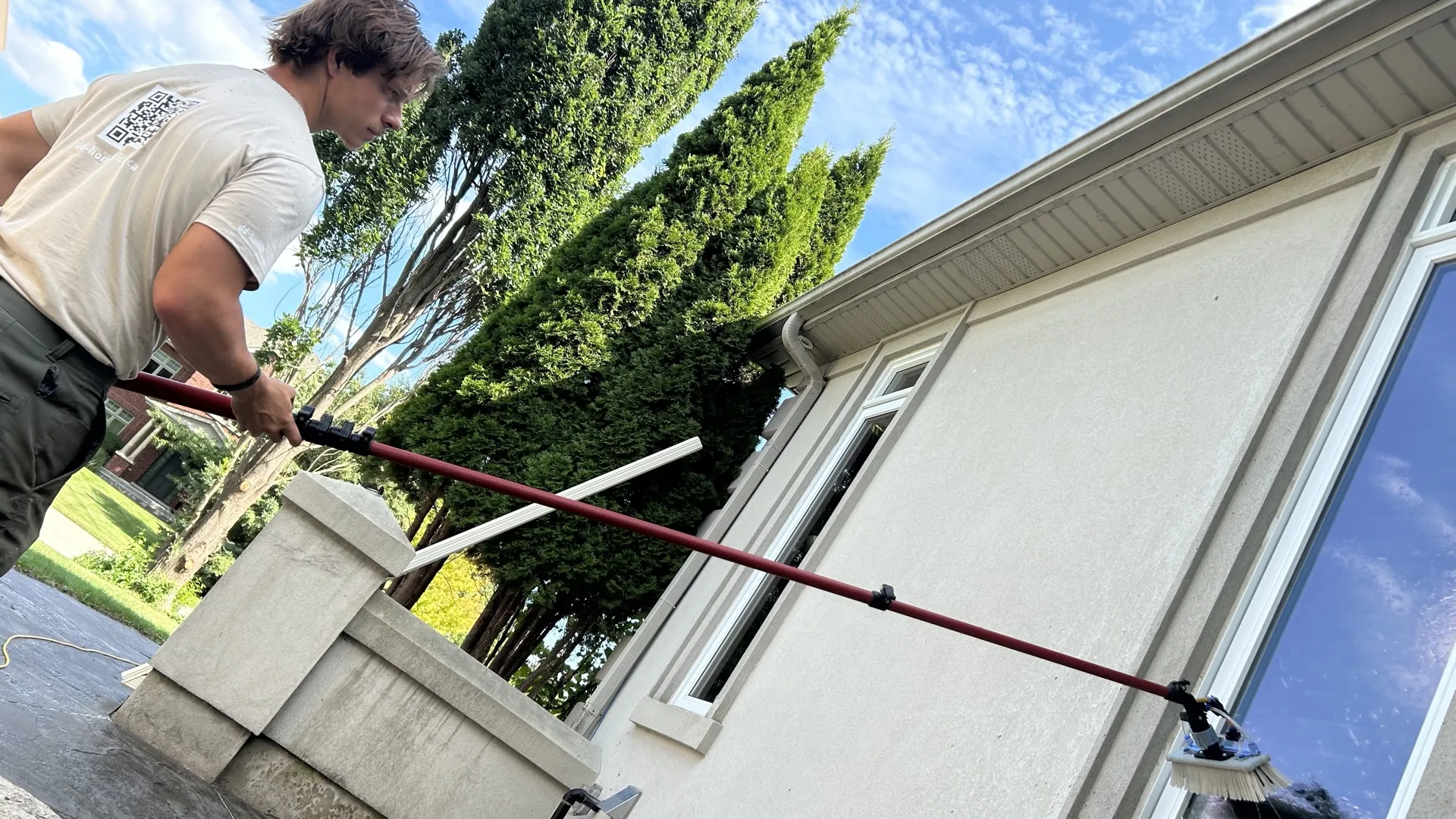
The water travels up a pole to a soft brush. The cleaner scrubs, rinses top to bottom and leaves the glass to dry on its own. With no dissolved minerals to leave behind, drying does not create spots, and frames, sills and screens get rinsed in the same pass. For routine cleaning, this often works without any soap at all.
Streaky glass no matter what you try?
We clean interior and exterior glass to a streak-free finish for homes across Kitchener, Waterloo, Cambridge & Guelph. Free, no-obligation quotes, ready within 1 business day.
How soap and squeegee works
A washer sleeve loads the glass with soapy water and loosens dirt. A squeegee then pulls the water, mineral content and all, off the pane in overlapping strokes, and the edges are wiped dry with a cloth. Because the water is physically removed rather than left to evaporate, few minerals get the chance to dry onto the glass.
This is the classic hand method, and it excels where fine control matters. It suits interior windows, small jobs, sticky film and spots that need a scraper. Its limits are reach and edges: high glass needs a ladder or lift, and water can drip back from frames and sills onto the finished pane. Too much soap is also the classic cause of streaks.
Side by side, job by job
| Job | Pure-water pole | Soap and squeegee |
|---|---|---|
| Spotting from hard water | Rinse water carries almost no minerals, so few spots form. | Depends on wiping edges well, and drips from frames can spoil a pane. |
| Second-storey glass | Reached from the ground. | Needs a ladder, lift or tilt-in access. |
| Frames, sills and screens | Rinsed along with the glass. | Wiped by hand, and often skipped. |
| Oil, sap, paint and sticky film | May need hand work first. | Detergent and a scraper suit these well. |
| Old mineral scale | Pure water alone will not dissolve it. | Needs a descaling product either way. |
| Interior glass | Not a fit, since it means a hose indoors. | The usual method, with microfibre. |
| Water use and setup | Uses more water and needs a filter system. | Uses a bucket and a small kit. |
Choose one, or expect a company to use both
Lean toward pure water if you have many upper-storey windows, hard-water spotting from sprinklers, frames and sills that need rinsing, or a home where ladders are awkward.
Lean toward soap and squeegee if the job is mostly interior glass, the windows are small and low, or the glass carries film, paint or sap that needs hands-on work.
Most crews use both, with pure water on the outside and hand tools for detail and interiors. So the useful question is not which one, but how the company decides. Ask what its TDS reading is at the end of the pole, how it handles old scale, and what it does about frames.
What to ask before you book
D&D Home Services quotes window cleaning from $125 for typical Kitchener-Waterloo homes and confirms the price in writing before work begins. Whichever company you choose, ask the questions above and expect a plain answer. For the tool-focused side of this choice, read water-fed pole versus traditional squeegee. If spots are already on your glass, read why hard-water deposits form and how to remove them, and see window cleaning for what a visit covers.
Key Takeaways
- Most Waterloo Region water comes from groundwater and is hard, so drying droplets leave white mineral spots on glass.
- Pure-water poles rinse without leaving minerals, reach upper storeys from the ground and clean frames and sills too.
- Soap and squeegee handles interior glass, sticky film and fine detail well, but needs ladders for height.
- Most crews use both methods, so ask how a company chooses and what its TDS reading is.
Sources & References

Request a home-service quote
Select the service you need and describe the work area and access.