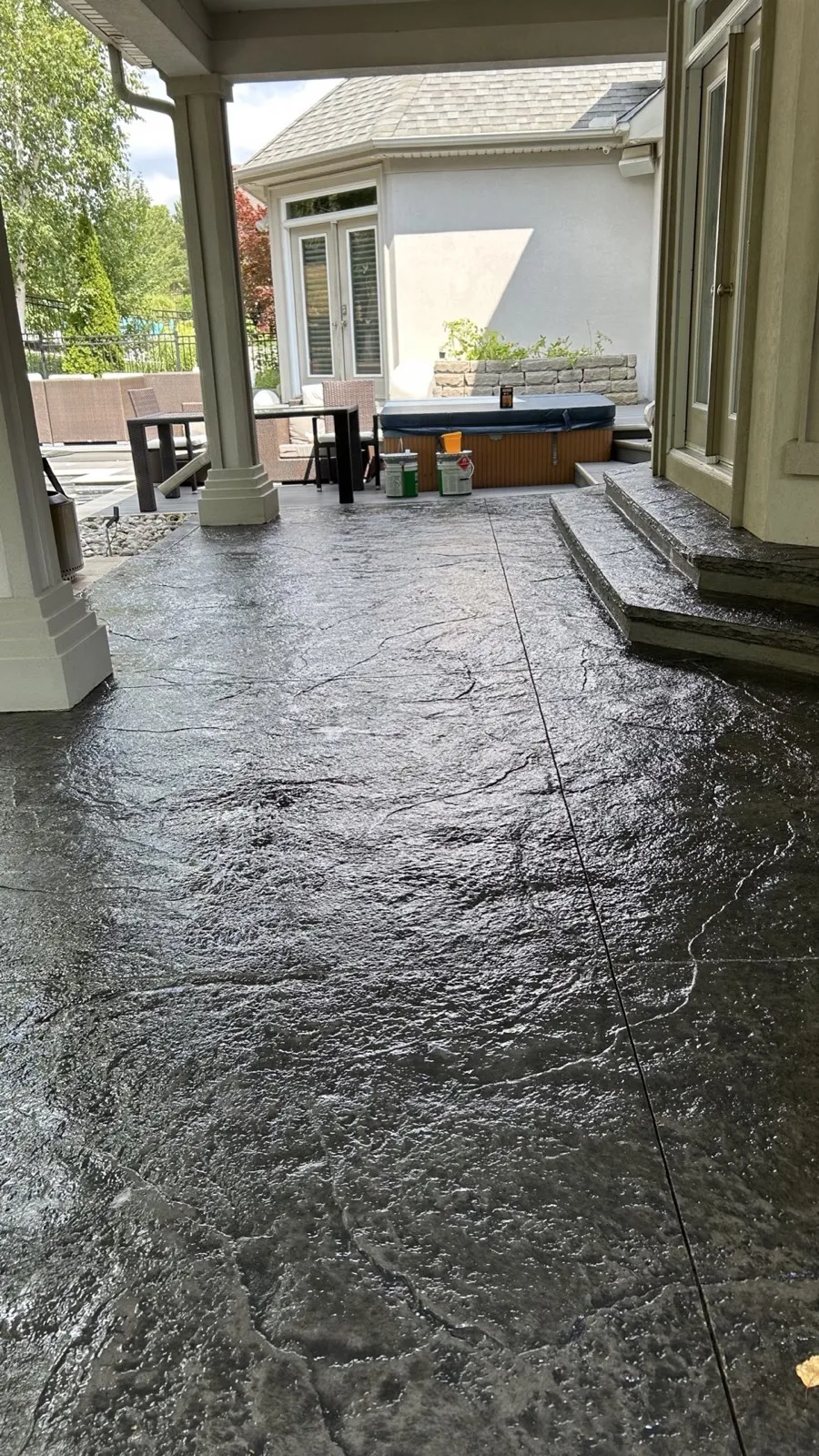
Some fading in the first year is normal, and some is a sign of a thin or poorly bonded coat. Here is how to tell the difference, what causes early wear and what to do about it.
In This Article
First, is it really fading?
Fresh sealer is the blackest it will ever be. Within weeks the surface film starts to weather, and by the end of the first year most driveways have softened from jet black to a dark charcoal. That is ordinary wear, not failure.
The question is whether the film is still doing its job. Run the water test: pour a cup of water onto a clean, dry patch in daylight. If it beads or runs off, the film is intact. If the pavement darkens and drinks the water quickly, the film has thinned or gone. Then compare a worn spot with a protected one, such as the strip beside the garage door, to see how much colour has changed.
Seven reasons a coat fades early
- A thin film. One light coat on dry, thirsty pavement can soak in and leave little on the surface.
- A weak mix. A low-solids product, or one thinned well past the label, makes a film that wears through sooner.
- Poor conditions on the day. Sealer applied in heat, damp or a cool spell can form a weaker film. See weather conditions for driveway sealing in Ontario.
- Heavy wear. Turning wheels, winter grit, salt and snow blades all scrub the surface.
- Full sun. Ultraviolet light bleaches the film, and south-facing driveways take it hardest.
- Weak bonding. Dust, oil or damp under the film shortens its life.
- Thirsty pavement. Old, dry, porous asphalt drinks more sealer than a smooth, recent surface, and it may have needed a second coat.
Want your exact driveway sealing price?
Skip the guesswork, we quote your actual driveway, itemized line by line, free and no-obligation. Serving Kitchener, Waterloo, Cambridge & Guelph, with quotes ready within 1 business day.
Reading the pattern on your own driveway
| What you see | What it suggests | What to check |
|---|---|---|
| Even grey across the whole surface | Ordinary weathering, or a thin film from the start | The water test, and what the quote said about coats |
| Grey only in the wheel tracks and near the garage | Traffic wear, especially from turning | Whether the rest of the surface still beads water |
| Grey along the edges and the apron | Salt, grit and plows, or thin coverage at the edges | The edge condition and crack treatment |
| Blotchy light and dark patches | Uneven application or uneven absorption | Whether the light patches are old, patched or oily areas |
| Grey in the sun, dark in the shade | Sunlight bleaching the film | Nothing urgent, since this is expected |
| Rough, gritty feel with stones showing | The film has worn through | Plan a recoat for the next suitable window |
Do nothing, spot-treat or recoat
Colour alone is not a reason to recoat. A film that has faded to charcoal but still sheds water is doing its job, and stacking another coat on it invites the buildup and peeling described in the common driveway sealing mistakes.
- Still beads water: leave it, and check again next spring.
- Worn through in patches: clean those areas, fill any cracks and spot-treat thinly with the same product, following the label.
- Thin and thirsty across most of the surface: plan a proper recoat in the next suitable window, with prep and crack filling first.
Habits that slow the fade next time
You cannot stop sunlight, but a few habits keep a coat looking better for longer.
- Ease the steering. Roll the vehicle a little as you turn instead of cranking the wheel while stopped.
- Clear snow with care. A plastic-edged shovel or a blade held slightly above the surface takes off less coating than steel pressed flat.
- Rinse and sweep in spring. Winter salt and grit scrub the film every time a tyre rolls over them.
- Keep debris off. Wet leaves, sap and seed pods stain the surface and hold dampness against it.
- Repair cracks as they appear. Water that gets under the film lifts it from below.
Fading comes on gradually. If your driveway went from black to blotchy in a few weeks, that points to a bonding or application problem, not sunlight, and it is worth raising early.
If a contractor did the work
Pull out the quote and check what it promised: the product, the number of coats and the preparation. Take dated photos of the worn areas and the water test, then contact the company and ask what was applied. A calm, specific conversation gets further than a complaint about colour. D&D Home Services confirms the scope of driveway sealing in writing before work begins, which makes that conversation easier, whoever you hire.
Key Takeaways
- Some fading from jet black to charcoal in the first year is normal, so judge the coat by whether it still sheds water.
- Thin coats, weak mixes, poor weather, heavy wear, full sun, weak bonding and thirsty pavement all fade a coat early.
- The pattern helps: wheel-track grey is traffic, edge grey is salt or thin coverage, and even grey can be weathering or a thin film.
- Recoat only when the film is thin or worn through, and never for colour alone.

Request a home-service quote
Select the service you need and describe the work area and access.