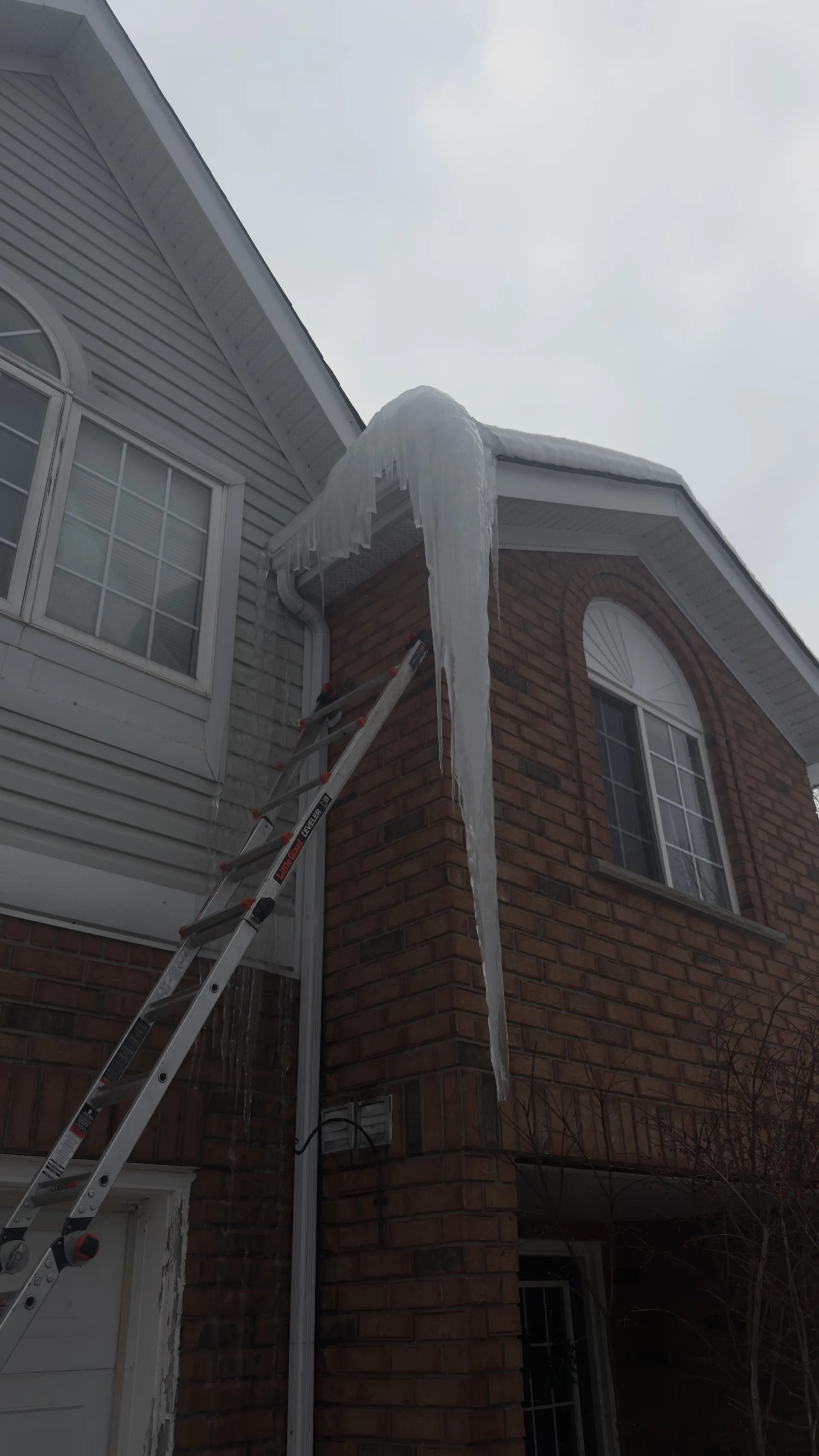
Snow season in Kitchener-Waterloo has no official start or finish date, but the pattern is steady enough to plan around. Here is what the climate records generally show, where to read the numbers yourself, and how to turn the pattern into a calendar for contracts, supplies and property checks.
In This Article
What the climate records show, and what they cannot
Environment and Climate Change Canada publishes climate normals, which are 30-year averages, for weather stations across Ontario. They are the honest source for this question, and they answer it in months, not exact dates. Below is the general pattern. Precise averages are best read straight from that source, because they shift with the station you pick and the years the average covers.
The pattern is familiar to anyone who has lived here through a few winters. The first lasting snow usually arrives in November or December. Flurries can appear earlier, and a mild spell can wipe out an early dusting completely. Freeze-thaw cycles are common from November to April, so pavement swings back and forth across zero long before and after the deepest cold. One winter can break the pattern in either direction, so treat it as a planning range, not a promise.
When you open the normals for the station nearest you, look at three things: snowfall by month, how many days the ground holds snow, and how often nights drop below freezing. Together they say more than a single yearly total.
The season in four phases
| Phase | Usual timing | What tends to happen | What to do |
|---|---|---|---|
| Early flurries | Late October to November | Light snow that melts on warm pavement, frosty mornings, black ice in shaded spots | Sign your snow arrangement, stock salt or sand, clear leaves from walks and drains before snow buries them |
| Settled winter | December to February | Snow that stays on the ground, repeated storms, cold spells that keep ice in place | Clear early and often, keep piles tidy, check vents and meters after each storm |
| Thaw and refreeze | Late February to March | Afternoon sun melts snowbanks, meltwater crosses walks and freezes overnight, heavy wet snow is still possible | Cut channels for meltwater, check downspout outlets, use a thin layer of de-icer where run-off freezes |
| Tail end | March to April | Occasional late snow, soft ground, sand and salt residue everywhere | Keep a shovel handy until nights stay above freezing, then sweep, rinse and pack up |
Treat the timing column as typical, not fixed. The phases blur into each other, and a January thaw can feel like March.
Want your driveway cleared before 7am?
Seasonal snow removal for homes across Kitchener, Waterloo, Cambridge & Guelph, so winter mornings take care of themselves. Free, no-obligation quotes, ready within 1 business day.
Why the calendar matters when you sign
No date on the calendar sends a plow to your driveway. Conditions do, and each contract sets its own trigger for a visit, so read yours instead of assuming a standard. What the calendar does control is the start and end of the contract term. Ask for both in writing, then ask three follow-up questions.
- Before the start date: what happens if a lasting snowfall arrives early? Arrangements differ on whether it is covered or billed as a single visit.
- After the end date: who clears a storm in the final week? A late dump is not rare enough to ignore.
- Thaw and refreeze: is ice treatment in March handled on the same terms as in January?
D&D Home Services offers snow removal from $80 per visit for typical Kitchener-Waterloo homes, and seasonal contracts are available. Seasonal prices are not published because they depend on the property and the terms, so get one quoted in writing. For the sign-up side of the calendar, see when to start your snow removal season.
Three jobs that belong before the first flurry
The early phase is the cheapest time to prepare, because nothing is frozen to the ground yet.
- Walk the property with a marker in mind. Note where the driveway edges, meters, vents, downspout outlets and steps are. Stakes go in before the ground hardens.
- Test the gear. Start the snow blower, check the shovel handles, and buy salt or sand while shelves are full.
- Clear the leaf layer. Wet maple and oak leaves under a first snowfall turn into a slick mat, and they block the drains that carry meltwater away.
How to tell when the season is really over
April catches people out. A warm week in March does not end snow season, and one late storm can undo a tidy shed. Use conditions, not dates: the forecast at weather.gc.ca, the overnight lows and the state of the ground.
- Wait for a run of nights above freezing, not just one.
- Keep a shovel and a small bag of salt or sand by the door until then.
- When the last banks have melted, sweep up leftover sand and salt and rinse the walks.
- Look over the driveway and lawn edges for damage, then store the gear and note what to replace.
The spring exterior maintenance guide picks up where this calendar ends.
Key Takeaways
- The first lasting snow usually arrives in November or December, and freeze-thaw cycles are common from November to April.
- Exact monthly averages come from Environment and Climate Change Canada's climate normals for the station nearest you.
- Get a contract's start and end dates in writing, and ask how early and late storms are handled.
- Keep a shovel and a little salt or sand by the door until nights stay above freezing.
Sources & References

Request a home-service quote
Select the service you need and describe the work area and access.