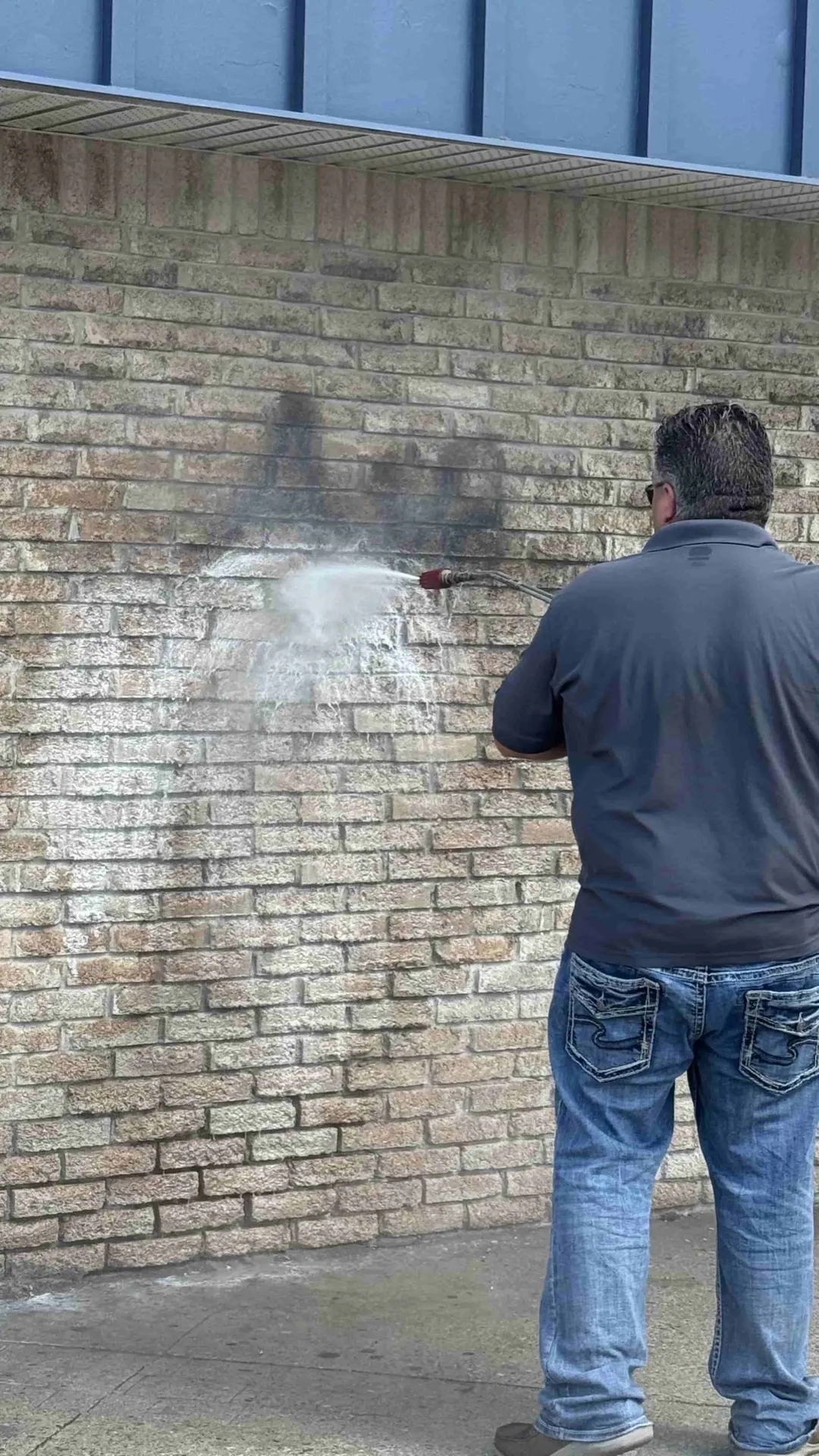
Washing a sidewalk raises a question that a driveway does not: whose concrete is it, and what does the city expect? The sections below separate your private walkway from the public sidewalk, list the questions to put to the City of Waterloo and the Region, and set out best practice for the wash itself and for the people walking past.
In This Article
Whose sidewalk is it?
In most Ontario municipalities the public sidewalk sits in the road allowance, which belongs to the municipality, even though it runs along your frontage. The path from that sidewalk to your door usually belongs to you.
- Your walkway, steps and driveway apron: generally yours to maintain.
- The public sidewalk: usually the municipality's, though many Ontario municipalities expect owners to keep the frontage clear of snow. Check the City of Waterloo's current rules.
- Private paths in a condo or shared complex: often a common element, so the corporation's rules apply.
The edge of the concrete is not always your lot line. If you are unsure where your property ends, look at your survey or ask the city before assuming.
Questions to put to the city and the region
Rules change, so put these questions to the city before you start.
- Water use. Are there current outdoor water restrictions? Municipalities can limit outdoor use in dry spells, and the Region of Waterloo publishes current guidance.
- Runoff. What may go into a storm drain or onto the road? Detergent, oil and sediment generally should not.
- Noise. Are there hours when gas-powered equipment is restricted?
- Working near the road. If a contractor needs to close part of a public sidewalk or set up in the boulevard, ask whether permission is required.
- Property standards. Does a maintenance by-law set expectations for walkways and frontage?
The City of Waterloo and the Region of Waterloo websites are the places to start, and a phone call to the city settles anything unclear.
Driveway or patio seen better days?
We pressure wash driveways, patios, decks and walkways across Kitchener, Waterloo, Cambridge & Guelph. Free, no-obligation quotes, ready within 1 business day.
Best practice on concrete, in seven steps
- Sweep first. Loose grit under a jet scratches the surface.
- Test a hidden patch. Use the widest tip and start far back, then step in only until the dirt lifts.
- Treat growth and stains. Apply a suitable cleaner or degreaser as its label directs, and let it dwell without drying.
- Use a surface cleaner on flat runs. It gives an even finish with no stripes, and the wand handles edges.
- Watch the joints. Keep the jet off expansion joints and cracks, where it can strip the filler and drive water under the slab.
- Go easy on weathered concrete. Salt and freeze-thaw scale sidewalks, and a hard jet takes more of the thin top layer.
- Rinse toward lawn, not toward the road or storm drain.
Do not wash when a freeze is due within the day, because wet concrete that refreezes is both a slip hazard and hard on the surface.
Common sidewalk problems and the right response
- Green film in the shade: use a cleaner and wash it off. It is a slip hazard, so do not leave it.
- Chewing gum: heat helps, and scraping should not gouge the concrete.
- Salt scaling and pitting: a sign of freeze-thaw wear. Wash gently, and do not expect a wash to repair it.
- Raised or cracked slabs: a trip hazard on a public sidewalk is one to report to the city, not to fix yourself.
- Oil or paint: treat with the right product first, and keep the runoff out of drains.
Protecting pedestrians and neighbours
A sidewalk is where the public walks, so the wash needs to be planned around them.
- Set out cones or signs, and keep the spray pointed away from people, cyclists, strollers and parked cars.
- Do not lay hoses across the walking path. If you must, use a cover or a ramp so nobody trips.
- Work in short sections, so most of the sidewalk stays open.
- Let the surface drain and dry before you reopen it. Wet concrete and algae are slippery.
- Give neighbours notice of the noise and the water.
When a sidewalk job needs a crew
A long frontage, stubborn stains such as gum, oil or paint, or a business or complex with several frontages are all reasons to bring in a crew. Ask any contractor for proof of liability insurance. With $2 million in general liability insurance, D&D quotes pressure washing for free, and typical Kitchener-Waterloo homes start at $350. Business frontages are outlined on the commercial services page, and the guide to power washing concrete sidewalks in Ontario covers the wider picture.
Key Takeaways
- Your private walkway is usually yours to maintain, but the public sidewalk normally belongs to the municipality, so confirm the boundary and check the city's current rules.
- Ask the City of Waterloo and the Region about outdoor water use, runoff, noise hours and any permission needed to work near the road.
- Sweep first, test a hidden patch, use a surface cleaner on flat runs, keep the jet off joints and rinse toward lawn, not the street.
- Protect pedestrians with cones, covered hoses and short sections, and let the concrete dry before reopening it.
Sources & References

Request a home-service quote
Select the service you need and describe the work area and access.