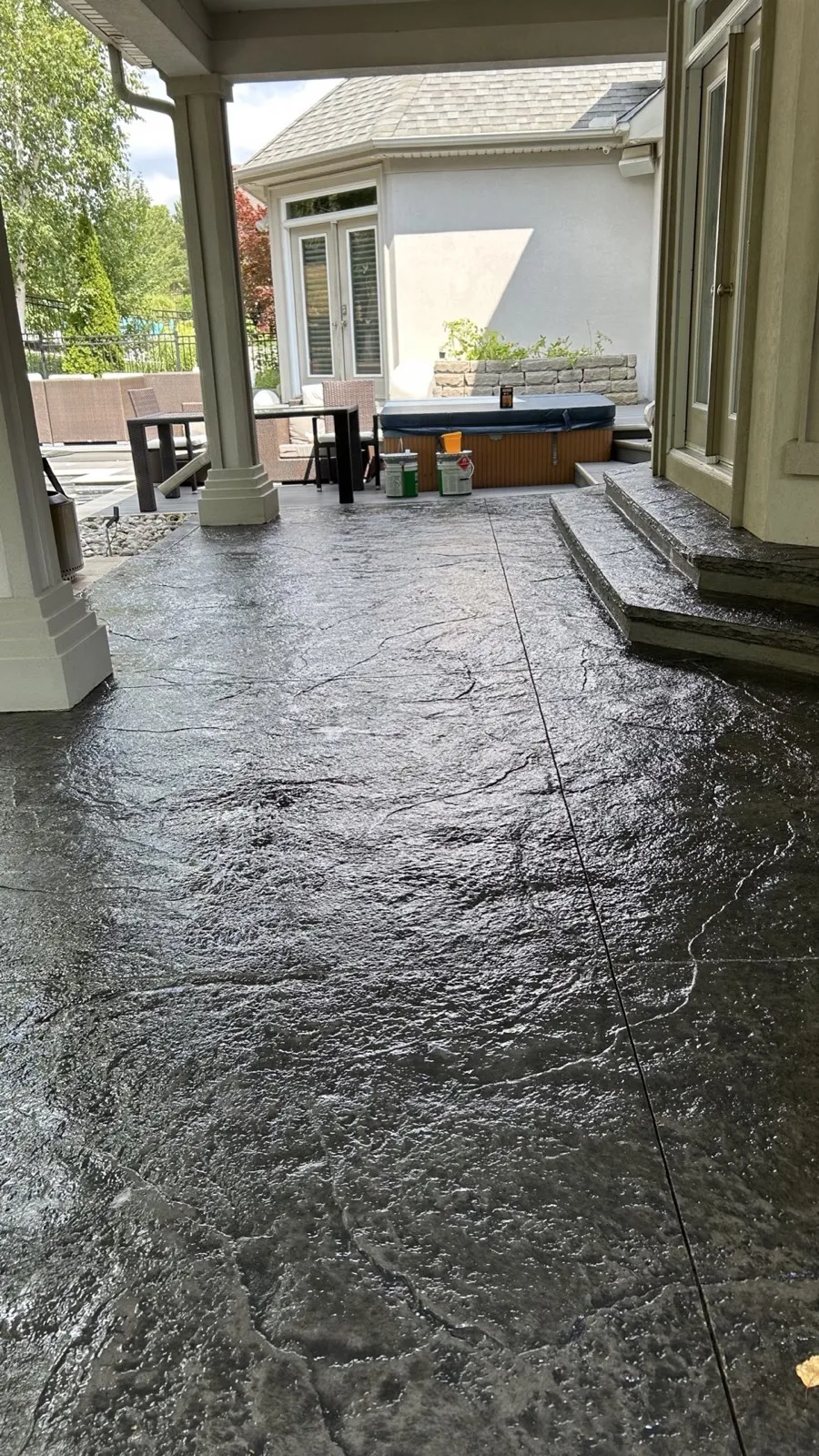
Salt does not dissolve asphalt, but the salty water it leaves behind keeps cracks wet and loosens an unsealed surface one winter at a time. Here are the four routes salt takes onto your driveway, what it does to each surface and how to slow the damage.
In This Article
Four routes salt takes onto your driveway
Not all the salt on your driveway came out of your own bag. It arrives by four routes, and you control more of them than you might think.
| Route | How it arrives | Where it shows |
|---|---|---|
| Street plow slush | Plows and passing traffic fling salty slush at the driveway mouth, and the ridge left at the end of the drive is packed with it | The apron and the first few metres of the drive |
| Your own de-icer | Granules spread on the drive, steps and walk get tracked around on boots | Wherever you spread, plus the path from the door to the car |
| Your vehicle | Slush packed into the wheel wells melts and drips off in one place | The parking spot and the garage apron |
| Runoff from elsewhere | Meltwater from the roof edge, a neighbour's walk or a snowbank carries dissolved salt across the pavement | Low spots, the drive edges and the ground below downspouts |
Cities, the Region and the province all salt public roads, and you cannot change that. The other three routes are yours to manage.
Why salty meltwater does more harm than snow
Snow sitting on pavement is mostly harmless. The trouble starts when it turns to water. Salt lowers the freezing point, so ice melts on days that stay below zero. That liquid soaks into pores and cracks, then refreezes when the sun drops or the brine thins out. Water swells as it freezes, and the swelling pries at the material around it.
Salt also draws moisture and holds it, so the surface stays damp for longer. Damp pavement is where the binder that glues the stones together slowly loses its grip. That is why an old, dry, unsealed driveway starts to shed grit and crumble at the crack edges while a sound one shrugs off the same winter.
Salt does not dissolve asphalt. The harm is indirect, and it comes from water on the move. A white crust on dry pavement after a thaw is dried brine, and it means salt is still sitting in the surface, waiting for the next wet spell.
Want your exact driveway sealing price?
Skip the guesswork, we quote your actual driveway, itemized line by line, free and no-obligation. Serving Kitchener, Waterloo, Cambridge & Guelph, with quotes ready within 1 business day.
What it does to asphalt, concrete and interlock
- Asphalt. Old, oxidized asphalt takes water in more readily, so cracks widen, edges break away and loose grit collects along the tire tracks. An unsealed, dried-out surface has the least protection.
- Poured concrete. Salty water soaks into the top layer, freezes and pops off flakes. That is called scaling. A young slab is the most vulnerable, so ask the installer how long to hold off on de-icers.
- Interlock. Meltwater flushes sand out of the joints. Empty joints let water and weeds in, and chipped or scaled pavers show up in spring.
Reading the damage in March
Wait until the frost is out and the pavement is dry, then walk the driveway in the order the salt travelled.
- Start at the apron. Look for crumbled edges, fresh potholes and loose stones where plow slush landed.
- Check the parking spot and the tire tracks. Pale staining, flaking or a rough, gritty feel points to repeated salty drips.
- Follow each crack. One with broken edges, or one that holds a dark line of moisture long after the rest has dried, is letting water in.
- Look along the edges and in the low spots, where meltwater lingered.
- Sweep a small square and see what comes up. A palmful of loose grit says the surface is shedding.
Photograph each problem with a tape measure beside it, and take the same shots next March. A crack that has grown tells you more than any single visit.
What sealing changes, and what it leaves alone
A sealcoat is a thin film. It slows the drying of the binder and helps the surface shed water, so less brine soaks in. That is worth having in a winter like ours, and it works best on a driveway that is otherwise sound.
It has limits. It does not close an open crack, rebuild an edge or firm up a soft base, and it does not make salt harmless. Fill cracks first, following the filler's label, and seal once the filler has cured. The guide to crack filling before sealing explains why the order matters. A coat also needs warm, dry weather to cure, so it belongs months ahead of the first salting. See sealing your driveway before winter for how quickly the fall window closes.
If the surface is sound and the coat is due, driveway sealing from D&D Home Services starts at $450 on a typical Kitchener-Waterloo home. You see the final price in writing before work begins.
A lower-salt routine that still keeps people safe
- Clear first. Shovel or plow down to the surface so the salt works on thin ice, not through packed snow. Use a plastic-edged shovel, since a steel edge chips weak asphalt.
- Spread thinly. The pavement should look lightly dusted, not white.
- Switch to sand when it is very cold. Salt slows down as the temperature falls, and sand grips at any temperature.
- Sweep up on the first dry day. Granules left behind dissolve in the next thaw and sink in.
- Deal with the car. Sweep out the slush that melts off it in the garage, and do not leave a heap of salty snow to melt on one patch.
- Steer meltwater away. Point downspouts off the pavement, as covered in why downspout extensions matter for Ontario homes, and pile new snow where its melt will run onto the lawn.
Once the frost is out, rinse the apron and the parking spot with a hose so brine flushes away instead of drying into the surface. Less product on the ground also means less chloride washing into soil and storm drains.
Key Takeaways
- Salt reaches a driveway by four routes: street plow slush, your own de-icer, drips from your vehicle and runoff from other surfaces.
- Salt does not dissolve asphalt. The damage is indirect, because it keeps liquid water moving into cracks and pores through the freeze-thaw months.
- Walk the driveway each March in the order the salt travelled: apron, parking spot, cracks, edges and low spots, and photograph what you find.
- Sealing slows water and brine entering the surface, but cracks must be filled first and the coat needs warm, dry weather to cure.

Request a home-service quote
Select the service you need and describe the work area and access.