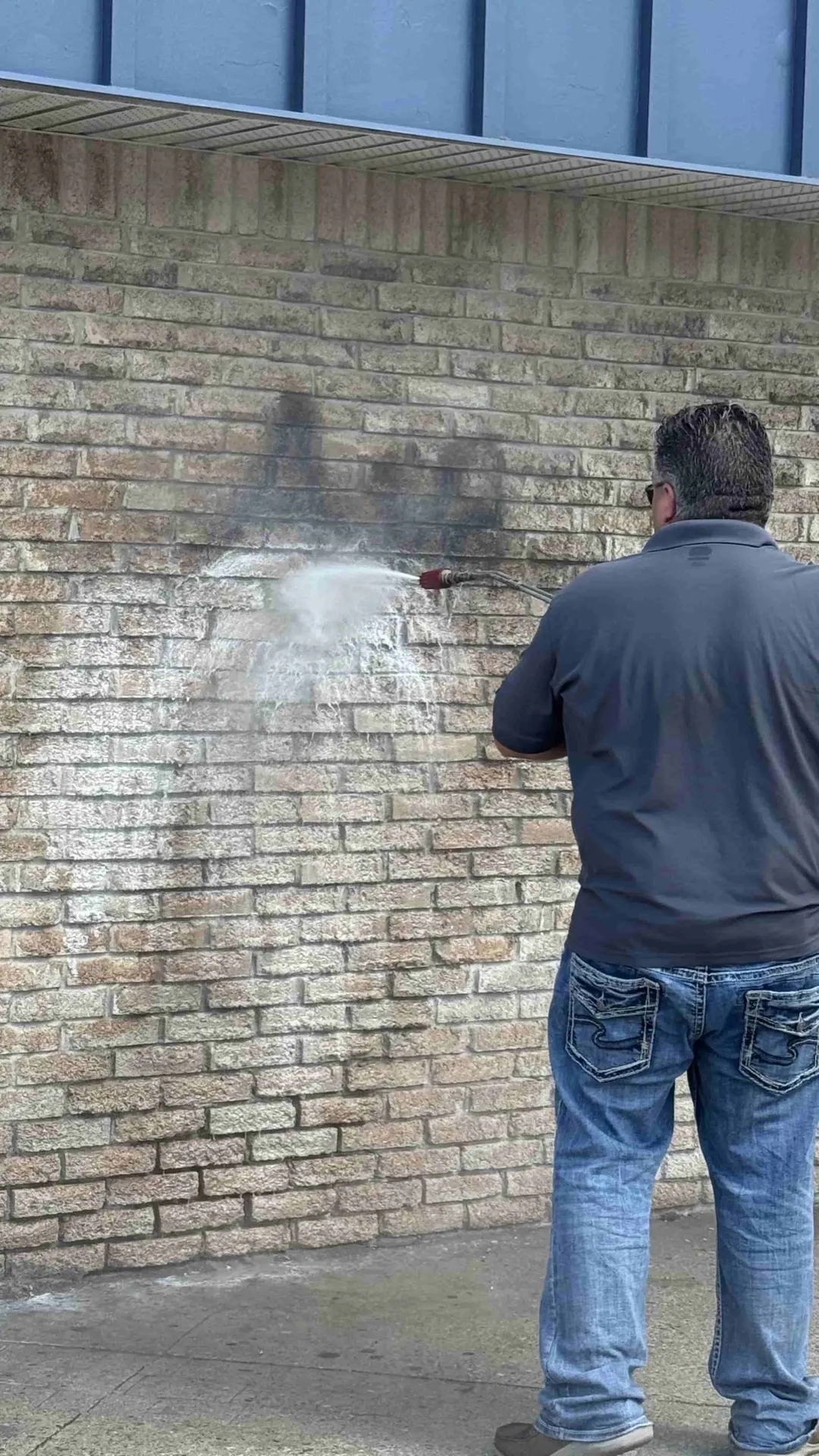
A coating is only as good as the surface under it, and washing is prep, not the finish. This guide covers what washing must remove, the checks that tell you the surface is ready, and how prep differs for wood, concrete and painted siding.
In This Article
What a coating needs from the surface
Every stain, sealer and paint asks the same four things of the surface beneath it: clean, sound, dry and able to grip. Washing handles the first one, and it helps with the second. The rest is up to you.
| Coating | What the surface must be | Common prep mistake |
|---|---|---|
| Stain on a deck or fence | Free of mildew, grey fibre and old flaking finish, and open enough to absorb | Staining damp wood, or leaving raised fuzz that the stain then locks in |
| Sealer on concrete or interlock | Free of oil, white mineral deposits and failed old sealer, fully dry, with joints filled | Sealing over trapped moisture, which can turn the finish cloudy |
| Paint on siding or trim | Free of chalk, mildew and loose paint, with sound edges | Forcing water behind the cladding, or painting before it has dried |
What washing removes, and what it does not
Washing takes off dirt, pollen, algae, mildew, chalky residue and coatings that are already letting go. It does not repair anything. Rotten boards, cracked slabs, loose joints and split caulk are still there when the surface is clean, and a fresh coat over them fails early.
It also will not reliably remove sound old finish, dissolve oil without a degreaser, or neutralize what a cleaner leaves behind. Treat the wash as one step in a sequence, not the whole job.
For painted trim and siding, use a simple tape test once the surface is dry. Press strong tape onto the paint, smooth it down and pull it off sharply. If flakes of paint come away with it, the old coating is still failing, and it needs scraping and sanding back to a sound edge before any primer or paint goes on. Bare wood should be primed the same day it is exposed.
Driveway or patio seen better days?
We pressure wash driveways, patios, decks and walkways across Kitchener, Waterloo, Cambridge & Guelph. Free, no-obligation quotes, ready within 1 business day.
Dry time and readiness checks
Most failed coatings trace back to moisture. Surfaces feel dry long before they are. Three simple checks help:
- Wood, the sprinkle test. Flick water onto a board. If it soaks in within a few minutes, the wood is open and can take stain. If it beads, the board is either still sealed, glazed from milling or too wet. New pressure-treated lumber often needs weeks or months to settle, so follow the stain maker's advice.
- Wood, a moisture meter. Many stain labels give a maximum moisture level. A meter costs little and beats guessing.
- Concrete, the plastic-sheet test. Tape a clear plastic square, roughly 45 cm (18 in) across, to the slab overnight. Droplets underneath in the morning mean moisture is still rising through the slab.
As a general guide, wood needs a day or two of dry weather after washing and concrete about the same, but shade, dew, humidity and a soaking rain all stretch that. If in doubt, wait another dry day. The product label decides.
Residue, rinsing and the wrong cleaner
A cleaner that is not fully rinsed can leave a film that stops paint or sealer from bonding. Brighteners and strong cleaners also need rinsing so the surface returns to a neutral state, and some sealers care about it more than others. Rinse longer than feels necessary, from the top of the surface down, and check the coating maker's prep instructions before choosing a product, since those instructions outrank any general advice.
Keep the runoff in mind as well. Cleaning water carrying detergents should be kept off garden beds and away from street storm drains, which in most Ontario towns lead to a creek or river without treatment.
Order of operations and Ontario timing
- Wash and rinse thoroughly.
- Repair: fill cracks, replace boards, refill joint sand, renew caulk.
- Dry, with the checks above.
- Coat, within the temperature and dry-weather window on the product label.
Southern Ontario's coating season is shorter than the washing season. Cool nights, dew and late-autumn dampness cut the window for many products, so plan the wash and the coat as one weather-watched job. The sealing timing guides on when to seal a new driveway and crack filling before sealing show how prep and timing fit together.
D&D Home Services lists pressure washing from $350 and driveway sealing from $450 for typical Kitchener-Waterloo homes. Ask for the wash and the coating to appear as separate lines on a written quote.
Key Takeaways
- Washing cleans and reveals, but it does not repair rot, cracks or loose joints, so fix those before coating.
- Moisture ruins more coatings than dirt does: use the sprinkle test, a moisture meter or the plastic-sheet test before you coat.
- Rinse cleaners and brighteners thoroughly, since residue can stop paint or sealer bonding.
- Plan the wash, repairs, drying and coating as one weather-watched sequence.

Request a home-service quote
Select the service you need and describe the work area and access.