Road salt does not dissolve concrete the way acid eats metal. It sets up conditions in which a Southern Ontario winter does the damage. This guide explains the mechanism, what pressure washing can and cannot do about it, and what to change before next winter.
In This Article
How salt and freeze-thaw work together
Concrete looks solid, but its surface is a network of tiny pores. Salt melts ice, and the salty slush that results keeps the slab wetter for longer, so more of that water soaks in. When the temperature falls again the water refreezes and expands, pushing on the pores from inside. Freeze-thaw cycles are common from November to April in this part of Ontario, and a slab can go through many of them in a single winter.
Each cycle is a small push. Repeat it enough times and the thin top layer lets go in flakes. Salt has a second, slower effect on steps and porch slabs. If it reaches the steel inside, the steel rusts, the rust swells, and chunks of concrete pop off from within.
What the damage looks like
- Scaling: the smooth surface peels away in thin flakes, leaving a rough, pitted texture with stones showing through.
- Spalling: larger pieces break loose, often at edges, steps and cracks.
- Map cracking: a web of fine surface cracks.
- White residue: salt crystals that dry on the surface, especially near the garage door.
- Rust stains: orange streaks near step edges and joints, a sign that steel or metal is corroding.
Older slabs and slabs poured late in the season are the usual victims, but a sound driveway can scale too if salt is applied heavily and repeatedly.
Driveway or patio seen better days?
We pressure wash driveways, patios, decks and walkways across Kitchener, Waterloo, Cambridge & Guelph. Free, no-obligation quotes, ready within 1 business day.
What pressure washing does, and what it cannot do
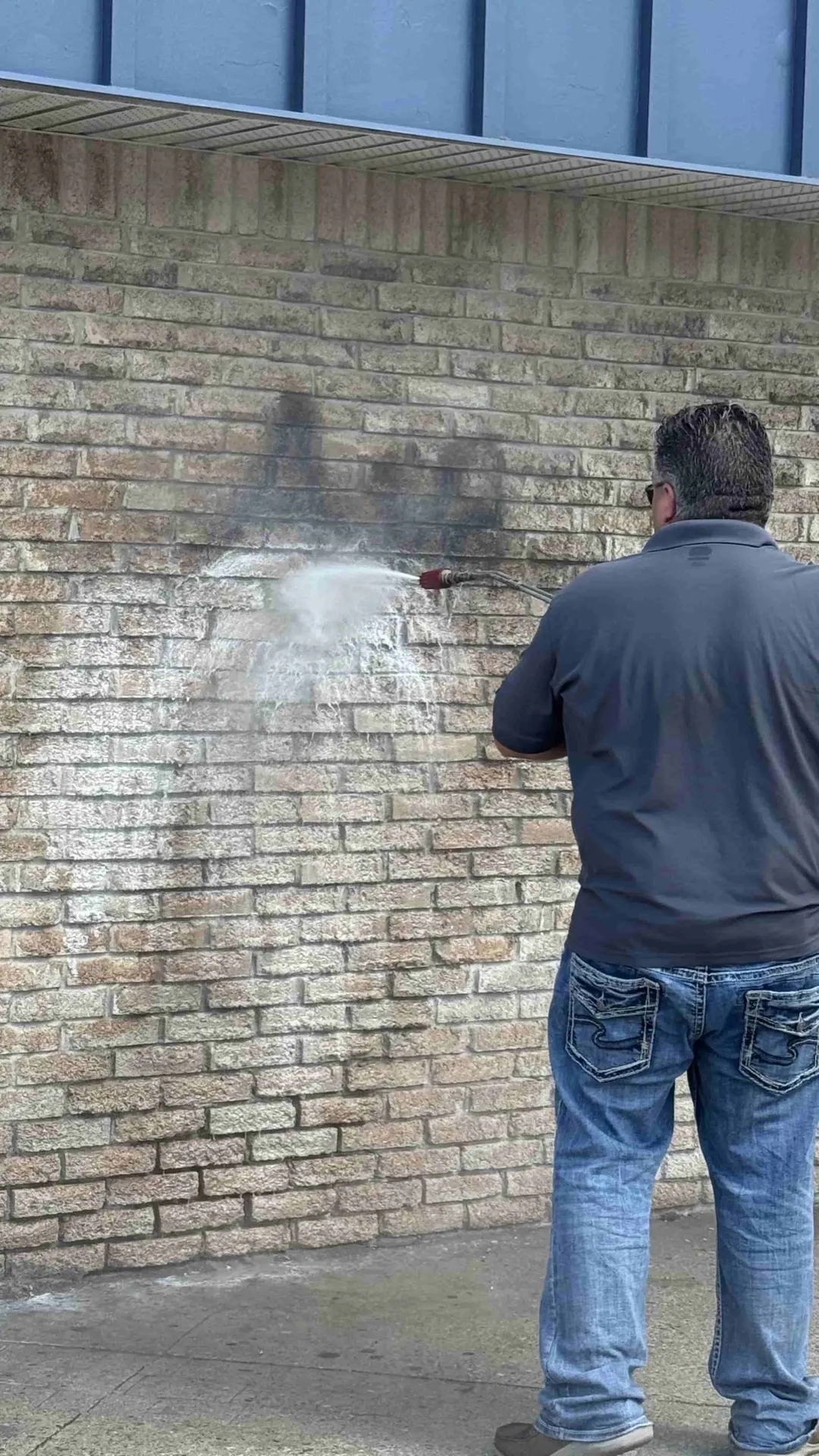
Washing helps in three ways. It rinses salt residue and grit off the surface, so the slab is not held damp. It clears the dirt that hides cracks, so you can see what needs repair. And it prepares the slab for a sealer or coating.
It cannot repair scaling, rebuild lost surface or stop the next winter's damage. Worse, a hard jet on an already scaled slab tears off more of the weakened layer, so use a surface cleaner at modest pressure and keep well back. Never wash when a freeze is due within a day, because water forced into cracks and pores can refreeze and make the damage worse.
Habits and products that protect a slab
- Shovel first, salt second. Clear the snow down to the surface, then use as little salt as you can. Heavy handfuls do more harm than good.
- Use sand for traction on cold days when salt is barely working. The options are compared in salt alternatives for ice and driveways.
- Rinse the salt film in spring and around the garage door during mild spells.
- Go easy on new concrete. Many installers advise keeping de-icers off a slab during its first winter.
- Consider a sealer. A penetrating sealer made for freeze-thaw and de-icers can reduce how much water and salt a slab absorbs. It needs a clean, dry surface and the product label's conditions.
Interlock, steps and garage floors
Driveway slabs are not the only victims. Interlock takes salt into its joints and surface, where it can leave white mineral deposits and hold moisture against the paver edges. Concrete steps and porch slabs suffer most, because they are often thinner, sit beside a salted walkway and may have steel inside. Garage floors get a daily dose from the undersides of cars.
For the garage, a squeegee and a broom after each melt spell do more than any product. Push the slush out the door before it dries into a crust, then rinse the film off in spring.
Repair, seal or replace
Match the fix to the damage. Hairline cracks can be filled. Light scaling on a slab that is otherwise sound can be washed and then sealed or coated. Spalled patches call for patching or resurfacing. Slabs that are heaved, crumbling all over or corroding inside are candidates for replacement, and washing them harder will not change that.
D&D Home Services lists pressure washing from $350 for typical Kitchener-Waterloo homes, with a free written quote, and offers concrete sealing to cut how much salty water the surface absorbs. If you are weighing cover-ups, driveway sealing vs concrete coating compares them, and the six areas to wash first after winter puts the salt-prone spots in order.
Key Takeaways
- Salt keeps slush liquid so slabs stay wetter, and repeated freezing then flakes the top layer of concrete.
- Scaling, spalling, map cracking, white residue and rust streaks each point to a different stage of winter damage.
- Washing removes salt and reveals cracks, but it cannot repair scaling, and hard pressure on a weak slab makes it worse.
- Shovel first, use less salt, add sand, rinse in spring and keep de-icers off new concrete in its first winter.

Request a home-service quote
Select the service you need and describe the work area and access.