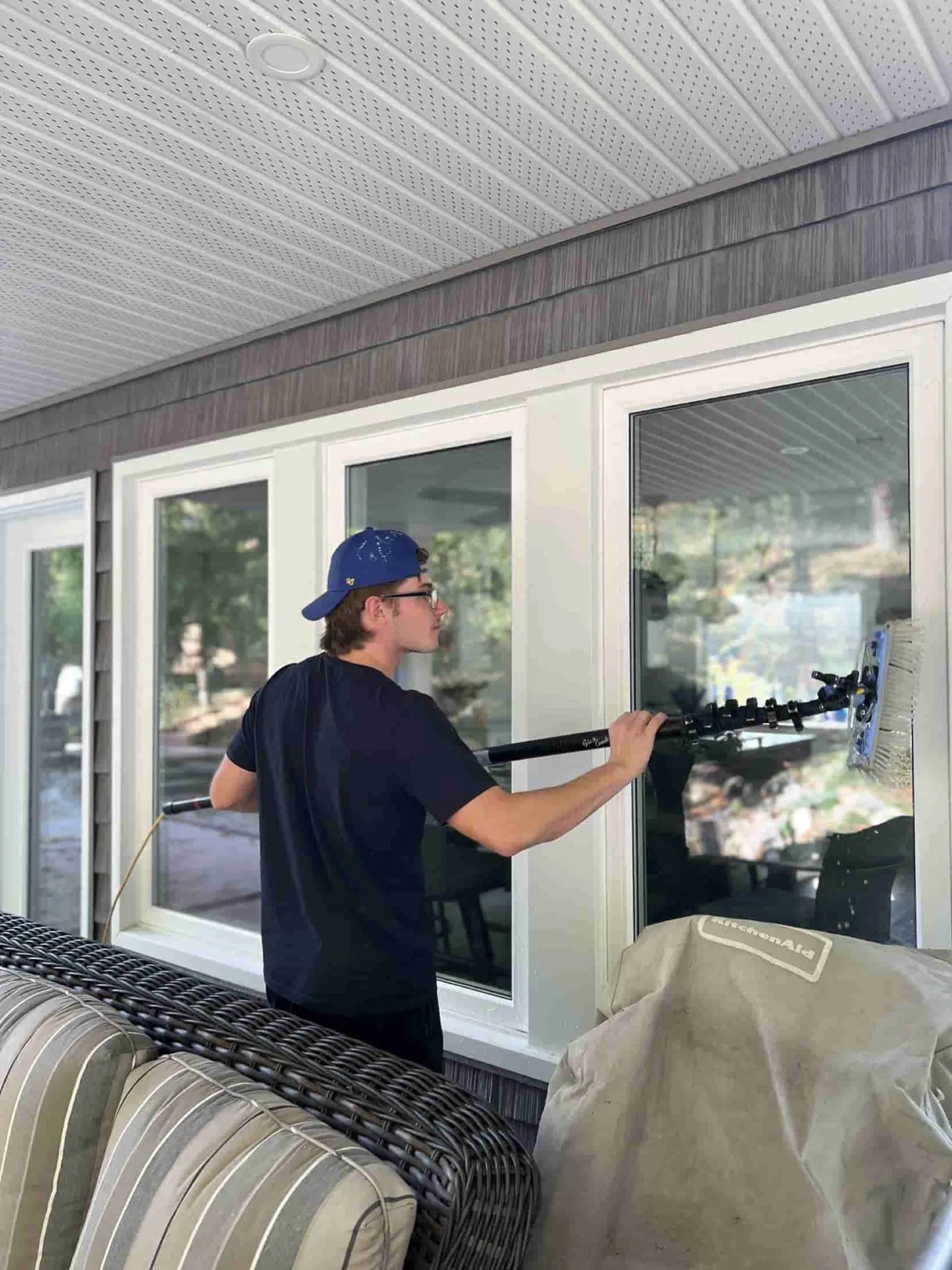
You can pressure wash windows only at very low pressure, and most homeowners should not try. A pressure washer on normal settings can crack glass, stress the seals of double-pane units, push water past the frame and tear screens. A garden hose, soft brush and squeegee, or a pure-water pole used by a window cleaner, clean the glass without that risk.
In This Article
- Can you pressure wash windows? The short answer
- What a pressure washer does to glass, frames and screens
- Why older Ontario windows are most at risk
- What to use instead of a pressure washer
- A safe way to wash windows with a hose
- Upper windows, ladders and washing the house
- If you already pressure washed your windows: what to check
- Pressure washing windows questions homeowners ask
Can you pressure wash windows? The short answer
For normal use, no. Pressure washers are built for concrete, decks and driveways. A window is thin glass held in a frame by seals, caulk and sometimes putty, all designed to shed rain and hose spray, not a concentrated jet.
Power washing is usually a pressure washer that also heats the water. That adds a second problem on a cold day, because hot water on cold glass can crack it.
Check the care guide that came with your windows. The maker's instructions, and any warranty terms, come first. Whatever the guide says, a garden hose gives you all the water pressure a window needs.
Want an exact price for your home?
Skip the guesswork: we look at your actual property and quote it in writing, free and no-obligation. Serving Kitchener, Waterloo, Cambridge & Guelph.
What a pressure washer does to glass, frames and screens
- Cracked glass. A jet at close range stresses the pane, most of all if it already has a chip, a scratch or an unseen stress crack. Hot water on cold glass adds thermal shock.
- Stressed seals. Double and triple-pane units are sealed at the edges. A hard jet aimed at the edge and frame can stress that seal. Once it leaks, fog or droplets show up between the panes, and no cleaning will clear them. Seals fail from age too, so see why cleaning will not fix condensation between panes.
- Water forced past the frame. Gaps at the sash, weep holes and caulk lines let a jet push water inside. It can wet the interior sill, trim and the wall cavity behind, and damp materials invite mould.
- Stripped caulk, paint and putty. Old caulk lines, painted wood and glazing putty chip and lift under a jet.
- Bent or torn screens. Mesh stretches and tears, and thin frames bend.
It also does not clean well. A jet moves loose dirt, but soap and minerals dry on the glass as spots. Waterloo Region's hard groundwater leaves white marks on a window that air-dries, as hard water deposits on windows explains.
Why older Ontario windows are most at risk
Southern Ontario's freeze-thaw winters work on every joint around a window. Caulk shrinks and cracks, paint blisters, and putty dries out. A homeowner may not notice, but a pressure washer finds every weak line.
Older wood windows with painted sashes and glazing putty are the most exposed. Older sealed units may already have an ageing edge seal, and a jet can be the last straw. Newer vinyl windows are not immune: their weep holes and gaps at the sill can still let a hard spray in.
Spring is when people reach for the pressure washer, after a winter of road-salt film and pollen. It is also when frames are at their most worn. If you are not sure what your windows are made of, assume they cannot take a jet.
What to use instead of a pressure washer
| Method | Safe for glass and seals? | Best for, and limits |
|---|---|---|
| Garden hose, gentle spray and a soft brush or mop | Yes | Pollen, dust and salt film. Dry the glass, or hard water spots can follow |
| Soapy water, applicator and squeegee | Yes | A clean, dry finish. Needs reach, so upper windows mean a ladder or lift |
| Pure-water pole with a soft brush | Yes | Upper windows from the ground, with frames rinsed too. See water-fed pole vs squeegee |
| Mild mineral cleaner, test patch first | Spot treatment only | White hard water marks. Follow the label and keep it off metal and stone |
| Pressure washer | Not recommended | Concrete, decks and driveways, not glass |
A safe way to wash windows with a hose
- Pick an overcast day above freezing. Direct sun dries soap into streaks, and frost ruins the job.
- Take the screens out and wash them flat on a soft surface with a hose and a soft brush. The window screen cleaning guide has more.
- Rinse the glass and frame from the side with a gentle spray. Do not aim it up into the seals under the sill.
- Wash with a soft mop or sponge and a bucket of water with a few drops of dish soap.
- Squeegee top to bottom, wiping the blade between passes, then dry the frame edge and sill with a clean cloth.
- Look it over. Note any cracked caulk, gaps, or fog between the panes.
Keep your feet on the ground wherever you can.
Upper windows, ladders and washing the house
A pressure washer wand pushes back against you, and on a ladder that is a bad mix. The Canadian Centre for Occupational Health and Safety calls falls from portable ladders a major source of serious injury. The Electrical Safety Authority advises keeping at least 3 metres from overhead power lines. For second-storey glass, use a pole from the ground, a window that tilts in for cleaning from inside, or hire it out.
If you are washing the siding as well, do not aim a jet at the windows. Close them, keep the spray off the frames and consider a gentler method. Why pressure washing damaged your siding and why soft washing is safer covers the alternative for the walls.
When you want the glass done without the ladder work, ask a professional which method they will use. D&D Home Services quotes window cleaning from $125 for typical Kitchener-Waterloo homes, with a written quote before work begins.
If you already pressure washed your windows: what to check
- Look for cracks or chips in the glass, especially along the edges.
- Watch for fog or droplets between the panes. They can take days or weeks to appear.
- Check the interior sill, trim and wall below each window for damp or stains, then look again after the next rain.
- Check the caulk and putty for gaps, missing pieces or lifted paint.
- Check the screens for bends and tears.
- Take photos and dates. They help if you contact the window maker or installer about a warranty.
If you find damp, deal with it quickly. A glazier or window company can say whether a sealed unit needs replacing, and a leak behind trim should be fixed before it spreads. Haze that wipes off is dirt. Fog between the panes points to a seal problem.
Pressure washing windows questions homeowners ask
Can you power wash windows?
Not safely. Power washing usually means a hot-water pressure washer, and hot water on cold glass can crack it. The jet adds its own risks to the glass, seals and frames. Warm soapy water, a soft tool and a squeegee clean glass without those problems.
Does power washing clean windows?
It moves loose dirt, but it does not leave glass clean. Soap and minerals dry as spots, and hard water makes that worse. Mineral deposits need a proper cleaner and a dried finish. A soft brush, gentle rinse and squeegee give a better result.
Can a pressure washer break a window?
Yes. A jet at close range can crack glass, especially a pane with chips or stress, and it can damage caulk or the seal of a double-pane unit. Even without breakage, it can force water past the frame into the wall.
Is it OK to pressure wash window screens?
Not at normal settings. The mesh stretches or tears, and the thin frame bends or pops out of its corners. Take the screens out, lay them flat on a soft surface and wash them with a garden hose, a soft brush and a little dish soap. Rinse, then stand them up to dry.
Key Takeaways
- Pressure washers are built for concrete and decks, not glass, seals, caulk or screens.
- A jet can crack glass, stress double-pane seals and force water past the frame into the wall.
- Warm soapy water, a soft brush or mop, a gentle hose rinse and a squeegee clean windows safely.
- Older Ontario windows with worn caulk, putty or ageing seals are the most at risk.
- If you already used a pressure washer, check for fog between panes and damp below the windows over the next weeks.
Sources & References

Request a home-service quote
Select the service you need and describe the work area and access.