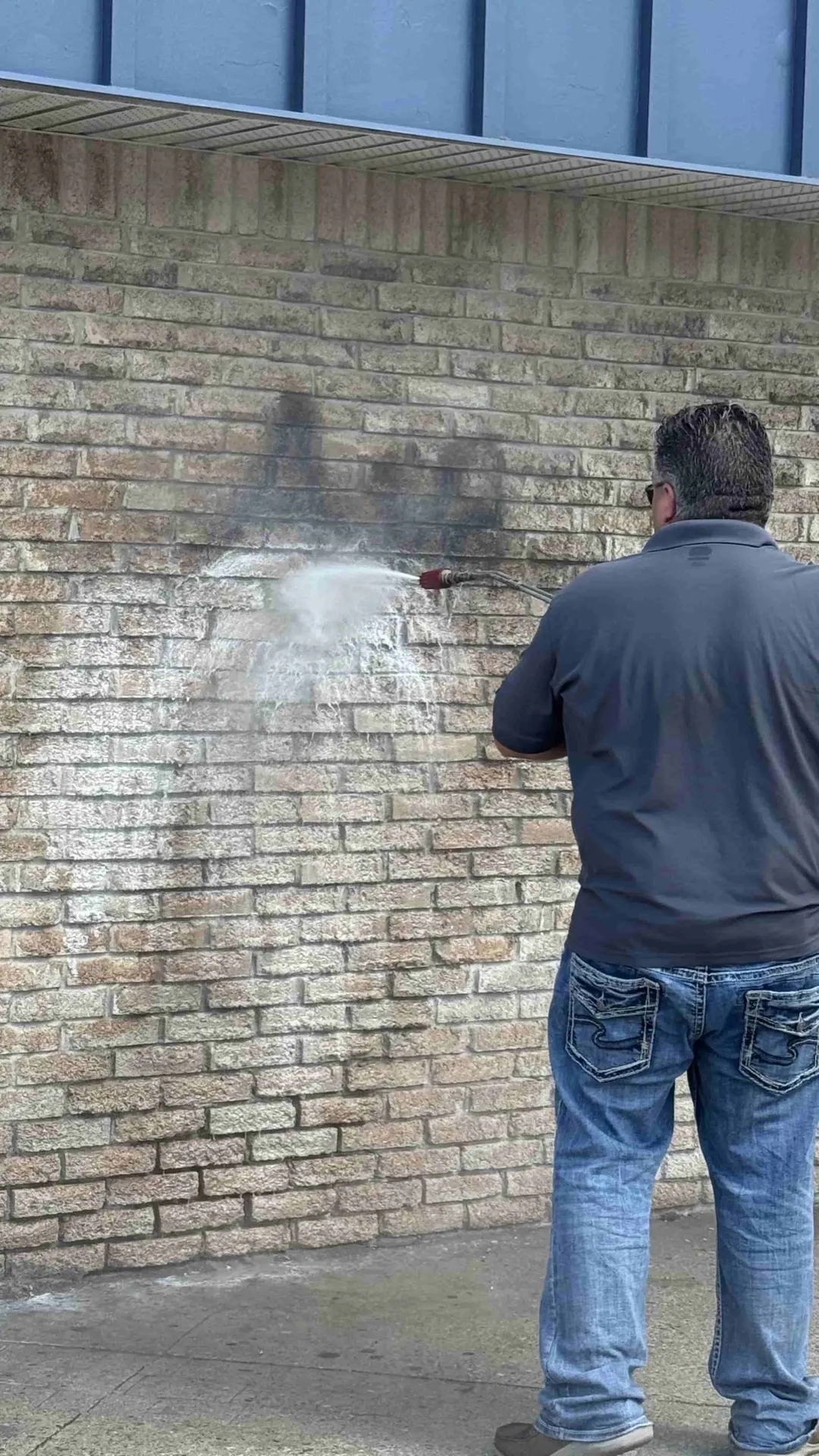
Blasting black growth off siding feels like a win, until the streaks come back. This post explains what a jet actually does to mould and algae, what it does to the siding, and what to do instead so the clean lasts.
In This Article
What a jet removes, and what it leaves behind
Dark streaks on siding are usually algae or mould, and in practice they are treated the same way. Both grow as a film that anchors itself in the tiny texture of the surface. On weathered, chalky or porous siding, the roots reach further in than the eye can see.
A pressure jet shears off the visible layer. It does not reliably reach the living cells anchored underneath, and it flings spores around the wall and into the air. The siding looks clean for a few weeks. Then the next damp spell arrives, the surviving growth restarts and the streaks return, often in the same places.
What a jet does to the siding itself
The bigger cost is what the pressure does to the wall.
- Vinyl: water is driven up behind the laps, where it gets into the wall cavity. Hard jets can also crack panels or unhook them from their locks.
- Aluminum: dents and a dulled finish.
- Wood and cedar: fuzzed, gouged grain and stripped paint.
- Fibre cement: chipped edges and a scoured surface that holds dirt afterwards.
- Stucco: cracks and water intrusion into a surface that absorbs.
- Trim and caulk: joints pushed open around windows and doors.
Water behind the cladding is the worst outcome. The growth you removed was on the outside. The damp you forced in stays where you cannot see it, and that is where genuine mould problems start.
Driveway or patio seen better days?
We pressure wash driveways, patios, decks and walkways across Kitchener, Waterloo, Cambridge & Guelph. Free, no-obligation quotes, ready within 1 business day.
Telling growth from plain dirt in one minute
Not every dark mark is mould, and a quick check saves an unnecessary treatment.
- Dirt and pollen: wipe off with a damp cloth and gather below ledges and near the ground, where rain splashes soil up the wall.
- Algae: green, grey or dark streaks on shaded, damp walls, often in vertical lines and slimy when wet.
- Mould and mildew: black or grey speckles or fuzzy patches, usually in damp corners, crevices and under eaves.
- Rust or metal stains: orange or brown runs below nails, vents or gutters.
Algae and mould need killing. Dirt needs rinsing. Rust needs its own product, not a mould treatment. If a damp cloth removes the mark, a gentle rinse may be all the wall needs.
What actually stops regrowth
Killing the growth calls for a cleaning mix that is designed to do it, applied gently and given time to work. Commonly that means a diluted sodium hypochlorite-based mix with a surfactant that helps it cling to the wall, or another algaecide. It goes on at low pressure, sits for the dwell time the product label sets, and is rinsed off gently. Plants are wetted and covered first, and the product label governs the dilution.
That is the idea behind soft washing. It relies on chemistry and patience rather than force, which is why it suits siding. What soft washing is walks through the method, and soft washing vs pressure washing helps you decide between them. Household bleach is not a shortcut: strength, rinsing and plant protection all matter, and mixing it with other cleaners can release harmful gas.
Why it comes back, and how to slow it
Moisture and shade feed the growth, so the wall itself is part of the fix. Southern Ontario's humid summers and mature tree cover make north and shaded walls the usual trouble spots.
- Trim shrubs and branches so sun and air reach the wall.
- Fix overflowing or leaking gutters, and check that downspouts discharge away from the house.
- Turn sprinklers so they stop wetting the siding.
- Keep soil and mulch below the siding line, so splashback does not feed growth from the bottom.
- Clean on a regular rhythm so the growth never gets thick.
Safety, and when to get a second opinion
Wear eye protection, gloves and a mask suited to dust and spores when you are near heavy growth. Keep the ladder work to single-storey reach, because a wet wall and a wet ladder are a poor pair.
Musty smells indoors, stained ceilings, soft sheathing or damp drywall near the affected wall point to a moisture problem that no exterior cleaning will fix. Have the cause found first. For the exterior itself, D&D Home Services lists soft washing from $350 for typical Kitchener-Waterloo homes, with a free quote in writing before work begins.
Key Takeaways
- A pressure jet shears off visible growth but leaves anchored cells and spreads spores, so streaks usually return.
- The larger risk is forcing water behind siding laps, trim and stucco, where it can cause real mould problems.
- Killing growth takes a proper cleaning mix at low pressure with the label's dwell time and a gentle rinse.
- Trim back shade, fix gutters and sprinklers and clean regularly, or the wall will grow it again.

Request a home-service quote
Select the service you need and describe the work area and access.