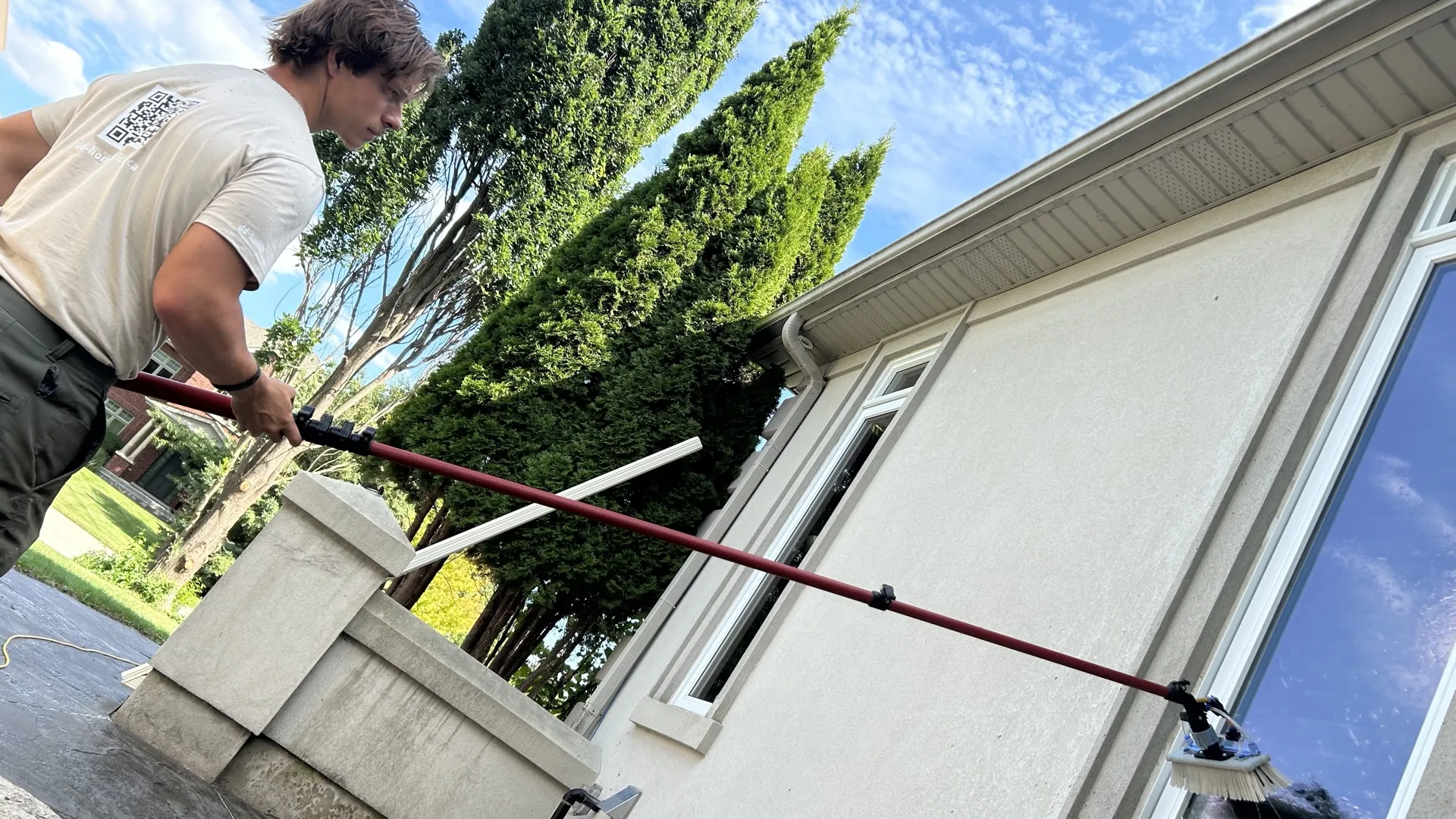
Cold weather changes what a window-cleaning kit needs to do. Here is what cold does to your gear, what to look for in each tool by type, how to keep a cleaning mix from freezing, and which jobs are better left for a mild day.
In This Article
What cold does to your gear
- Water freezes. At or below 0°C, cleaning mix can ice on glass, frames, hoses and in the bucket. On sub-zero glass, water can ice over faster than a squeegee can clear it.
- Rubber stiffens. A cold, hard blade skips and chatters, leaving lines instead of a clean pull.
- Hands lose grip. Thick gloves cut dexterity, and cold fingers drop tools.
- Glass dislikes sudden change. Hot water on cold glass can crack it, especially if it already has a chip or edge damage.
- Winter dirt is gritty. Road salt and sand dry into a film, and grit scratches glass if it is dragged.
Tool by tool: what to look for
| Tool | Winter-friendly feature | Trade-off |
|---|---|---|
| Squeegee channel and handle | A corrosion-resistant channel, which holds up to salty water, and a handle you can grip with gloves. | Better metals and handles usually cost more. |
| Squeegee rubber | A blade that stays flexible in the cold, with a straight, clean edge. | Softer rubber wears faster, and hard rubber skips when cold. |
| Washer sleeve or applicator | Microfibre that holds mix without dripping. | It saturates quickly and needs frequent rinsing. |
| Bucket | A smaller bucket filled with lukewarm mix, refilled often. | More trips, but the mix stays usable. |
| Scraper | A plastic blade for stickers and light ice on sills. | Less aggressive than metal, which is the point on glass. |
| Cloths | Dry microfibre kept somewhere warm. | Wet microfibre stiffens and freezes outdoors. |
| Extension pole | Locking collars that work with gloves on. | Poles with water in them can freeze inside. |
| Gloves | Waterproof, lined, with a grippy palm. | You give up some dexterity. |
Streaky glass no matter what you try?
We clean interior and exterior glass to a streak-free finish for homes across Kitchener, Waterloo, Cambridge & Guelph. Free, no-obligation quotes, ready within 1 business day.
Keeping the mix from freezing
Use lukewarm water, not hot, so you never send a temperature shock through cold glass. Mix small batches, and keep a second bucket indoors to swap in when the first cools.
A cleaner made for cold weather, or a small amount of isopropyl alcohol in the mix, lowers the freezing point. Follow the product label, test it on a small area and keep it away from window film and coatings. Alcohol is flammable, so keep it away from heat and open flames, and ventilate when you use it indoors.
Work on the side of the house that is catching the sun, where glass is warmer, and stop as soon as ice starts forming on the pane.
How technique changes in the cold
Good tools help, but cold weather also changes how you work with them.
- Do one pane at a time. Wet a pane only as fast as you can clear it.
- Use less liquid than you would in summer. Glass that is cold dries and freezes unevenly, so a lighter wet coat is easier to control.
- Pull the squeegee in firm, steady strokes and wipe the blade after each one, so ice crystals do not build up on the rubber.
- Dry the frame edge and the bottom sill straight away with a cloth. Water left there is where ice starts.
- Stop when your hands are numb. Dropped tools and rushed strokes cause most of the damage in winter.
What to do in winter, and what to leave for a mild day
- Interior glass: any day. Dry microfibre and a spray cleaner are enough for smears and condensation marks.
- Exterior glass: only when the air is above freezing and the ground is dry. From November to April, mild days do come between freeze-thaw cycles, so wait for one.
- Ladders: never on ice, packed snow or wet leaves.
- Ice on glass or sills: do not chip it or pour hot water on it. Wait for a thaw.
- Salt film on ground-floor glass: rinse it with lukewarm water and dry it, so grit does not scratch the pane.
Looking after the gear
Salt is hard on tools. Rinse squeegees, channels and buckets with clean water after any winter use, dry them, and store them indoors. A blade left in a cold car goes hard and can crack. Check the edge of each rubber before every job, and replace it once it is nicked or rounded, because a damaged edge is the most common cause of streaks.
Read the winter window care tips for the rest of the season. For product types, the window cleaning products guide is a useful companion. D&D Home Services quotes window cleaning from $125 for typical Kitchener-Waterloo homes, confirmed in writing, and the window cleaning page explains what a visit covers.
Key Takeaways
- Cold makes water freeze, stiffens rubber, cuts grip and makes hot-water-on-cold-glass a cracking risk.
- Choose corrosion-resistant channels, flexible squeegee rubber, grippy gloves and dry microfibre for winter work.
- Use lukewarm water and a cold-rated cleaner or a little isopropyl alcohol, following the label and keeping it away from coatings.
- Do interior glass any day, and leave exterior work for mild days above freezing with dry footing.

Request a home-service quote
Select the service you need and describe the work area and access.