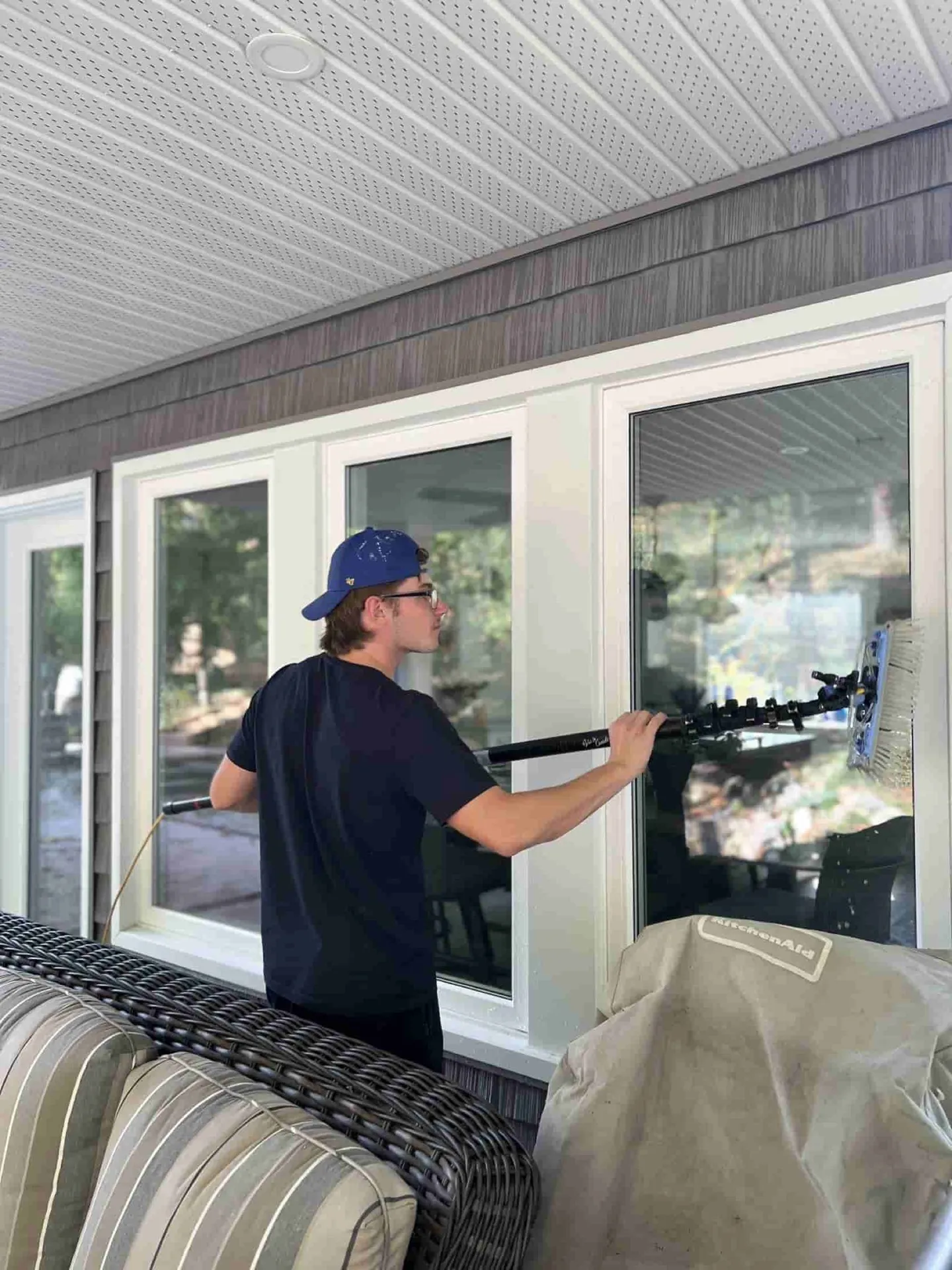
Winter is perhaps the hardest season for windows. Salt spray, ice, condensation, and reduced light hours challenge both the performance and appearance of your home's windows. Here's how to manage winter window care effectively, keeping your windows clean, functional, and energy-efficient through an Ontario winter.
In This Article
Winter Challenges for Windows
Understanding what winter does to your windows helps you address each issue specifically:
- Salt accumulation: Road salt kicked up by vehicles (especially on front-facing windows near busy streets) etches glass and frames over time
- Condensation: Cold exterior glass combined with interior humidity creates condensation that, if excessive, can damage window frames and sills
- Ice formation: In older windows or frames with failing seals, ice can form between the glass and frame
- Thermal stress: Extreme temperature differentials cause expansion and contraction in frames and glazing compounds
- Reduced visibility: Film, road grime, and mineral deposits accumulate quickly in winter and are less easily noticed in low-light conditions

Dealing with Condensation
Some condensation on the interior of windows is normal in Ontario winters, it indicates the window glass temperature is below the dew point of your indoor air. Occasional light condensation is not a problem. Persistent heavy condensation is.
Normal condensation: Light misting in morning that evaporates when the sun warms the glass. No action needed.
Excessive condensation: Heavy water droplets running down the glass or pooling on the sill. Actions to take:
- Reduce indoor humidity with exhaust fans in bathrooms and kitchen
- Check that your HRV (Heat Recovery Ventilator) is properly set for winter operation
- Use a dehumidifier in moisture-generating areas
- Wipe sills daily if condensation is pooling, standing water on wood sills causes rot over time
Condensation between glass panes: This indicates a failed IGU (Insulated Glass Unit) seal. The window's insulating capacity is significantly reduced and the glass unit should be replaced.
Need a hand with your home's exterior?
From gutters and windows to full exterior washes, we help homeowners across Kitchener, Waterloo, Cambridge & Guelph. Free, no-obligation quotes, ready within 1 business day.
Can You Clean Windows in Winter?
Yes, professional window cleaning can be performed in winter when temperatures are above 0°C. The cleaning solution prevents freezing during application and rinse. Here's what to know:
- Professional cleaners use a small amount of dish soap or a low-freezing solution that prevents instant freezing
- Cleaning should be done when temperatures are above 0°C and rising (morning cleans in winter are riskier than afternoon)
- Avoid cleaning in direct sunlight in winter, the temperature differential between shade and sun can cause streaking
- Interior cleaning can be done year-round regardless of outdoor temperatures
D&D Home Services performs window cleaning year-round, weather permitting. We monitor conditions carefully and reschedule rather than compromise quality.
"Winter window cleaning is absolutely possible and often worthwhile, especially on south-facing windows where salt and road film accumulates most heavily."
- D&D Home Services Window Cleaning Team
Ice Accumulation and Safe Removal
Ice on window exteriors is rarely a problem, it melts with morning sun. Ice on the inside of window frames is a concern because it indicates either a seal failure or significant air infiltration.
Safe ice removal practices:
- Never use metal scrapers on window glass, they cause scratches
- Never use boiling water to melt window ice, thermal shock can crack glass
- Commercial windshield de-icer spray (used sparingly on exterior glass) is generally safe
- For interior frame icing, address the air infiltration source (failed caulking, weatherstripping, or seal)
Maximizing Winter Energy Efficiency
Windows are typically responsible for 25–30% of residential heat loss. Here are practical improvements:
- Window insulation film: Interior adhesive shrink film provides a low-cost secondary insulating layer for older single or double-pane windows
- Heavy curtains or cellular shades: Can reduce heat loss by up to 20% when kept closed on cold nights
- Weather tape: Apply rope caulk to drafty window gaps, it peels off cleanly in spring
- Draft snakes: For sills with air infiltration, these provide immediate improvement
Test for drafts: On a cold, windy day, hold a lit incense stick or a thin piece of toilet paper near window edges and corners. Movement indicates air infiltration, a caulking fix that takes minutes and can meaningfully reduce heating costs.
Interior Window Maintenance in Winter
- Wipe frames and sills monthly, condensation film, dust, and finger marks accumulate even in winter
- Check wooden sill paint for any cracking or lifting, address with touch-up paint before moisture penetrates
- Clean interior glass when you notice visibility degradation, haze from cooking, smoke, and humidity film is most noticeable in low winter light
- Inspect hardware (locks, handles, hinges), cold temperatures cause metal to contract, and poorly lubricated hardware is prone to sticking or breaking
Preparing for Professional Spring Window Cleaning
Getting Ready for the Best Results in Spring
- Note any windows where condensation was excessive this winter, these may need frame caulking attention
- Note any windows with failed seals (fogging between panes), plan for IGU replacement
- Schedule professional exterior cleaning for late April when consistently above 5°C
- Interior cleaning can be booked any time year-round
- Consider D&D's spring bundle: windows + exterior wash + gutter inspection for maximum value

Request a home-service quote
Select the service you need and describe the work area and access.