An hour in late September or October can spare you drafts, ice and damp sills all winter. This three-pass checklist covers the outside, the inside and how each window operates, then sorts what to fix now from what can wait.
In This Article
When to do it, and what to bring
Aim for the weeks after the summer heat and before the heating season, roughly late September to mid-October. Nights are cool, dry days are common, and any repair that needs caulk or paint still has weather to set in. Freeze-thaw cycles begin in November and run to April, so anything left unsealed is tested hard.
Bring a flashlight, a small screwdriver, a putty knife, a notepad or phone for photos, and a strip of tissue or ribbon for testing drafts. Take pictures as you go, because a dated record shows what changed from year to year.
Pass one: outside
| Check | What you are looking for | What to do |
|---|---|---|
| Caulk and trim | Cracks, gaps, shrinkage or peeling where the frame meets the wall. | Scrape out failed caulk and reseal with an exterior sealant, on a dry day, following its label. |
| Glass | Cracks, chips, or haze between the panes. | Note it. Fogging between panes needs a window contractor. |
| Frames and sills | Soft or spongy wood, bubbling paint, or white powder on metal. | Probe gently with a screwdriver tip. Soft wood needs repair before winter. |
| Drainage slots | Weep holes packed with dirt or paint. | Clear them with a thin wire. |
| Eavestroughs above | Overflow streaks running down the glass and wall. | Clean the gutters. Overflow soaks the frames below. |
| Ground and wells | Soil or mulch heaped against frames, and wells full of leaves. | Pull soil back and clear wells so water can drain away. |
Streaky glass no matter what you try?
We clean interior and exterior glass to a streak-free finish for homes across Kitchener, Waterloo, Cambridge & Guelph. Free, no-obligation quotes, ready within 1 business day.
Pass two: inside
- Sills and the wall below. Look for stains, bubbled paint, soft drywall and mould. Old marks tell you where water has been.
- Glass edges. Watch for beads of moisture or tide marks along the bottom edge, which show where condensation runs.
- Weatherstripping. Look for cracked, flattened or missing strips where the sash meets the frame.
- Locks and latches. Each one should pull the sash tight against the frame.
- Humidity. A small hygrometer shows if indoor air is damp enough to fog glass on cold nights.
Pass three: operation and winter setup
- Open, close and lock every window. A sash that sticks may be swollen, painted shut or off its track.
- Clean tracks, then lightly spray dry silicone on them so the sashes glide.
- Test for drafts on a windy day by holding tissue or ribbon at the seams. Movement shows a leak.
- Repair or replace torn screens and decide whether to store them for winter. If you have storm windows, fit them and check that their drainage slots are open.
- Take pictures of any windows that failed a test, so you can deal with them first in spring.
The windows people forget
A checklist that stops at the living-room windows misses the openings that cause the most trouble.
- Sliding patio doors. Check the rollers, the lock and the weatherstripping along the edges. A door that lifts or rattles leaks heat, and a track full of grit wears the rollers out.
- Basement windows and wells. Clear leaves and debris, check that the well drains, and look for dampness on the sill inside. Any bedroom or basement window that serves as an emergency exit should open fully and easily, so test each one.
- Garage, utility and attic windows. They are out of sight, so they are often out of mind, and a cracked pane or gap can let in cold, damp and animals.
- Skylights. Look for stains or moisture on the shaft, and for debris piled against the curb.
What to fix now, what can wait, and who to call
Fix now: open caulk, blocked drainage slots, worn weatherstripping, stiff locks and torn screens. They are cheap, and each one saves heat or keeps water out.
Can wait: cosmetic paint touch-ups and cleaning marks that do no harm, until spring.
Call a contractor: fogging between panes, rot, a sash that will not close and drafts that persist after resealing.
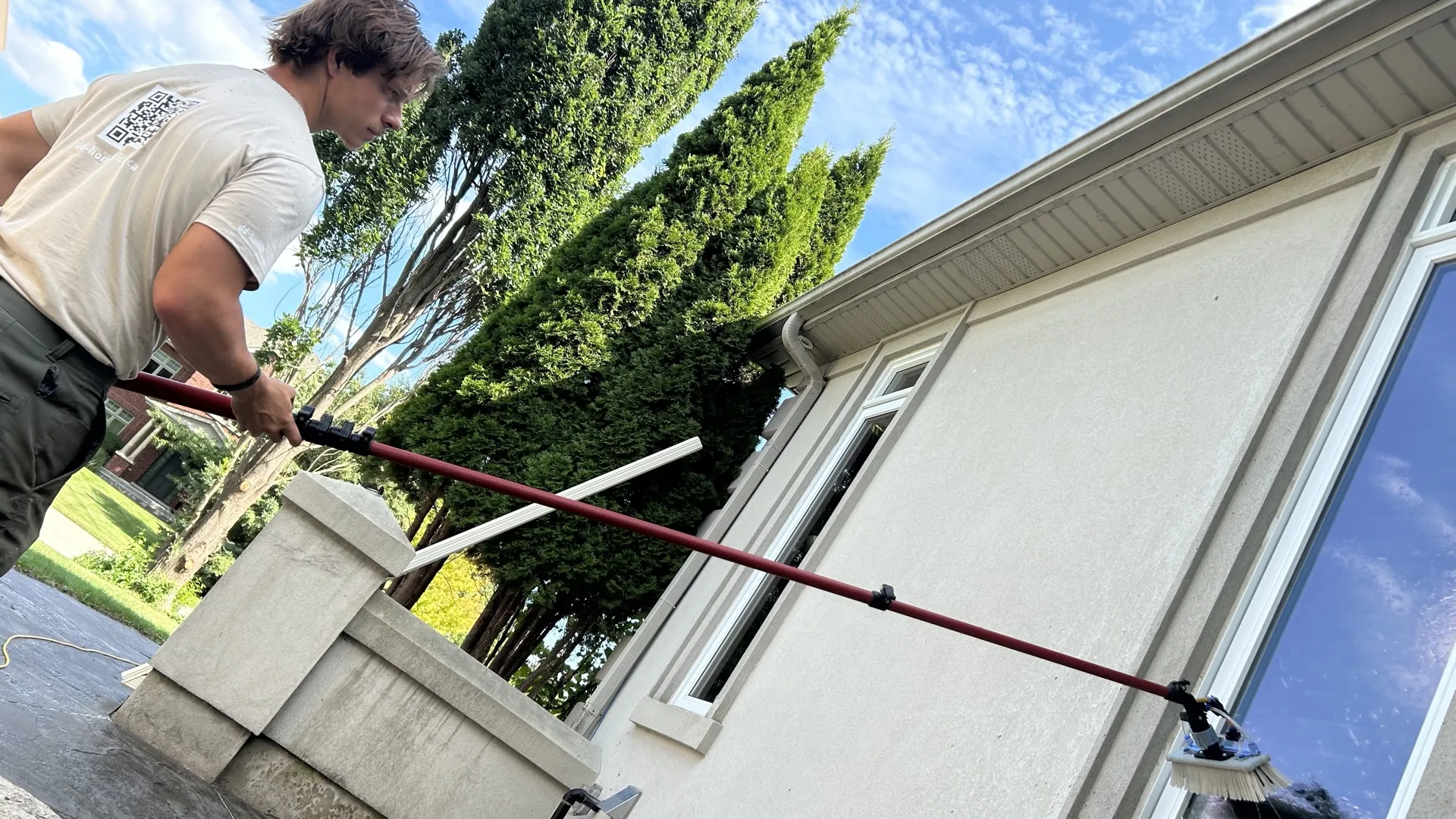
A fall clean pairs well with this inspection, because clear glass makes cracks and fogging easier to spot. D&D Home Services quotes window cleaning from $125 for typical Kitchener-Waterloo homes. See the fall home exterior checklist for the rest of the house, and window cleaning for what a visit covers.
Key Takeaways
- Inspect windows in late September or October, before the heating season and freeze-thaw cycles begin.
- Check the outside, the inside and how each sash operates, and photograph anything that fails.
- Fix caulk, weatherstripping, blocked drainage slots, locks and screens now, because each is cheap and effective.
- Fogging between panes, rot, sashes that will not close and persistent drafts need a window contractor.

Request a home-service quote
Select the service you need and describe the work area and access.