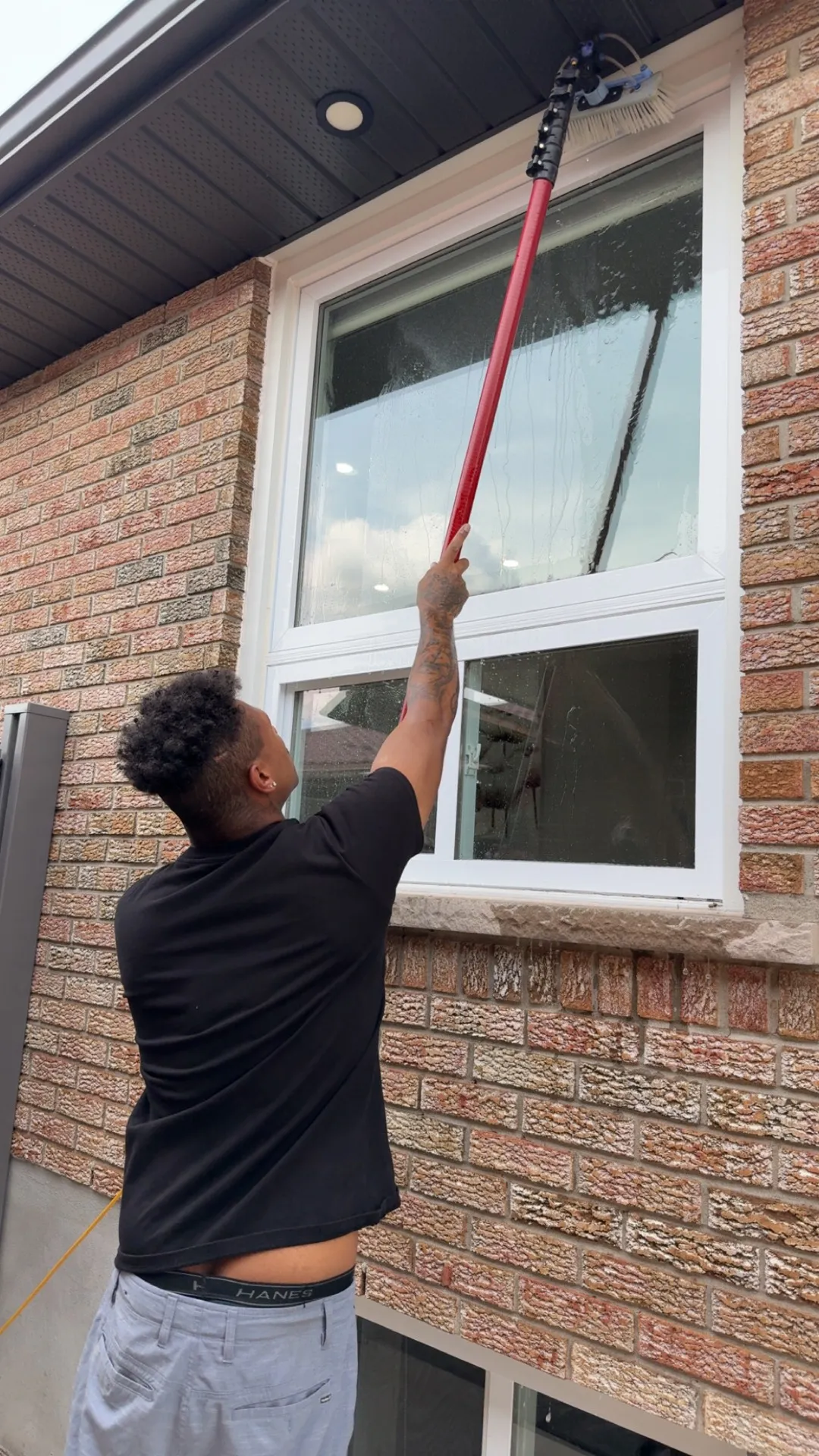
A new house does not come with clean eavestroughs. Roof grit, trade leftovers and blown-in seeds settle in the troughs within months, so this guide covers what lands there, when to make the first clean and what to check while you are at it.
In This Article
What lands in a brand-new trough
A trough starts collecting the day the roof goes on. Roofers, siding crews and landscapers all work above or beside it, and much of what they leave behind ends up in the low spot at the eave.
- Roof grit. Fresh asphalt shingles commonly shed some loose granules in their first months. Rain washes them down into the trough, where they form a gritty layer.
- Trade leftovers. Screws, nail ends, trim offcuts, sealant blobs and bits of plastic wrap slip in during installation.
- Site dust. Sawdust, drywall dust and stone dust drift around a subdivision that is still being built, and settle on every roof nearby.
- Seeds and leaves from elsewhere. A street with only saplings still receives debris from mature trees on neighbouring lots, parks and creek corridors.
Grit and dust are heavier than leaves. They pack into a dense, muddy layer, and after a few rainfalls that layer can dam the downspout outlet.
Small street trees are not a free pass
New streets often have young trees and few big ones, so skipping the fall clean is tempting. The debris still arrives. Maple keys and oak catkins ride the wind in spring, and the heavy leaf drop from late October into November lands on your roof from whatever stands upwind. The tree the builder planted is small now. It will not be in five years.
Lots on newer streets can also be narrow, with roofs close together, so the leaves of several properties mix. If you can see mature trees from an upstairs window, plan on leaves.
Gutters overflowing, or overdue for a clean?
We clean and flush gutters across Kitchener, Waterloo, Cambridge & Guelph, and catch small problems before they reach your foundation. Free, no-obligation quotes, ready within 1 business day.
Treat the first clean as an inspection
Builder-installed troughs are hung quickly, and fresh backfill settles over a year or two. The first time you are at the eave, look for faults as well as debris. A hose is the only test tool you need: run water into the high end of each run and watch it travel. It should move steadily to the downspout without pooling on the way.
- Standing water. Water that lingers after the flow stops means the slope is off. Read why gutter pitch matters before you decide it is nothing.
- Joints and end caps. Dark trails on the fascia or drips at a seam point to thin or missing sealant.
- Hangers. Look for gaps, loose fasteners and long stretches with no support.
- Downspout ends. Does each one empty onto a splash pad or extension that carries water away from the foundation? Settling soil can leave a dip against the wall, which sends water back toward the house.
- Dents and scratches. Other trades' ladders sometimes leave them behind.
Take dated photos of anything wrong. If your builder's warranty is still running, read its terms and deadlines and report drainage faults early. A slow leak at a corner is easy to miss and expensive to ignore.
A first-year timeline that works
- When the roof, siding and landscaping are finished: flush every run and look it over, even if the troughs seem empty. Pull out grit and any stray fasteners.
- Late September to early October: a quick check that the downspouts still run freely before the leaf drop begins.
- After the leaves are down, usually in November: the full clean, ahead of the first lasting snow.
- May and June: look again once seed pods and catkins have finished falling.
- Year two: settle into a yearly clean. Move to twice a year if the trees have grown or the roof is still shedding grit.
Nothing in this list needs a special tool. It needs a habit of looking at the eave at the same times each year.
Doing it yourself or booking it
A two-storey new build puts the eaves at second-storey height, and the ladder rules do not relax because the house is young. If that is your home, read gutter cleaning safety for two-storey homes before you lift a ladder. For the rest of the exterior, why new builds need exterior cleaning too covers what else collects in the first years.
If you would rather hand it over, D&D Home Services offers gutter cleaning in Waterloo from $125 for a typical Kitchener-Waterloo home, with a free written quote before work begins. Ask the crew to note anything odd at the joints or the slope while they are there.
Key Takeaways
- New troughs collect roof grit, trade leftovers and site dust in their first months, well before any leaf season.
- Small street trees do not mean a light leaf load, because wind carries debris from mature trees nearby.
- Use the first clean as an inspection: check the slope, sealed joints, hangers and where each downspout empties.
- Photograph problems with dates and report drainage faults early, while your builder's warranty terms still apply.

Request a home-service quote
Select the service you need and describe the work area and access.