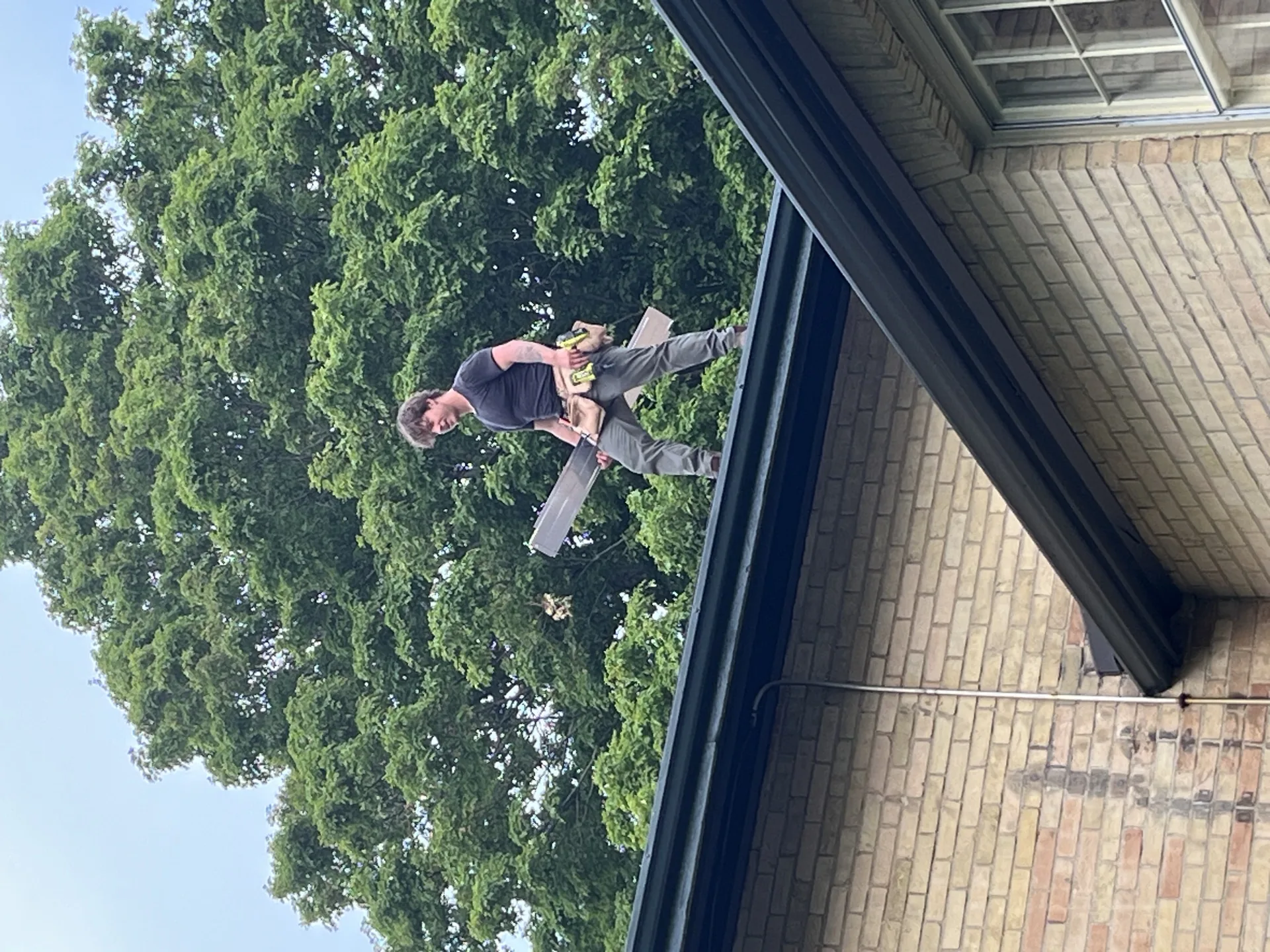
By April your guards have carried a season of snow, ice and freeze-thaw. This spring inspection runs in three passes, a ground walk, a close look and a first-rain test, so you find damage before the maple seeds arrive.
In This Article
When to look, and what winter did
Wait until the ice is off the eaves and the mornings stop frosting the rungs. In Kitchener that is usually some time from March into April. Going up on a frosty morning turns a check into a fall risk, so stay on the ground until it is properly dry.
Winter is hard on guards in specific ways. Snow loads the surface, and sliding snow strikes the front edge. Ice builds along the eave and pulls downward. From November to April, repeated freezing and thawing expands and contracts metal and wood, and fasteners loosen a little each cycle. Meltwater also freezes inside downspouts, which can split joints or push extensions out of place.
Pass one: a walk from the ground
Stand back at each corner of the house and sight along every run, as you would check a shelf for level. Look for waves, dips, gaps at the roof edge, and sections that sit proud of their neighbours. Use binoculars, or zoom a phone photo, for anything you cannot judge by eye.
Check the shaded side and the sunny side of the house separately. The shaded side keeps its ice and damp the longest, while the sunny side goes through more freeze-thaw cycles in a single day. Take a reference photo of each side, so next spring you can compare like with like.
Then check the bottom of the system. Are the downspout extensions still in place, or has snow shoved them aside? Is the soil beside the foundation damp or eroded where water has been landing? Is anything starting to nest at the ends of the guards?
Tired of cleaning gutters twice a year?
We install premium gutter guards on homes across Kitchener, Waterloo, Cambridge & Guelph. Free, no-obligation quotes, ready within 1 business day.
What the signs mean
| Sign | Likely cause | What to do |
|---|---|---|
| A wavy or bowed front edge | Snow or ice load, or hangers pulled loose | Check the hangers and fasteners, and call if the trough itself has moved |
| Sections lifted or shifted | A snow slide or loose clips | Re-fasten, or replace a bent section |
| Dents or crumpled corners | Falling ice or a branch | Replace the damaged piece |
| Rusty streaks at fasteners or cut edges | Steel parts corroding | Renew the fasteners, and note it for a future upgrade |
| Dirty streaks down the siding | Overflow during the thaw | Check the downspouts for ice or grit, and flush them |
| A crushed or displaced downspout extension | Snow or ice shoving it | Reposition it so discharge lands away from the wall |
| Peeling paint or bare wood on the fascia | Water reaching the wood repeatedly | Probe the board for soft spots |
Pass two: a careful ladder check on single-storey eaves
- Choose a dry day and set the ladder on firm, level ground with a standoff, keeping three points of contact.
- Test each fastener by hand, and tighten or replace any that spin or have rusted.
- If the design allows it, lift one section and look at the trough beneath for packed grit, standing water and last year's seedlings.
- Check that every outlet is clear, and brush the surface with a soft brush.
Leave second-storey eaves to a crew. Gutter cleaning safety for two-storey homes explains why the risk climbs quickly with height.
What looks alarming but is normal
Not every mark is damage. A layer of grit and dirt on top of the guards, a light green film of algae on a shaded run, and a few small scratches are all normal after a winter. So is a fresh dusting of pollen in April.
What is not normal is anything that changes the shape of the run or lets water through where it should not go: a bow, a gap, a missing piece, or a stain on the wall below. Those are the items to act on.
Pass three: the first hard rain and the seed drop
Watch the first heavy spring rain from a window. Every downspout should run strongly, and no water should skip over a run. Weak flow points to ice or grit still stuck in a downspout, so flush it once the weather is mild.
In late spring, maples release seed pods and oaks drop catkins, so plan a brush-down of the guard surface after they fall. Nesting season begins about the same time. If you find an active nest, leave it alone until the young have gone, since some birds' nests are protected, and ask a wildlife professional if you are unsure.
D&D Home Services offers gutter guard installation and gutter cleaning across Kitchener, Waterloo, Cambridge and Guelph, with free quotes confirmed in writing. For the rest of your spring list, see the spring exterior maintenance guide.
Key Takeaways
- Inspect once the ice is off and the rungs are dry, usually March into April, and start with a walk from the ground.
- Bowed edges, lifted sections, dents, rusty fasteners and dirty streaks each point to a specific winter cause.
- Check fasteners and the trough beneath from a ladder on single-storey eaves, and leave second-storey work to a crew.
- Watch the first hard rain, brush the guards after the late-spring seed drop and leave active nests alone.

Request a home-service quote
Select the service you need and describe the work area and access.