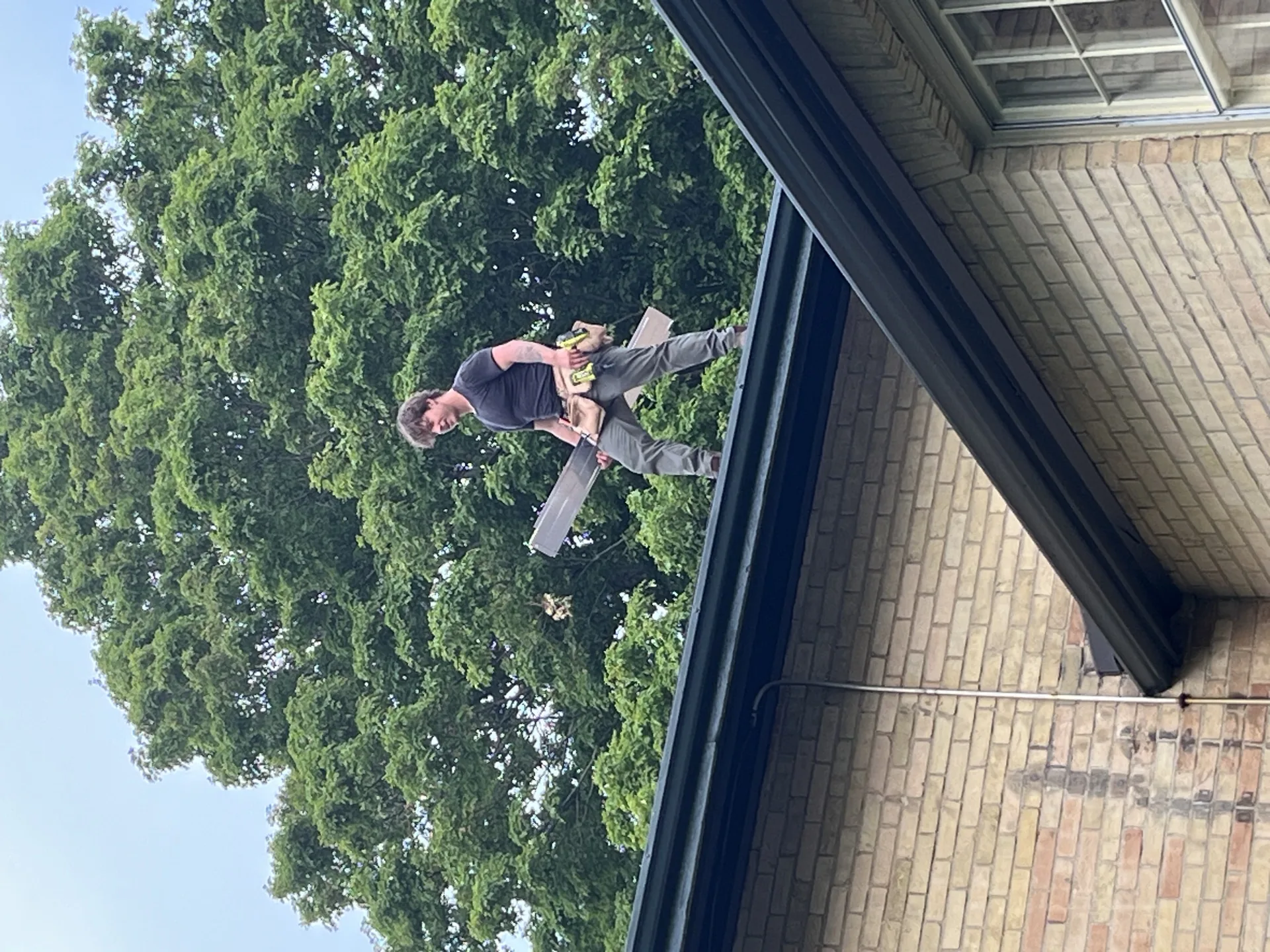
A big storm can shift a guard, bend a hanger or dump a branch on a run in a few minutes, and you can learn a lot from the ground without climbing anything. This guide gives three safety checks first, then what each type of weather does to guards, how to sort damage into now, soon and watch, and when to call a crew.
In This Article
Three safety checks before you look
- Is the weather over? Wait for wind to drop and lightning to move away. Loose sections, branches and ice can fall without warning.
- Are there downed lines? The Electrical Safety Authority advises staying back about 10 metres, roughly a school bus length, from any downed line, and calling 9-1-1 and your electricity distributor. Lines can hide under branches, so wait before you clear debris.
- Is the service mast intact? If the mast on the wall looks bent, pulled away or sagging, leave it alone and call a licensed electrical contractor.
Then keep your feet on the ground. A wet ladder, a hanging section overhead and a slick lawn make a poor combination.
What each type of weather does
| Weather | What it can do to guards | What to look for from the ground |
|---|---|---|
| High wind and thunderstorms | Lifts sections, bends hangers, drops branches and debris on the run | Gaps or raised edges, a run that has shifted, branches lodged on the guard, downspouts knocked loose |
| Hail | Dents guards, troughs and downspouts | Dents in metal, cracked plastic and loose granules from the shingles on the ground below |
| Heavy rain | Overwhelms capacity and exposes weak outlets | Overflow marks, washed-out soil at outlets, water at the foundation |
| Freezing rain and heavy wet snow | Loads runs with weight | Bowed runs, hangers pulled from the fascia, big icicles, damage from sliding snow |
Tired of cleaning gutters twice a year?
We install premium gutter guards on homes across Kitchener, Waterloo, Cambridge & Guelph. Free, no-obligation quotes, ready within 1 business day.
The fifteen-minute ground walk
Go round the house in the same order every time, with binoculars or a zoomed phone photo.
- The roof edge, for lodged branches or missing shingles.
- The guard surface, for lifted or shifted sections and a heavy load of debris.
- The trough line, for sags and gaps at the fascia.
- Each downspout, for bends, splits or a detached elbow.
- The discharge spot, for displaced extensions or washed-out soil.
- The siding, soffit and fascia below the run, for streaks or new stains.
- Ceilings inside along exterior walls, for fresh marks.
Pay extra attention to valleys, inside corners and the stretch above each outlet, since storm debris packs there first. A branch lodged in one of those spots can dam a run in a single shower.
Sorting damage: now, soon or watch
- Now: a section hanging or about to fall, a run sagging with weight, a downspout detached over a walk, a branch lodged on the guard, sharp bent edges near where people walk. Cordon the area off and call a crew.
- Soon: bent hangers, dents that change the shape of a run, a displaced extension, an outlet that runs weakly.
- Watch: scuffs and small dents that do not affect flow. Photograph them and look again after the next hard rain.
A sagging run counts as urgent because water, debris and ice add weight quickly, and a run already pulling from the fascia can tear away in the next downpour.
Safe ground-level steps are limited: put an extension back, sweep debris off the walk, and keep people away from anything overhead.
Record it before you touch it
Photograph each problem from a distance and close up, with the date on your phone. Note the storm and the time it hit. Keep any receipts, and tell your home insurer promptly if damage is more than cosmetic. Ask a contractor for a written assessment, which is easier to compare with your policy than a verbal opinion.
When to call a crew
When a storm hits a whole neighbourhood, crews get busy. Book early, and do not feel rushed into the first offer that arrives. Call for anything at height, any run that is sagging or separating, and any repair to the trough or fascia behind it. After a major storm, unsolicited offers of repair tend to appear. Ask any company for proof of liability insurance and a written quote, and be wary of anyone who asks for payment in full up front.
Crew members at D&D Home Services are Working at Heights certified. Gutter cleaning starts at $125 and gutter guard installation at $450 on typical Kitchener-Waterloo homes, and replacing a wrecked run is eavestrough installation work. Every quote is free, and the price is confirmed in writing before any work begins.
Key Takeaways
- Before looking, check that the weather has passed, stay about 10 metres from any downed line and leave a damaged service mast to a licensed electrical contractor.
- Wind, hail, heavy rain and freezing rain or wet snow each damage guards differently, so look for the signs that match the storm.
- Sort findings into now, soon and watch, with anything hanging, sagging or over a walk treated as urgent.
- Photograph damage before touching it, tell your insurer, and ask any storm-time repairer for insurance proof and a written quote.
Sources & References

Request a home-service quote
Select the service you need and describe the work area and access.