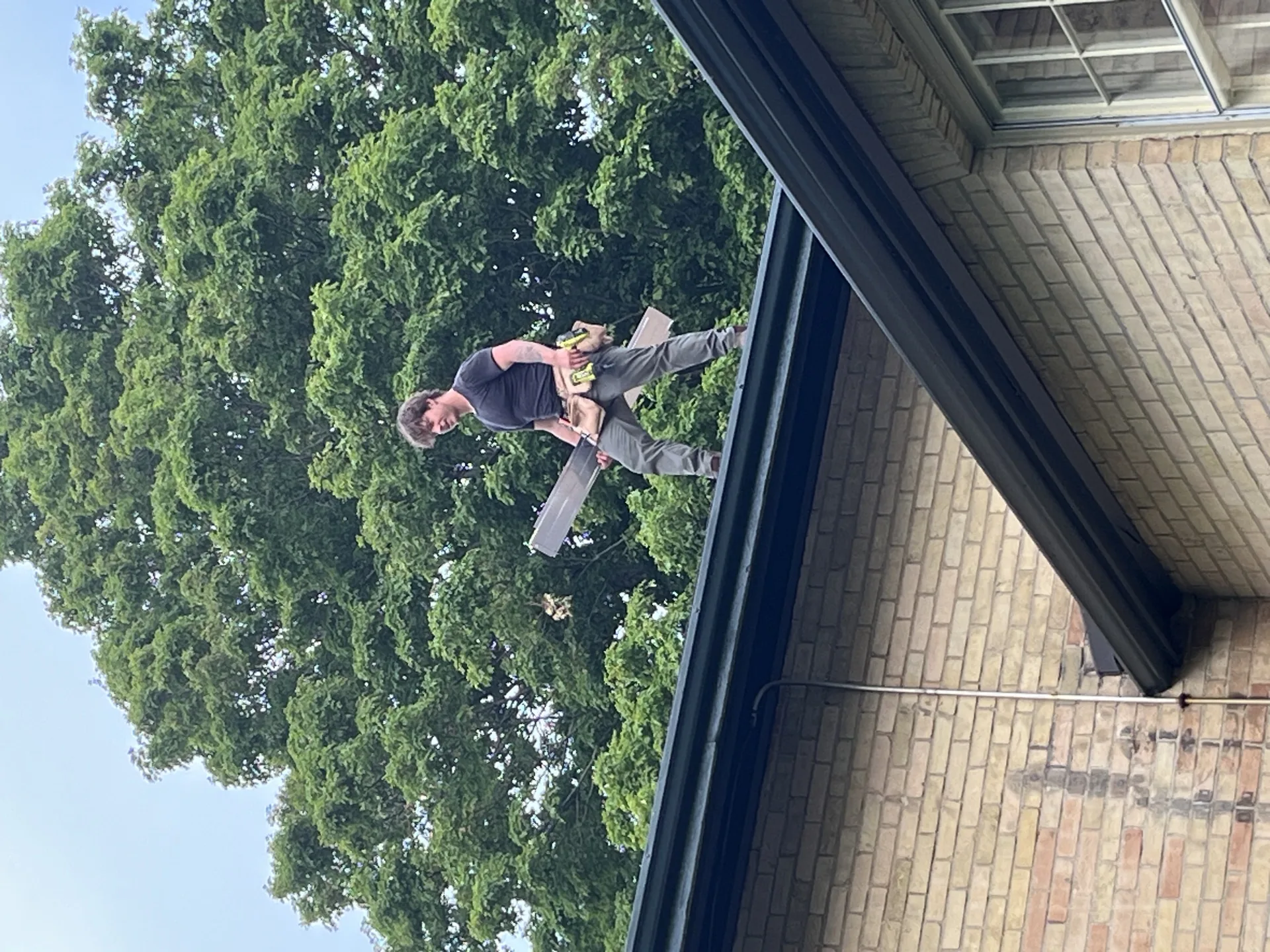
Micro-mesh and reverse-curve guards keep debris out in opposite ways, so they fail in opposite ways too. Here is how each handles Ontario debris, downpours and ice, with a clear choose this if, choose that if at the end.
In This Article
A sieve and a slide: two ideas for keeping debris out
Micro-mesh is a sieve. A fine screen, usually stainless steel in an aluminum frame, lets water pass through while debris stays on top. A reverse-curve guard is a slide. A solid hood curves over the front edge, water clings to the curve by surface tension and drops into a narrow slot, and leaves are meant to keep travelling over the edge.
A sieve can clog on its surface. A slide can be outrun by fast water. Most of the differences below follow from those two facts.
Fine debris: needles, grit and seed pods
Ontario yards make a lot of small material: maple seed pods in late spring, oak catkins, pine needles, and grit washed off asphalt shingles. Micro-mesh is built for exactly this. Its openings are small enough to hold most of it on the surface, where you can see it and brush it off.
A hood copes better with large debris than small. Needles and seed pods can catch at the nose or slip into the slot, and grit that gets in settles inside the hood, out of sight. Because you cannot see it, it tends to be found late, when water starts spilling. That is the strongest practical argument for mesh where trees stand close.
Mesh has a fine-debris problem of its own. Pollen, dust and decayed leaf fragments can film over the surface and slow the water. A soft brush and a rinse usually restore it.
Tired of cleaning gutters twice a year?
We install premium gutter guards on homes across Kitchener, Waterloo, Cambridge & Guelph. Free, no-obligation quotes, ready within 1 business day.
Downpours and winter ice: how each one fails
Heavy rain. Both designs can lose water. On mesh, a filmed surface or a sudden rush off a long, steep roof can send water sheeting over the edge. On a hood, fast water can jump the slot instead of following the curve. Roof length, pitch and valleys decide which is worse. Trough size and downspout count matter as much as either guard, so read eavestrough sizes for Ontario homes before you commit.
Winter. From November to April, freeze-thaw cycles turn meltwater into ice. On a hood, ice can build at the nose and block the slot. On mesh, meltwater can freeze into a sheet across the surface. Ice dams come from heat escaping through the roof, not from the guard, and neither design prevents them. What you can check is the fastening, because sliding snow and ice load the front edge of both.
The Ontario scorecard
| Condition | Micro-mesh | Reverse-curve |
|---|---|---|
| Maple seeds and oak catkins | Stay on top and brush off | Can catch at the nose or enter the slot |
| Pine needles | Held on the surface, matting over time | Can bridge the slot or slip into it |
| Broad leaves | Lie on top; wind and rain move many off | Slide off on steeper roofs, stick on low pitches |
| Roof grit | Mostly held out, may film the surface | Can get inside and settle in the trough |
| Heavy downpour | A filmed surface can shed water over the edge | Fast water can jump the slot |
| Ice at the edge | Can form a sheet on the surface | Can build at the nose |
| Seeing what is going on | Easy from the ground | Hard without lifting or opening the hood |
Upkeep, inspection and your roof warranty
Mesh sits open to view. You can scan the eave from the ground, spot a mat of debris and clear it with a brush on a pole. A hood hides the trough, so problems stay hidden until water misbehaves. Ask whether a hood's sections lift or hinge, and how the installer would check the inside.
Both designs can be fastened in several ways: screws through the fascia, clips on the trough, or a tuck under the first row of shingles. A tucked edge can affect a roofing warranty, so ask the installer and the shingle manufacturer, in writing, before you agree. Compare warranty exclusions too, not just the word "lifetime".
Choose micro-mesh if, choose reverse-curve if
- Choose micro-mesh if fine debris is your main problem, meaning needles, seed pods or shingle grit, and you can accept brushing the surface now and then.
- Choose reverse-curve if your debris is mostly large leaves, your roof is steep enough to keep the surface shedding, and the installer can show you how the hood opens for inspection.
- Get a second opinion if your roof has long runs or valleys. The trough size and downspout count may need to change before either guard will cope.
D&D Home Services quotes several guard types across Kitchener, Waterloo, Cambridge and Guelph, so you can ask for both designs priced for your roofline. The gutter guard installation page explains how quoting works, and gutter guard types compared covers the other designs.
Key Takeaways
- Micro-mesh works like a sieve and a reverse-curve hood works like a slide, so each fails in a different way.
- Mesh holds back needles, seed pods and roof grit better, while hoods shed large leaves but can hide fine debris inside.
- Fast water can skip past either design in a downpour, so trough size, downspouts and valleys matter as much as the guard.
- Ask how each is fastened, whether it tucks under shingles, and how you would inspect and clean it.

Request a home-service quote
Select the service you need and describe the work area and access.