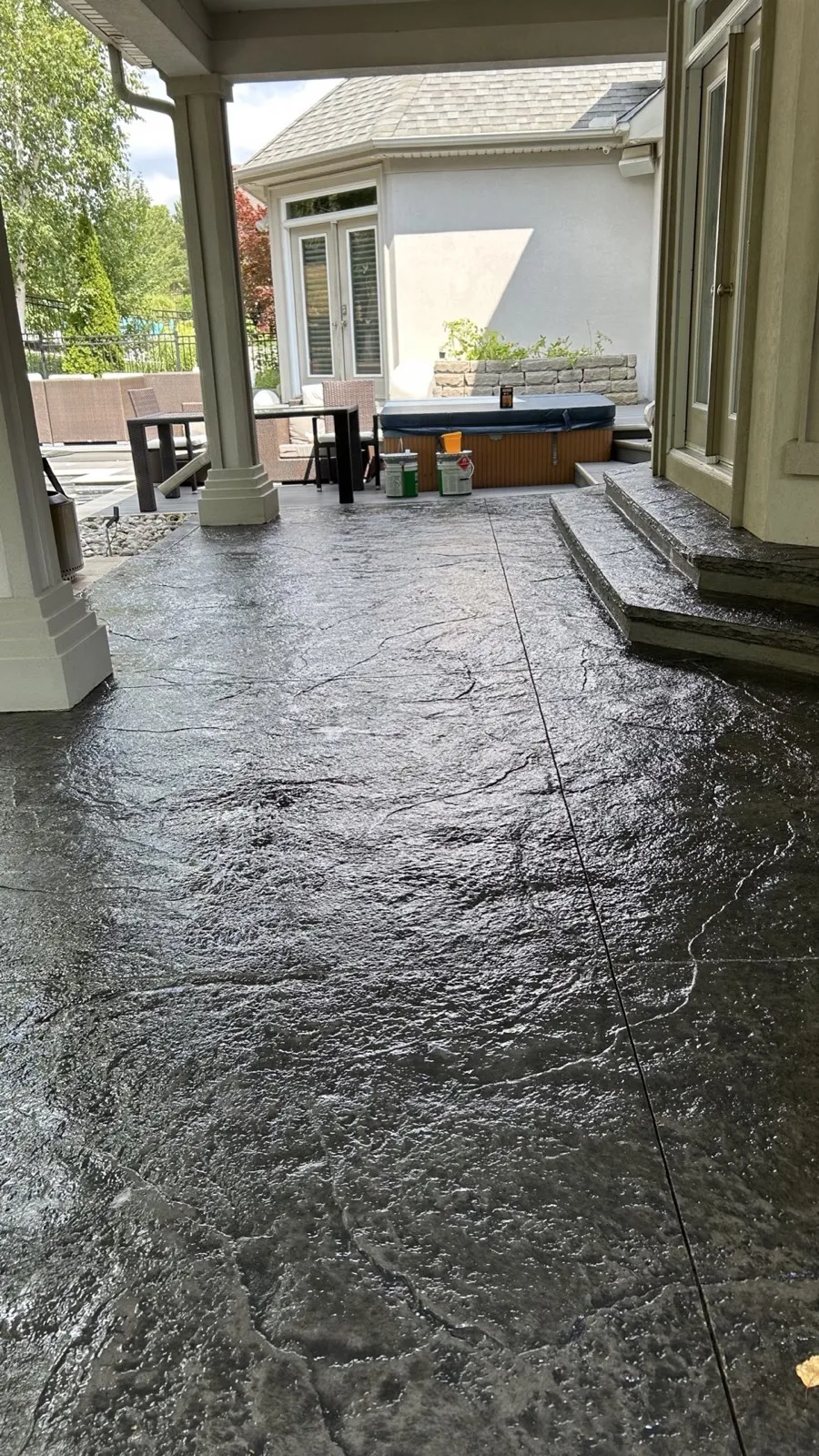
Driveway sealing is worth it on firm, sound asphalt that is starting to dry out, because a fresh coat slows the wear that lets water in before freeze-thaw tears the surface open. It is a waste on a failed base, widespread alligator cracking or a driveway you will replace soon. This guide gives you a cost-per-year test and the cases to skip.
In This Article
- Is driveway sealing worth it? The short answer
- Does driveway sealing work? What it does and does not do
- When driveway sealing is a waste of money
- The cost-per-year test
- Five checks before you pay anyone
- Ontario conditions: freeze-thaw, salt and the right product
- How to get an honest answer from a sealing contractor
- Driveway sealing questions homeowners ask
Is driveway sealing worth it? The short answer
It depends on what is underneath, not on how the surface looks. Sealing is maintenance for pavement that is still structurally sound. It is not a repair for pavement that is failing.
It is usually worth it when:
- The surface is firm underfoot, with a few narrow cracks at most.
- The asphalt has had time to cure and is turning grey, dry and rough.
- Water soaks in rather than beading on the surface.
- You expect to stay long enough to get the benefit, or you want a clean first impression before a sale.
It is usually a waste when:
- The base has failed and the surface sags, ruts or feels springy.
- Alligator cracking covers a large area.
- The driveway will be torn up or repaved within a year or two.
- The current coat is still doing its job.
The rest of this guide explains why, and how to test your own driveway.
Want an exact price for your home?
Skip the guesswork: we look at your actual property and quote it in writing, free and no-obligation. Serving Kitchener, Waterloo, Cambridge & Guelph.
Does driveway sealing work? What it does and does not do
Asphalt is stone held together by a sticky binder. Sun, water and traffic dry that binder out over the years. The surface turns grey, roughens and gets brittle, and small stones start to loosen. Sealcoat is a thin protective film applied over the top.
A coat applied to sound pavement can:
- Shed water instead of letting it soak into the surface and hairline cracks.
- Slow the sun's drying effect on the binder.
- Bind the loosest surface material and bring back an even dark colour.
It cannot:
- Add strength. A film has no structure of its own.
- Fix a weak or poorly drained base.
- Bridge wide cracks. Those need a filler made for the job, applied before the coat.
- Stop tree roots or stop potholes from forming over a soft spot.
The Ontario link is water. It gets into cracks, freezes, expands and thaws again many times a winter. Each cycle widens the opening a little. A film that keeps water out of small cracks slows the start of that process. Once the base itself is soft, nothing on the surface changes the outcome. Think of sealing as insurance on good pavement. Nobody can promise how many years a coat will add, so be wary of anyone who does.
When driveway sealing is a waste of money
| Situation | Why a coat will not pay | Better move |
|---|---|---|
| Failed base: sagging, springy or rutted | A thin film cannot hold a moving surface together | Get a paving contractor to assess the base and drainage |
| Widespread alligator cracking | The cracks reopen along the same lines, because the surface keeps flexing | Read about alligator cracking and replacement |
| Brand-new asphalt | The mix is still curing, and early timing is a judgement call | Ask the paver when the first coat should go on |
| Driveway to be redone within a year or two | The coat leaves with the surface | Patch hazards only, and save the money |
| Roots lifting the pavement | Sealing hides a symptom without touching the cause | Deal with the roots first, as tree root damage to asphalt driveways explains |
| A coat that is dull but intact | Stacked coats get thick, crack and peel | Wait, and repeat the water test next spring |
| A peeling or bubbling coat | New product over loose film lifts with it | Find the cause and remove loose film first |
Concrete and interlock are different. They need sealers made for those materials, for different reasons, so this guide covers asphalt only.
The cost-per-year test
Sealing is cheap next to what it is meant to delay, but cheap is not the same as worthwhile. This test puts numbers behind the decision, using your own quotes.
- Price the whole job. Ask for the coat, crack filling and prep as separate lines.
- Divide by the years until the next coat. Sun, traffic, snow clearing, salt and the product all change that figure. If a coat should last about four years, divide the quote by four. That is your yearly cost of protection.
- Price what you are delaying. Divide a repaving quote by the years the new surface should last, to get its yearly cost.
- Compare the shares. Add up the coats you expect over the driveway's life and divide by the replacement price. That fraction is what you spend on sealing to postpone replacement.
Here is an example with made-up round numbers, to show the logic and not to quote a price. A new surface lasts twenty years. Coats over that time add up to half the replacement price. To break even, they must stretch the driveway by about ten more years. If they add two, they did not pay for themselves in cash.
The lesson is about timing. Coats earn their keep on firm pavement, early in its life, when they protect something that still has years in it. On a failing driveway the sums never close. Other reasons count too, such as a tidy driveway when you sell. For a fuller comparison, see driveway sealing vs driveway replacement.
Five checks before you pay anyone
Run these on a dry day once the frost is out of the ground.
- Walk it. Soft, springy or sagging spots point to the base.
- Look at the cracks. A few separate lines are one thing. A web of connected cracks with small, block-like cells is another. Cracks wider than a pencil line need filling first, as covered in crack filling before sealing.
- Check the drainage. Puddles that sit long after rain suggest a low spot or a saturated base.
- Pour a cup of water on a clean, dry patch. If it darkens the surface and soaks in quickly, the film is thin or gone. If it beads or runs off, the coat is working.
- Find the history. Note when the driveway was laid and last sealed. For new asphalt, follow the paving contractor's advice on the first coat.
If two or three of these point to the structure, spend on a paving assessment before you spend on sealer. If they all look healthy, the question becomes timing, which is covered in how often to seal your driveway in Ontario.
Ontario conditions: freeze-thaw, salt and the right product
Southern Ontario is hard on asphalt. Winters swing across the freezing point many times, snow blades and shovels scrape the surface, and salt and sand wear it down. Driveways under mature trees stay damp, so moss and leaf stains build up. Sun-baked ones dry out faster. All of that shortens or stretches the time between coats.
Sealer needs the right weather. Product labels set a minimum temperature and ask for a dry stretch before and after the job, so the practical window here runs from late spring to early fall. Damp pavement and cool, humid mornings are common causes of peeling.
Check the product, too. Coal-tar sealers can no longer be sold in Canada: federal rules banned their sale from December 31, 2025. A quote that names one is a red flag, and you should ask which product will be used and why.
How to get an honest answer from a sealing contractor
- Ask for repair, prep and coating as separate lines, so you can judge each.
- Ask what the prep includes, such as cleaning, crack filling and edging.
- Ask which product and which weather conditions apply.
- Ask what the contractor would do if the driveway were not a good candidate. A straight answer is a good sign.
- Get a second opinion if the advice is to replace.
D&D Home Services offers driveway sealing from $450 for typical Kitchener-Waterloo homes, with a free written quote before work begins. Describe the age, cracks and last coat when you ask, so the quote fits your driveway.
Driveway sealing questions homeowners ask
Is driveway sealing necessary?
No. It is optional maintenance, not a structural requirement, and a sound asphalt driveway can last years without it. Sealing earns its place on firm pavement that is drying out, where a coat slows wear and keeps water out of small cracks. It does little on a failed base.
Is driveway sealing a waste of money?
It can be. Skip it on a failed base, a driveway covered in alligator cracking, one you will redo soon, or one with a coat that still works. On firm, ageing pavement it is a reasonable way to slow wear. Test your own driveway first.
Does driveway sealing help with cracks?
A coat seals hairline cracks and keeps water out of them, but it does not bridge wide ones. Fill those with a crack filler made for the job before sealing. A web of connected cracks points to a base problem, and sealing will not fix that.
Does driveway sealing do anything on a new driveway?
New asphalt needs time to cure, and the right moment for the first coat depends on the mix and the weather. Ask the paving contractor when to seal, and follow that advice instead of guessing. After that, check the surface each spring.
Key Takeaways
- Driveway sealing is maintenance for sound pavement, not a repair for a failed base.
- It is usually worth it on firm, dry-looking asphalt and a waste on sagging surfaces, widespread alligator cracking or a driveway you will replace soon.
- Use the cost-per-year test with separate quote lines for repair, prep and coating.
- Run five checks first: firmness, crack pattern, drainage, a water test and the driveway's history.
- Coal-tar sealers can no longer be sold in Canada, so ask which product a contractor will use.
Sources & References

Request a home-service quote
Select the service you need and describe the work area and access.