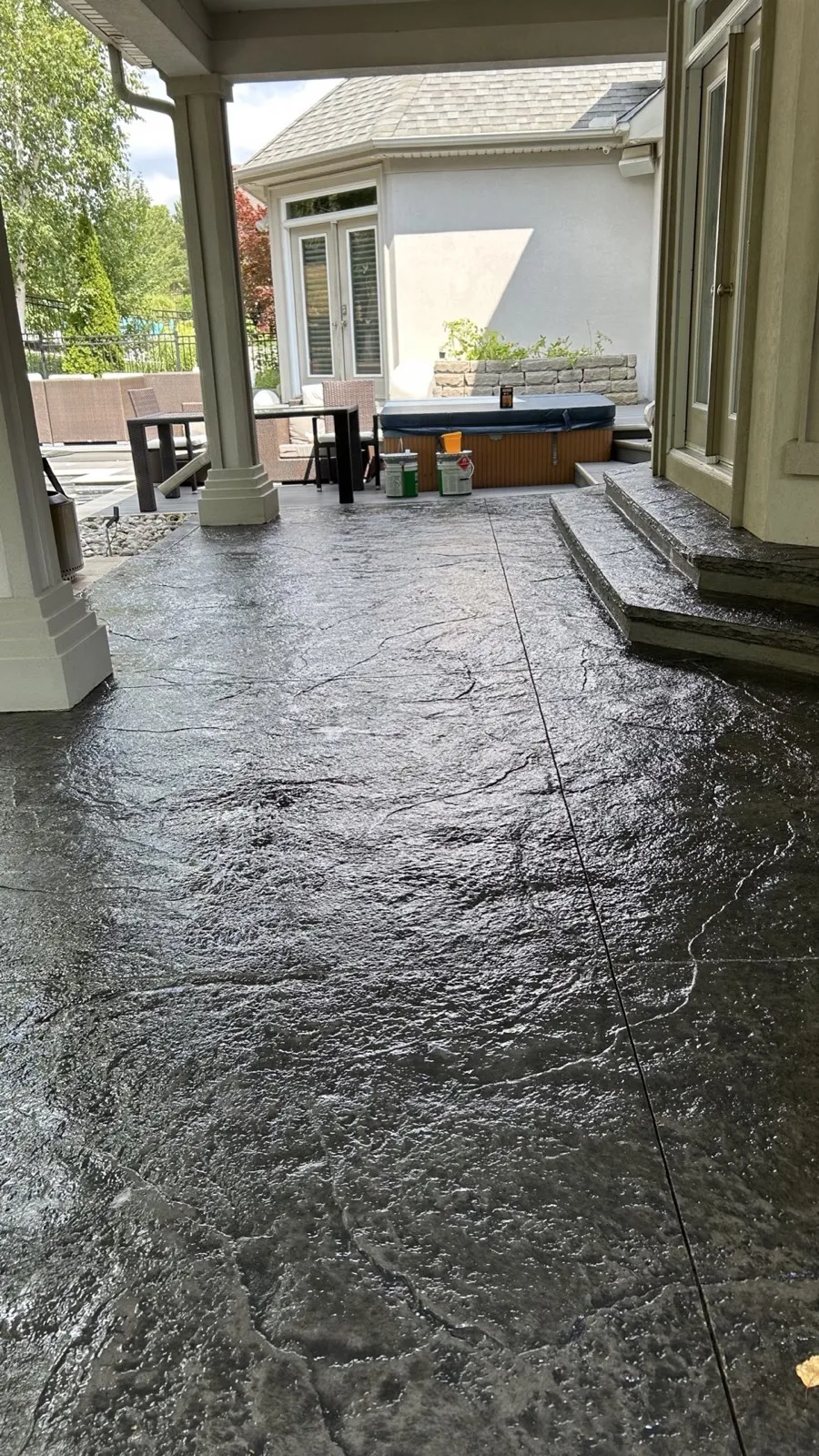
A sealer covers an interlock driveway, but it does not straighten it, refill it or hold it together. This inspection guide gives you nine checks with simple tests, one rule for deciding what must be repaired before any coat, and a way to record what you find.
In This Article
When and how to inspect
Wait until the frost is out and the pavers have been dry for a couple of days. Go early in the morning or late in the afternoon, when low sunlight throws dips and raised edges into shadow.
Bring a straight board or a string line, a putty knife, chalk, a garden hose and your phone. Walk the surface in strips, the way you would mow a lawn, so that no section is skipped. Mark each problem with chalk as you go, and photograph it with a tape measure beside it.
Nine checks with simple tests
| Check | How to test it | If it fails |
|---|---|---|
| Levels | Lay the board or string across the surface and look for gaps beneath it. After rain, note where puddles stay. | A sunken or heaved area points to a base problem, so repair it first |
| Rocking stones | Step on each paver along the wheel tracks and near the garage. A tilt or a click means it is loose. | Lift and re-bed it, and do not seal over it |
| Broken units | Look for cracked, chipped or crumbling pavers, especially at corners and edges. | Replace them, and ask the installer about colour matching |
| Joint sand | Probe a few joints with the putty knife. They should be full to just below the bevel. | Clean and refill with a sand your installer or the sealer's maker approves |
| Growth | Check the joints and the shaded strips for weeds, moss and algae. | Pull the roots, clear the debris and find the cause, often shade or standing water |
| Ants | Look for small mounds of sand along the joints. | Deal with the nest first, after reading Ontario's current pesticide rules, then refill the joints |
| Stains | Sprinkle water on dark spots. If it beads, oil or old sealer is present. | Treat the stain first, following the cleaner's label |
| Old sealer | Look for peeling, cloudy patches and flaking gloss. | Ask a professional about removing it, since new product bonds poorly to a failing film |
| Edges | Check the border stones and the strip where pavers meet the lawn or the garage slab. | Edges that drift outward or leave gaps need their restraint restored before sealing |
Want your exact driveway sealing price?
Skip the guesswork, we quote your actual driveway, itemized line by line, free and no-obligation. Serving Kitchener, Waterloo, Cambridge & Guelph, with quotes ready within 1 business day.
Repair first, or prep first?
Sort every mark with one rule: if it moves, holds water or is broken, repair it first. If it is dirty, dull or thin, it is prep.
- Repair first, with a hardscape contractor: sunken, heaved or rocking pavers, drifting edges, cracked units and puddles that keep returning.
- Prep before the coat: refilling joints, removing weeds and moss, treating oil, and washing off dirt.
- Wait or get advice: white haze on new pavers, an old sealer that is failing and stains that will not lift.
Give repairs time to settle. Ask the installer when a re-bedded area or fresh joint sand is ready for a coat.
Fix the water source before the coat
Water that keeps returning undoes any sealer. Check where roof water lands, whether the surface slopes toward the house or the garage, and whether a low corner collects a puddle after rain. Redirecting a downspout is a small job, and regrading is not. The guide to improving drainage around your home covers the options, and the guide to cleaning interlock paving shows what to do once the surface is sound.
Taking the results to a quote
Draw a rough sketch of the driveway and number each chalk mark. Add photos, the age of the pavers and the date of any earlier sealing, and describe the trouble spots in a few lines. A crew that sees the sketch can price the prep and coat accurately, and can tell you which items belong to a repair contractor first.
Give D&D Home Services the sketch and the photos when you request a quote for interlock and paver sealing. The written quote is free and confirmed before any work starts.
Key Takeaways
- Inspect after the frost is out and the surface has dried, using a straight board, a putty knife, chalk and a phone.
- Check levels, rocking stones, broken units, joint sand, growth, ants, stains, old sealer and edges before any coat goes on.
- If it moves, holds water or is broken, repair it first, and if it is dirty, dull or thin, it is prep.
- Fix the water source and give repaired areas time to settle before sealing, and record findings with a numbered sketch and photos.
Sources & References

Request a home-service quote
Select the service you need and describe the work area and access.