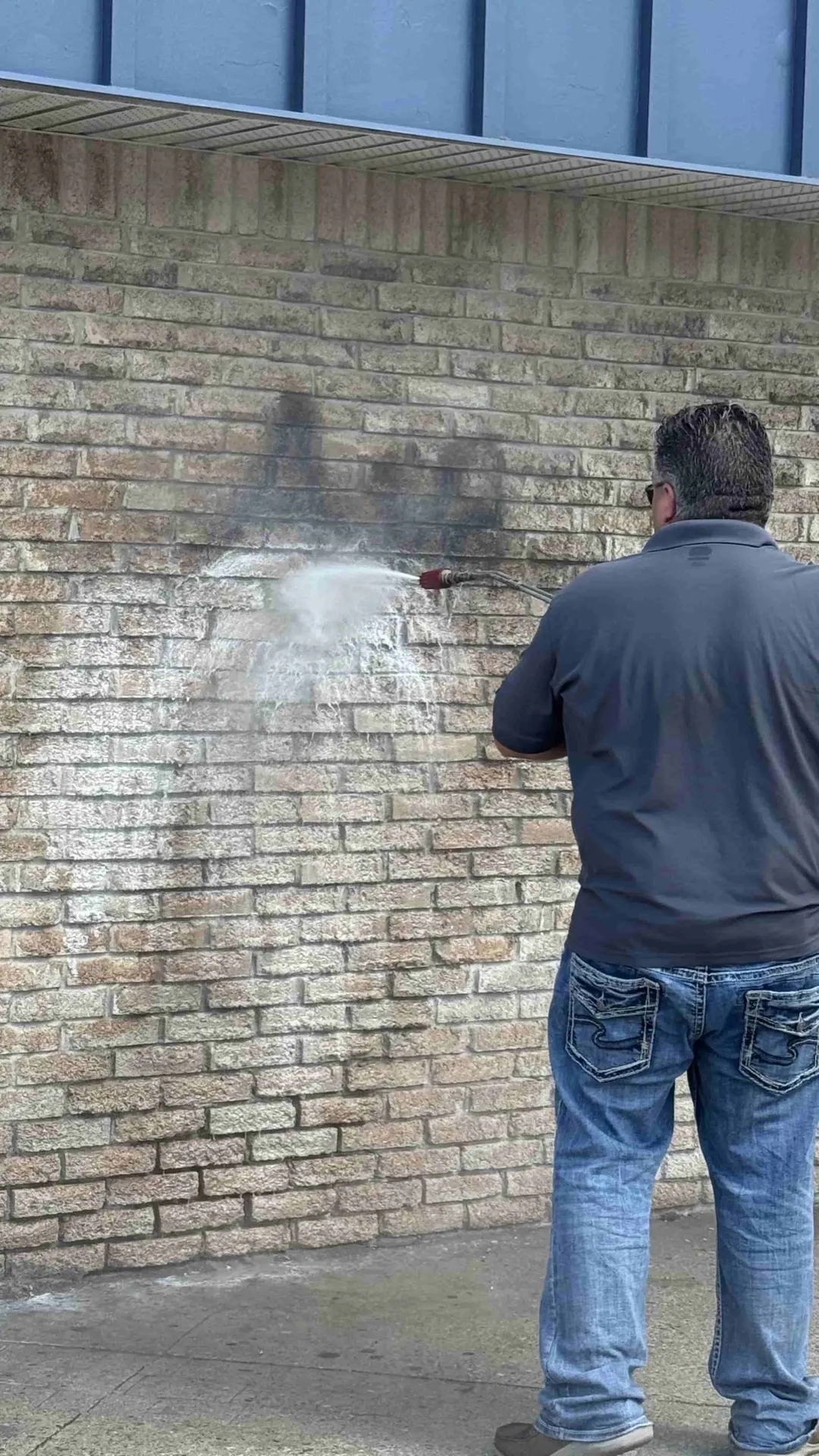
White powder on interlock is a mineral salt, not dirt, and that changes how it should be treated. This guide covers how to identify it, why a pressure wash can hide it or worsen it, and what actually clears it.
In This Article
What efflorescence actually is
Concrete pavers and the mortar or bedding around them contain soluble salts. When water moves through the material, it carries some of those salts to the surface. The water evaporates, and the salts stay behind as a white, grey or chalky crust. Three things are needed: salts, moisture and a way for the moisture to evaporate.
New pavers often show it in their first season or two, and it commonly fades as the salts are used up. If it appears on an older patio, or keeps coming back, something is feeding it, usually water from rain, a downspout, a sprinkler, the ground beneath or winter de-icers.
Efflorescence or something else? Four look-alikes
| What it might be | How it looks | How to tell |
|---|---|---|
| Efflorescence | Powdery white or grey crystals, often patchy | Dry-brushes off, then returns after damp weather |
| Polymeric sand haze | A hard white film on paver faces beside the joints, after install or a wet-out | Does not brush away. Linked to jointing sand that was not cleared off the surface |
| Winter salt residue | A white crust in late winter and spring, heaviest near the road and garage | Dissolves in plain water and follows a snowy season |
| Hard-water scale | Chalky arcs or spots where a sprinkler lands | The pattern follows the spray, not the paving units |
Try the dry-brush test first. A stiff, dry brush that lifts the white as powder points to salts. A film that stays put points to haze or scale.
Driveway or patio seen better days?
We pressure wash driveways, patios, decks and walkways across Kitchener, Waterloo, Cambridge & Guelph. Free, no-obligation quotes, ready within 1 business day.
Why a water blast often backfires
Water is what carries the salts, so drenching the paving can feed the problem. A jet dissolves surface crystals, and the patio looks clean while wet. Some of that salty water is forced into the pavers and joints. As the surface dries, the salts are drawn back up, and the white often returns, sometimes in blotches that look worse than before.
Hard pressure adds its own damage. It blasts jointing sand out of the gaps, which opens new paths for water and seeds, and it can roughen the paver faces. Efflorescence is one of the jobs where more water and more force are usually the wrong answer.
What actually helps
- Wait for dry weather and let the paving dry out.
- Dry-brush and sweep, collecting the powder instead of rinsing it into the joints.
- Use a purpose-made efflorescence remover if a film is left. Test a hidden corner, wet the paving first if the label says so, and follow the label on dilution and dwell. Acid-based products can etch pavers, and they harm plants, so wear gloves and eye protection and keep them off garden beds.
- Rinse thoroughly with a gentle spray, and keep the rinse out of street drains.
- Let it dry, then judge. Repeat on the stubborn patches only.
- Consider a paver sealer once the white has stopped returning. Sealing too early can trap moisture and salts and turn the surface cloudy.
Fix the moisture path, and know when to ask for help
Washing does not cure the cause. Redirect downspouts, re-aim sprinklers and check that the patio drains away from the house instead of into the base. Limit de-icing salt on the paving. If a new installation keeps blooming heavily, ask the installer about the base and the jointing sand.
The wash itself is covered in how to clean interlock paving, and soft washing efflorescence on brick covers the same salt on masonry walls. D&D Home Services lists pressure washing from $350 for typical Kitchener-Waterloo homes, and the quote is free and in writing. If the pavers need re-sanding and a sealer afterwards, see interlock and paver sealing. Ask any crew what they will do about the joint sand and about the efflorescence itself.
Key Takeaways
- Efflorescence is a soluble salt carried to the surface by water, so a dry-brush test can tell it apart from film or scale.
- A pressure wash can dissolve it, drive salty water deeper and blast out joint sand, so the white often returns.
- Dry-brush first, then use a purpose-made remover to the label, rinse well and repeat only on stubborn spots.
- Fix the moisture source and wait until the white stops returning before you seal.

Request a home-service quote
Select the service you need and describe the work area and access.