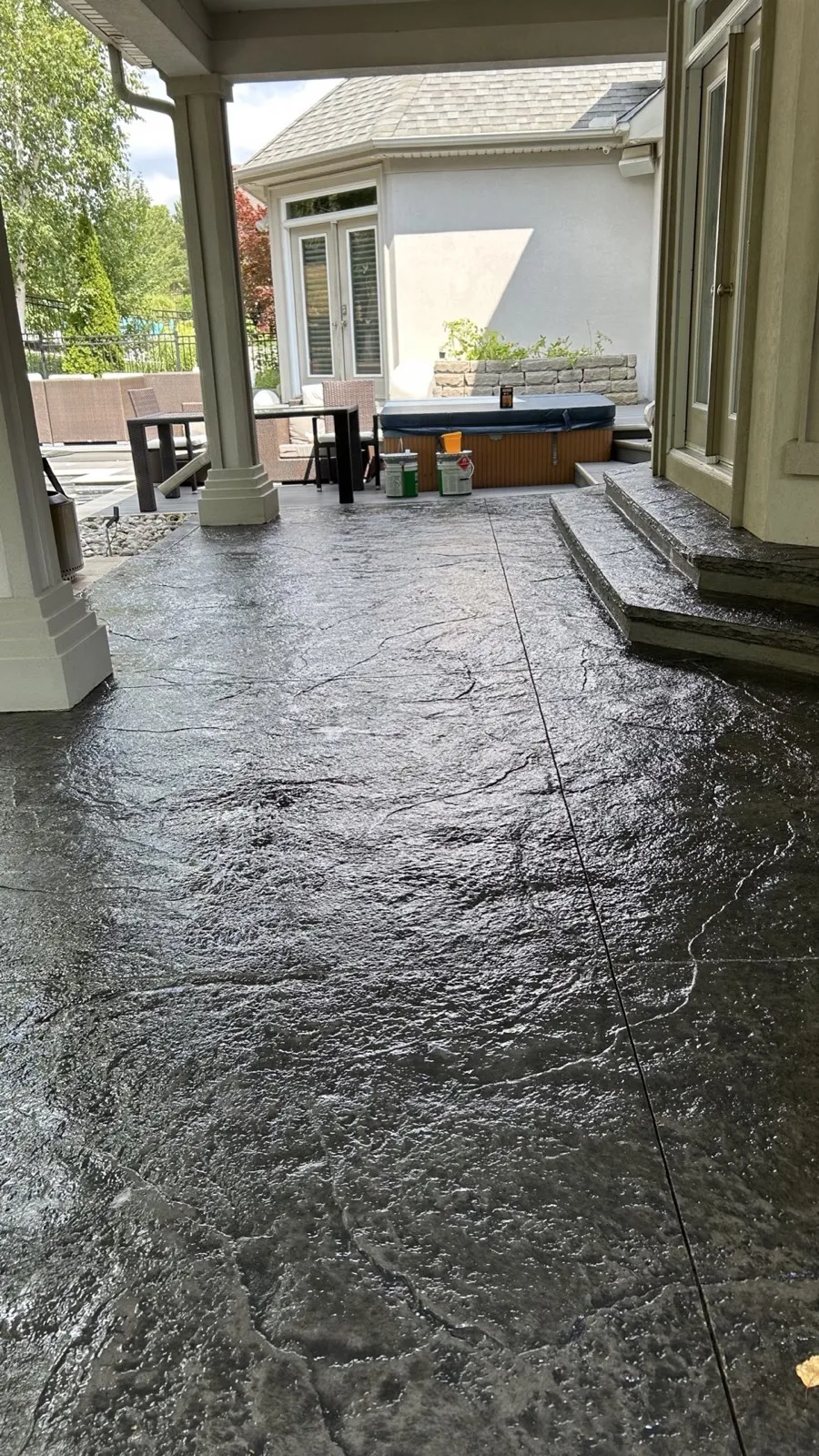
Bubbles and peeling almost always point to how the sealer went on, not to the pavement itself. Read the symptom table first, then follow the repair path that fits the size of the problem.
In This Article
Read the symptom first
| What you see | Usual cause | What it tells you |
|---|---|---|
| Bubbles or blisters that pop and leave craters | Sealer skinned over while moisture or vapour was still underneath. Damp pavement, hot direct sun or a heavy coat | The film was sealed before the surface was ready |
| Peeling in sheets or strips | Poor bond: dust, oil, damp, a frost or rain during cure, or an old failed coat underneath | The sealer never gripped the pavement |
| Fine cracks in a dried-mud pattern, then flaking | A coat that was too thick, or coats stacked on coats | Too much film for the surface to hold |
| Tacky patches that will not dry | Puddled sealer in low spots, cool or humid weather, oil in the pavement or a poorly stirred pail | The film cannot cure in that spot |
| Crescent scuffs and tyre marks | Traffic before the film had set, or wheels turned on the spot | Damage from use, not from the product |
| Streaks and lap lines | Uneven passes or sealer that started to set before it was blended | Cosmetic, and often fades as the film cures |
Blemishes that are not failures
Not every mark on a new coat means it has gone wrong. Before you scrape anything, rule out these.
- Debris in the film. Leaves, grit, insects and, in late spring, maple seed pods can land in wet sealer and stay. They wear off or can be picked out, and they do not affect the bond underneath.
- Tackiness in the first days. Cool, humid Ontario weather stretches the cure. A film that is still soft after a day or two may only need more time.
- Uneven colour. Wet sealer looks glossy and patchy, then dries flatter and more even. Judge it after it has cured.
- Light texture. A slightly rough feel is normal, especially where a sand additive was used.
What matters is whether the film is bonded. Press a fingernail against the edge of a suspect spot once the surface has cured. If it stays put, it is probably fine. If it lifts as a flake, it is a bond problem.
Want your exact driveway sealing price?
Skip the guesswork, we quote your actual driveway, itemized line by line, free and no-obligation. Serving Kitchener, Waterloo, Cambridge & Guelph, with quotes ready within 1 business day.
Fixing a few spots
- Wait for a dry, mild spell that meets the product label's temperature limits. Repairing in cold or damp weather repeats the mistake.
- Remove everything that is loose. Scrape and wire-brush the lifting film back until it holds firmly at the edges. Popped blisters get the same treatment.
- Clean and dry the exposed patch. Sweep, wash off dust and oil, and let the pavement dry through.
- Treat any oil stain with a cleaner and primer made for the job, since oil will lift a patch again.
- Recoat thinly with the same product, feathering the edges into the sound sealer around it. Two light passes beat one heavy one.
- Keep traffic off for the full time the label gives.
Expect the patch to look slightly different from the older film around it. Colour usually evens out over a season or two of wear.
When the whole coat is lifting
If sheets are coming away across a large area, adding another coat is the worst move. It buries the loose layer, and the whole stack peels together the following spring. Removing a widespread coat by hand is slow work, and a pressure washer used carelessly can gouge the pavement, so get advice before you start.
Take clear photos, note when the sealing was done and which weather followed it, and keep the product name and pail label. That record helps whoever assesses it, whether that is the maker's technical line or a contractor. Sometimes the wise choice is to clean off what is loose, fill any cracks and wait for the next good weather window before recoating.
Stopping it happening again
- Sealer goes on clean, dry pavement. Dew and yesterday's rain count as damp. Check the surface by hand, not just by sight.
- Coats stay thin. The common driveway sealing mistakes explain why heavy coats fail.
- Weather sets the date. Temperature and a dry forecast for the days around the job matter, as covered in the weather conditions for driveway sealing in Ontario.
- Stir, then stir again. Solids settle, and the bottom of a pail is not the same product as the top.
- No stacking. Do not add a new coat over one that is already peeling or cracking.
If a contractor did the work
Contact the company first, and share your photos and the dates. A professional crew should want to know about a problem, and a written quote that lists the product and number of coats makes the conversation much easier. D&D Home Services confirms the scope of driveway sealing in writing before work begins, which gives both sides something concrete to refer back to.
Key Takeaways
- Bubbles and peeling usually come from sealer applied over damp or dirty pavement, in the wrong weather or in too thick a coat.
- For a few spots, remove loose film, clean and dry the area, treat oil and recoat thinly with the same product.
- Do not stack a new coat over a peeling one, and get advice if the whole driveway is lifting.
- Keep photos, dates and the product name, and contact the contractor first if a company did the work.

Request a home-service quote
Select the service you need and describe the work area and access.