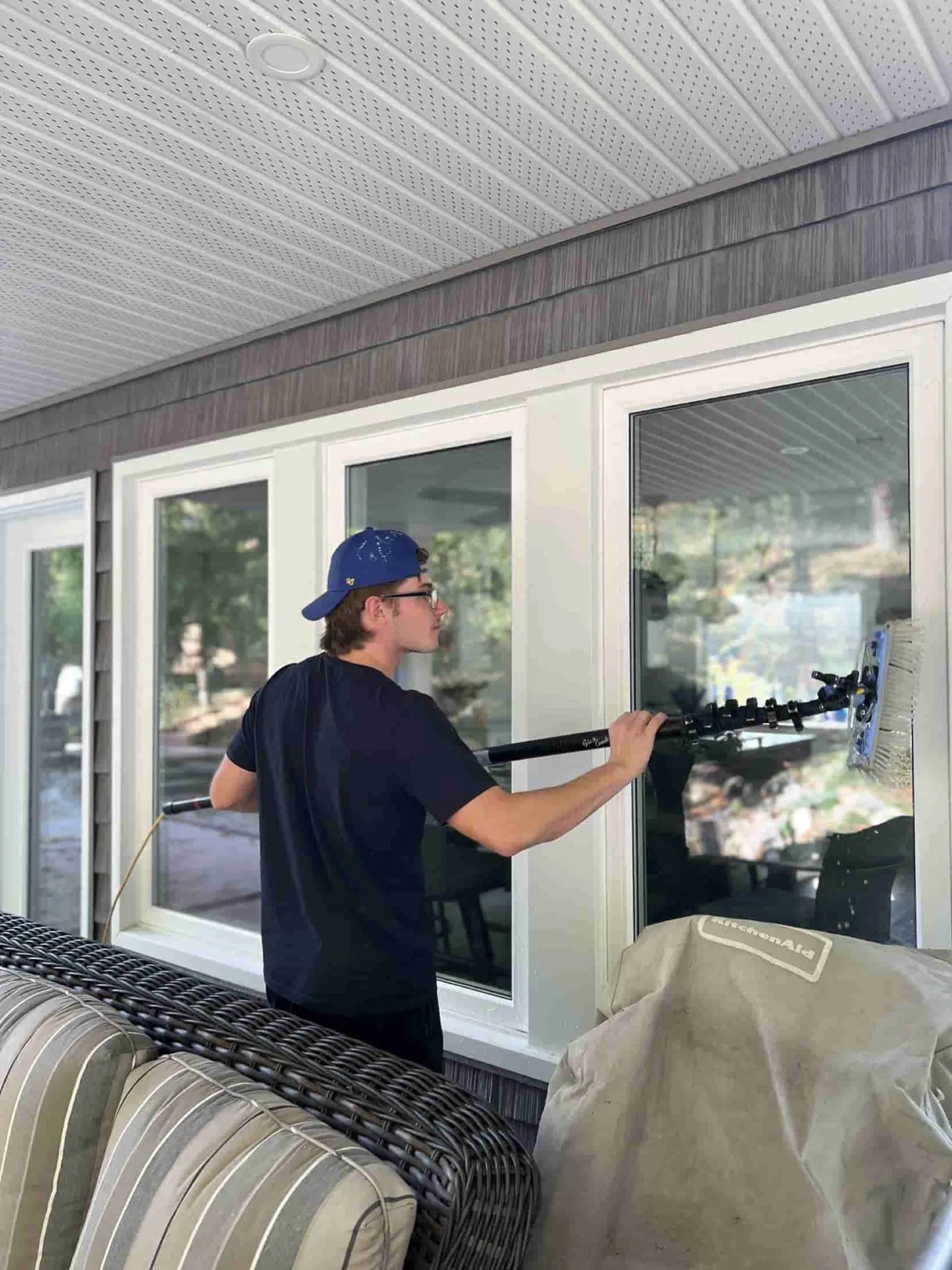
A commercial window cleaning contract should state which glass is cleaned, how often, what each visit includes, who is insured and what happens on rain days. Frequency usually runs from weekly for busy entrance glass to a few times a year for upper floors. This guide covers how to set the schedule, what clauses to include and how to compare bids.
In This Article
- How often commercial windows need cleaning
- Weekly, monthly or quarterly: how to choose
- How Ontario seasons change the schedule
- What belongs in a commercial window cleaning contract
- Commercial window cleaning tender: how to ask for bids
- Red flags in a bid, and getting a scheduled quote
- Commercial window cleaning contract questions
How often commercial windows need cleaning
Frequency should follow the glass, not the building. One property usually has several kinds of glass that get dirty at different speeds, so a single schedule for all of it wastes money or leaves some panes neglected. Start from the table, then adjust after a few visits once you see how fast the glass actually soils.
| Glass | Common starting point | Why |
|---|---|---|
| Entrance doors and sidelights | Weekly | Handprints and traffic film build up daily |
| Street-facing storefront, exterior | Every two to four weeks in busy seasons | Splash, salt film and dust reach it first |
| Interior faces in restaurants, clinics and showrooms | Monthly | Customers see these up close, and grease or touch marks show |
| Ground-floor office exterior | Monthly to quarterly | Less foot traffic, same weather exposure |
| Upper-floor and rear glass | Quarterly or seasonally | Away from splash, so it stays presentable longer |
| Warehouse, back-of-house and low-visibility glass | Once or twice a year, or as needed | Appearance matters less than light and safety |
These are starting points, not rules. A business on a salted main road in March needs more visits than one set back from traffic in July. For typical intervals by business type, see our overview of commercial window cleaning in Kitchener-Waterloo.
Want an exact price for your home?
Skip the guesswork: we look at your actual property and quote it in writing, free and no-obligation. Serving Kitchener, Waterloo, Cambridge & Guelph.
Weekly, monthly or quarterly: how to choose
Ask three questions about each group of glass.
- Who sees it, and how closely? Customers who walk through a door see it daily. Passers-by see a facade from a distance. The closer the view, the shorter the interval.
- What does it cost you when it looks neglected? A dirty clinic or showroom window costs trust. A dirty loading-dock window costs very little.
- How quickly does it re-soil? Glass beside a parking lot, a busy street or a construction site re-soils fast. Glass under an overhang, or on an upper floor, does not.
The answers often produce a tiered schedule. Doors weekly, full storefront monthly, upper floors quarterly. A contractor can price each tier separately, and you avoid paying for a full clean when only the doors need attention. If you are unsure, begin with monthly visits for the main glass for a season and adjust. Visits that happen too rarely turn into a first clean each time, and that is the most expensive kind.
The term for this is scheduled commercial window cleaning: fixed dates, fixed scope, one invoice. Ask whether visit dates are set in advance, or whether the crew calls when it has a gap, because only the first is a schedule.
How Ontario seasons change the schedule
Waterloo Region has four distinct cleaning seasons, and a good contract plans for them instead of treating a monthly visit as identical in every month.
- Winter. Road salt and slush mist the lower panes, and freezing temperatures can limit exterior work. Ask how a freezing day is handled, and whether interior work can continue.
- Early spring. Salt film is at its worst once the snow melts. Many properties schedule an extra visit in March or April. See spring window cleaning in Kitchener for what a thaw-time clean involves.
- Late spring. Pollen and seed pods coat glass, as covered in our guide to pollen season.
- Summer. Storms, construction dust and sprinkler overspray leave mineral spots, and some contractors add visits near building sites.
- Fall. Leaf debris and rain streaks accumulate. Cleaning before winter keeps salt from baking onto dirty glass.
You can write seasons into the contract as a calendar, such as one extra visit each spring and a pre-winter visit in the fall, rather than leaving it to a phone call.
What belongs in a commercial window cleaning contract
The aim of a contract is to make a disagreement easy to settle. These are the clauses that do that. Treat the list as a checklist, and have a lawyer review anything binding.
- Scope. List the glass by elevation and floor, interior or exterior, plus frames, sills, tracks, doors, screens and signage. Name anything excluded.
- Frequency and timing. The visit dates or pattern, the allowed hours, how much notice you get and who to call.
- Access and safety. How upper glass is reached, and who supplies what. Ontario's window cleaning rules cover access and fall protection, and where suspended equipment or rope access is used, building owners have duties such as providing anchor sketches and having anchors inspected.
- Insurance and WSIB. A current liability insurance certificate, with the owner or manager named if you wish, and a WSIB clearance certificate. WSIB says a clearance relieves the party hiring a contractor of liability for premiums the contractor may owe, and confirms the contractor's account is in good standing.
- Price and invoicing. Price per visit, how the first clean is charged, extras at stated rates, when invoices are due and how a price change is notified.
- Weather and missed visits. Whether a rain or freeze-day visit is rescheduled, within what period, and whether you are billed.
- Condition record. Photos of existing scratches, cracks and failed seals at the start, so pre-existing damage is not argued over later. Cleaning will not repair a failed seal.
- Quality and fixes. A short window in which missed spots are cleaned again at no charge.
- Term and exit. Contract length, renewal, notice to cancel and any price review. Be wary of long automatic renewals.
Commercial window cleaning tender: how to ask for bids
A tender, or a request for quotes, is simply a written brief sent to several contractors so their bids can be compared. Private owners and managers can keep it short. Public bodies and larger organizations may have a procurement policy that sets the process, so follow it.
A usable tender package includes:
- A window schedule or marked drawings, with the pane count by floor and elevation.
- The scope, frequency and seasonal calendar from your draft contract.
- A site walk-through date open to every bidder, so all of them see the same building.
- Required insurance and WSIB documents.
- A pricing form that asks for the same things from everyone: price per visit at each frequency, the first clean as a separate line, and unit rates for extras.
- A deadline for questions and a deadline for bids, plus the term options you want priced, such as one year and two.
- Your selection criteria. Price is one, along with experience, safety practice and references.
A common-format pricing form is what lets you compare bids line by line. Without it, one bidder prices the doors only and another prices the whole building, and the totals tell you nothing.
Red flags in a bid, and getting a scheduled quote
Be cautious when a bid has no scope in words, no site visit, a price far below the others, no mention of insurance or a vague promise to clean windows as needed. Be careful too of a long automatic renewal with no way out, or a contract with no weather clause.
D&D Home Services offers commercial window cleaning in Kitchener-Waterloo, Cambridge and Guelph, on a regular schedule or as a one-off. It carries general liability insurance, crew members are Working at Heights trained, and quotes are free and confirmed in writing before work begins. To see how building-scale work differs from cleaning a house, read about how residential and commercial window cleaning differ.
Commercial window cleaning contract questions
How often should a business have its windows cleaned?
It depends on the glass. Entrance doors often need weekly attention, storefront exteriors every two to four weeks in busy seasons, ground-floor office glass monthly to quarterly and upper floors quarterly or seasonally. Start with a tiered schedule, then adjust once you see how quickly each group of windows gets dirty.
What should a commercial window cleaning contract include?
At minimum, a written scope of glass by floor and side, the visit frequency and hours, price per visit, insurance and WSIB documents, a weather and missed-visit clause, a record of existing damage and the term and cancellation terms. Add a seasonal calendar if your property needs extra visits in spring or before winter.
Is monthly commercial window cleaning worth it?
For street-facing storefronts and customer-facing interiors, monthly is a common balance between appearance and cost, because glass stays easy to clean and each visit is quick. For upper floors or back-of-house glass, monthly is usually more than needed. Tier the schedule so each group of windows gets the interval it needs.
Can I cancel a commercial window cleaning contract?
That depends on what you signed. Look for the term, any automatic renewal and the notice period for cancelling. Before signing, ask for a clause that lets you end the contract with reasonable written notice, especially after the first few visits. Have a lawyer review anything binding if the contract is long or complex.
Key Takeaways
- Set frequency by type of glass: doors weekly, storefront every few weeks, upper floors quarterly or seasonally.
- A tiered schedule avoids paying for a full clean when only the doors need attention.
- A contract needs a written scope, visit dates, price per visit, insurance and WSIB documents, weather terms, a damage record and exit terms.
- Plan for Ontario seasons: salt in early spring, pollen in late spring and a pre-winter visit in fall.
- For a tender, give every bidder the same drawings, walk-through and pricing form so bids compare line by line.
Sources & References

Request a home-service quote
Select the service you need and describe the work area and access.